Member for

8 months 3 weeks
Off
Image
22024-ev-rally-london-brighton-2

This is the ultimate guide to the London Congestion Charge Zone, including whether EVs are exempt and how long they are exempt for.

What is the Congestion Charge Zone?
H2

The London Congestion Charge Zone (CCZ) was first introduced in 2003. Covering Central London, cars and other vehicles are charged a fee being driven inside it between 7am to 6pm Monday to Friday and 12pm to 6pm on the weekend. The current charge for entering the zone is £15, which covers the whole day. However, it’s expected that from January 2026 the charge will increase to £18.

Vehicles are recognised by automatic number-plate recognition (ANPR), with the charge managed by Transport for London (TfL). The zone itself has three main aims:

  1. To reduce traffic in Central London
  2. To reduce pollution in the city centre
  3. Raise funds for London’s transport system
When and how does the charge get applied?
H2

There are a few common scenarios where you might have to pay the charge. The Congestion Charge Zone covers Central London, so if you’re visiting London for a day, whether in your own car or a leased vehicle, you’re likely to enter the zone at some point, although there are plenty of routes you can take to avoid it.

The charge applies between the following times:

  • Monday to Friday: 7am to 6pm
  • Saturday and Sunday: 12pm to 6pm
  • All bank holidays

The only days of the year the charge isn’t applied are between Christmas Day and New Year’s Day.

Once incurred, the charge must be paid directly to TfL within three days. Alternatively, drivers who frequently pass through the zone can set up Auto Pay, which automatically pays the charge on their behalf at a discounted rate.

Do EVs pay the congestion charge?
H2

The simple answer is: currently, no, there is a congestion charge discount for EVs. Any vehicle with emissions below 75g/km and a zero-emissions range of 20 miles, which includes all EVs, is exempt from paying the charge.

This doesn’t apply to hybrid cars which, despite having batteries that do allow for limited zero-emissions travel, have had to pay the charge since October 2021. This means that, currently, only fully battery-electric vehicles (BEVs) and hydrogen fuel cars don’t need to pay the congestion charge.

However, it isn’t simply a case of not needing to pay. EV drivers must still register their vehicles with TfL and notify them that the car meets the above conditions. In return, they are given the Cleaner Vehicle Discount, which amounts to a 100% discount on the charge.

From 25th December 2025, the Cleaner Vehicle Discount, and thus London Congestion Charge exemption, will end, and electric vehicles will have to start paying the daily charge, currently priced at £15, for driving in Central London.

Image
lightbulb icon

Tip: non-UK registered electric cars with international number plates can’t get the discount, as the eligibility requirements are that the car must be registered in the UK or the European Economic Area (EEA). However, they may still be eligible for other London transport schemes.

#F2F5CF
#000000
How to register your EV for the Cleaner Vehicle Discount
H2

To apply for the discount:

  1. Go online to the TfL website and create a London Road User Charging account
  2. Log in to your account and follow the instructions
  3. Upload a photocopy or image of your car's V5C logbook issued by the DVLA
  4. Pay a £10 registration fee, which needs to be renewed each year
Penalties and mistakes to avoid
H2

The most common mistakes drivers make with the congestion zone are:

  • Not registering their electric car with TfL and assuming their vehicle is simply exempt from paying. If you fail to register your EV, you will need to pay the charge
  • Incorrectly thinking that their plug-in hybrid vehicle (PHEV) is exempt. PHEVs were exempt until October 2021, so all PHEV owners must pay the charge even if their car meets the other conditions for the discount
  • Driving through without any kind of exemption also means you’ll have to pay the charge, regardless of whether your vehicle meets the requirements for an exemption
  • Failing to pay within the time limit. Drivers have until midnight on the third day after travelling in the zone to pay. If you don’t, you’ll be issued a Penalty Charge Notice (PCN) of £180. If paid within 14 days, this drops to £90, but if it isn’t paid within 28 days a Charge Certificate is issued and it increases to £270 - and there are further penalties beyond this
What’s the difference between the congestion charge zone and ULEZ?
H2

It’s common for drivers to confuse the congestion charge zone with the Ultra Low Emission Zone (ULEZ), but they are in fact two different things. Electric cars are exempt from both under the Cleaner Vehicle Discount, but there are some key differences between them, most notably the area they cover and their hours of operation:

  Congestion Charge Zone (CCZ) Ultra Low Emission Zone (ULEZ)
Area covered Central London, including the City of London and the West End All London boroughs and the City of London
Hours of operation
  • Monday to Friday: 7am to 6pm
  • Saturday and Sunday: 12pm to 6pm
  • All bank holidays
  • No charge between Christmas Day and New Year’s Eve
24 hours a day, 7 days a week, every day of the year except Christmas Day
Charge cost per day £15 £12.50
EV exemption status Fully exempt until 25th December 2025 Fully exempt
How EVs claim the exemption Register through TfL No registration needed
Are PHEVs exempt? No Yes if they meet Euro 6 ( for diesel) or Euro 4 (for petrol) standards, otherwise no

It’s important to note that as they are different charges, drivers could potentially have to pay both charges for driving a non-exempt vehicle around London, totalling £27.50 for a full day.

Are EVs still worth it when they stop being exempt from the congestion charge?
H2

Exemption from both the congestion charge zone and ULEZ are key benefits to driving an electric car in London. Whilst losing their exemption status for the congestion charge will no doubt disappoint many EV drivers, it’s important to remember that it’s relatively easy to avoid the zone, and there are many other myriad benefits to going electric.

For example, even though you’ll have to pay the charge, electric cars are still better for the environment, and every zero-emission mile you drive still goes a long way towards helping the planet combat climate change.

It’s also worth staying registered with TfL to keep on top of any updates or future exemptions that may come into effect. Whilst there are no indications that exemption, either full or partial, will return from 2026 or beyond, EV drivers are still exempt from ULEZ for the foreseeable future, and there could be a new tiered system introduced with discounts. Either way, electric cars are still completely worth it, and you shouldn’t ditch your EV when the exemption ends.

Article read time
5 min read
H6
Summary
H2

Electric vehicles are currently exempt from paying the congestion charge until 25th December 2025, after which they will also need to pay the charge, which is currently set at £15 for the entire day.
H6
Off

Member for

8 months 3 weeks
Off
Image
Categories

A guide exploring the best electric cars that are eligible for the new electric car grant, including how much of a discount they have.

How do electric cars become eligible for the Electric Car Grant?
H2

Automotive brands must submit their electric cars to be assessed by the Department for Transport (DfT) and the Vehicle Certification Agency (VCA). Once approved, the discount will be applied automatically, unlike other grants which need the driver to apply for the grant.

One of the key requirements is that the car has a list price of £37,000 although this doesn’t include optional extras. For example, if you have two versions of the same EV where one is more than £37,000 and the other is below this threshold, the cheaper model may be eligible to apply for the discount, but the more expensive one won’t be able to.

How long are these discounts available for?
H2

The Electric Car Grant was announced in July 2025, with a total of £650 million being ring-fenced for the scheme. The UK Government has set a hard deadline of the 31st of March 2029, but of course the scheme could end early if all of the funding gets used up before then. Additionally, the scheme can be amended by the government at any time, so it’s entirely possible the deadline could be extended or even reduced.

The top 10 electric cars that are currently eligible for the new grant
H2

The following are our top picks for which EVs are now eligible for the new grant and have the discount applied. Note that there are plenty of other cars beyond this list which you can find here, with more being added all the time.

Band 1 – discount of up to £3,750

  1. Ford Puma Gen-E
  2. Ford E-Tourneo Courier

Band 2 – discount of up to £1,500

  1. Citroën e-C4
  2. Nissan Ariya
  3. Peugeot e-208
  4. Renault Megane
  5. ŠKODA Enyaq
  6. Toyota bZ4X
  7. Vauxhall Corsa Electric
  8. VW ID.3

Ford Puma Gen-E

The all-electric version of the highly successful Ford Puma, the Puma Gen-E is a brilliant option for those dipping their toes into the world of electric cars. For starters, it’s one of the cars that has been approved for the maximum £3,750 discount, which is great. Then there’s the fact that, for the most part, it will look and feel very familiar to the non-electric version, except of course the electric motor and 43 kWh battery, giving it a claimed 233 miles of zero-emissions driving range.

Image

Like many EVs on this list, the Ford Puma Gen-E can use rapid chargers, with a decent maximum charging speed of 100 kW, which translates to about 23 minutes to charge from ~10% to 80%. Plus, it’s a hugely practical car, with plenty of boot space (about 523 litres) and excellent handling in towns and cities, as well as an eye-catching Electric Yellow colour choice.

Ford E-Tourneo Courier

Another Ford car that got approved for the full discount is the E-Tourneo Courier. Designed for the driver that needs lots of space to move things (or, in this case, people), the E-Tourneo Courier is an affordable, all-electric people carrier with five seats. Its 54 kWh battery, equating to a range of about 125 miles in ideal conditions, will be sure to get you wherever you need to go, and can be charged quickly using a 100 kW rapid charger to help make long-distance journeys easier.

Of course, being a people carrier, the Ford E-Tourneo Courier is all about practicality over style. Whilst it may not be the best looking EV out there, it’s because it hasn’t been designed to be. Instead, it offers over 1,000 litres of storage space, and as there aren’t many all-electric people carriers it certainly has its uses, making it an ideal option for those who don’t want to make compromises by buying a crossover instead.

Citroën e-C4

Those looking for an affordable and practical EV could do a lot worse than the Citroën e-C4. As an electric car, it boasts a decent, if not unremarkable, range of around 200 miles; still plenty to get you places on a single charge, but by no means industry-leading. That said, you’re still in for an enjoyable driving experience, with a clever hydraulic system making town and city driving with lots of bumps much more pleasant than in other cars.

Image

It’s the first car on our list to be eligible for the lower end of the discount, but £1,500 off a brand-new electric car is certainly nothing to be sniffed at. With the Citroën e-C4, you’ll get rapid DC charging and an electric cost-per-mile of just 6.83p and zero-emissions all-electric driving. What’s not to love?

Nissan Ariya

Looking for a practical electric car offering impressive value for money? Check out the Nissan Ariya, now available with a £1,500 discount thanks to the grant. For a car that was revealed many years ago (back in 2020, if you can remember back that far!), the Nissan Ariya was certainly worth the wait, offering a respectable 250 miles of range and rapid charging (up to 130 kW) capabilities.

Image

Not only do you get a nice discount from the grant, you’ll also get a stylish electric car inside and out that’s big into minimalist design, with plenty of boot space on top. Whilst it sits in a heavily contested market, with plenty of “better” cars (that come with bigger price tags), the Ariya is an excellently priced choice, with a cost that makes sense for what you get. In some cases, you could even argue that you get more – especially in the looks department – for what you spend than some of the more higher-priced alternatives in its market.

Peugeot e-208

The Peugeot e-208 is the car maker’s first foray into the battery-electric market since their iOn model, and it’s been built from the ground up. Thankfully, too, because the e-208 is a very nice looking car. It’s a zero-emissions supermini with a sharp and sleek design inside and out that pays homage to the much-loved 208. It also drives exceptionally well for a small and light vehicle, giving you a WLTP range of 248 miles (real world around 225 miles in ideal conditions) and rapid charging of about 30 minutes for a 10-80% charge.

Image

It’s another excellent choice for those still on the fence about EVs, giving new drivers the familiarity of the 208 and a new experience with its all-electric driving. What it lacks in room (being a mini) it more than makes up for in driving experience and personality, and the £1,500 discount from the grant goes a long way to bringing its otherwise relatively hefty price tag down.

Renault Megane

One of the most stylish looking EV hatchbacks currently on the market is undoubtedly the Renault Megane E-Tech. In a sector as stacked as it is, with some big competition, it’s certainly one of the best looking, and the extra £1,500 off from the grant definitely sweetens the deal.

Image

In return, you’ll get a solidly designed electric car with a very respectable ~280 miles of range and a maximum rapid charging rate of 130 kW. That equates to a cost-per-mile of about 6.71p, which makes it very affordable to run. That’s not to mention a super comfortable ride, which is often cited as one of the car’s many strengths, as well as its large boot (around 440 litres) and plenty of buttons to press on its infotainment screen.

ŠKODA Enyaq

If you’re looking for an all-rounder SUV, the ŠKODA Enyaq is one of the best ones out there. It’s got pretty much everything you could ask for – plenty of range, plenty of space, plenty of fun, plenty of style, the list goes on! As if that weren’t enough reasons to consider getting one, the extra £1,500 discount from the grant makes it even more of a bargain.

The Enyaq range starts at 247 miles for the entry level trim, which is plenty to be getting by with, whilst its ability to charge using rapid chargers makes it excellent for long journeys. In fact, the Enyaq has been praised for its motorway driving experience, offering a smooth and quiet drive at faster speeds, whilst its great safety rating (4 out of 5 stars by Euro NCAP) make it a winner for anyone looking for a solid long-distance all-rounder.

Toyota bZ4X

For drivers who want a simple, no-thrills-yet-still-brilliant EV, Toyota’s first purpose-built fully electric SUV, the bZ4X, is the one for you. In short, it gets the job done, with plenty of style and boot space for most driving needs and a quality infotainment system featuring an 8-inch touchscreen and crisp graphics. It’s also incredibly comfortable to drive or be a passenger in it, with heaps of in-built tech to make longer-distance motorway trips more pleasant, such as adaptive cruise control.

That, in a way, is one of the car’s best selling points. Unlike plenty of other EVs, a lot of the fancy tech and gadgets come as standard, regardless of which Toyota bZ4X trim you go for. That means you’ll also get all the other hallmarks of modern cars like keyless entry, LED headlights, and reversing cameras.

Incidentally, for those who’re wondering, the name stands for “beyond zero”. And no, sadly that doesn’t mean it produces negative emissions.

Vauxhall Corsa Electric

Vauxhall’s incredibly popular small hatchback is now available as a fully electric vehicle. Just like the petrol/diesel version, the Corsa Electric gives decent range at an affordable price, made even cheaper thanks to the grant. If you’re looking for a small car with plenty of range, the Corsa Electric pulls ahead compared to other competition in its market segment, with move range (and boot space!) than other popular cars like the Fiat 500, Mini Electric, or Honda e. Plus, it can charge at up to 100 kW, giving you a full charge in as little as 30 minutes.

Image

If you’ve driven a Corsa before, you’ll find things are very similar here. The Corsa Electric feels very much like its ICE equivalents, with smooth handling translating to an altogether comfortable ride. It’s also less showy than other EVs, with the exterior having had only a minor facelift, which may appeal to drivers who aren’t looking to stand out.

Volkswagen ID.3

For drivers who want a bigger mid-sized hatchback, the Volkswagen ID.3 is a great choice – especially if you’re a fan of minimalist interiors. Digital touchscreen displays are all the rage in modern cars, and the ID.3 takes it to the next level, with very few physical buttons to press. Instead, almost everything is controlled via the car’s massive 12.90 inch screen, which you’ll get as standard, or you can connect using Apple CarPlay or Android Auto if you prefer. Or, for more of a futuristic vibe, you can use the optional augmented reality heads-up display to project some information on the windscreen.

Image

Other than that, the ID.3 is a solidly reliable car built by a reputable car maker, and even more of a bargain with the £1,500 discount applied by the grant. Ranges start at around 240 miles for the entry-level model, and the battery can be charged using a rapid 120 kW charger for sub-30 minute charging to 80%.

Article read time
8 min read
H6
Summary
H2

The new Electric Car Grant has landed, bringing discounts of up to £3,750 on new electric vehicles with a list price of under £37,000. The discount is applied automatically to eligible EVs, helping to lower the costs of new EVs for drivers to help them make the switch or upgrade to an electric car.

H6
Off

Member for

8 months 3 weeks
Off
Image
tethered pod point ev charger on wall

A complete guide exploring whether you can get 2 electric car chargers installed at the same property, and alternative options.

Why some households might want a second home EV charger
H2

When you look at the data, it’s perhaps no surprise that more drivers are wanting to know how they can keep multiple electric cars charged at home.

Electric cars have surged in popularity over the last few years, with data from Zapmap reporting over 1.6 million EVs on the UK roads as of August 2025. With over a third (34%) of UK households having two or more cars in 2024 according to data from the Department for Transport (DfT), homes in the UK are increasingly becoming multi-EV households.

Being able to charge two or more EVs makes them even more convenient as you can plug them both in and get them both charging at the same time, rather than having to swap the cable over to the other EV when one has finished charging.

Similarly, having separate chargers makes it easier to manage charging and monitor energy usage for people living in shared households. Or, alternatively, landlords may want to offer multi-EV charging via multiple chargers for tenants.

What are the technical limitations to getting a 2nd EV charger installed?
H2

From a practical standpoint, getting multiple electric car chargers installed at home depends on your home’s setup.

For starters, the main limitation will be the property’s power supply. Most households in the UK have single-phase power and between 60 to 100 amp main fuses. This means that even if your household does have enough power for the additional charger, you won’t necessarily get the same charging rate from both.

For example, two 7 kW chargers installed on a single-phase power supply won’t actually charge each car at 7 kW, but more like 3-3.6 kW. So you’ll effectively be getting half the charging rate with each vehicle.

One way around this is to upgrade your home’s power supply to three-phase, but this can be costly and might not be possible for your home. However, it’s worth contacting your DNO (Distribution Network Operator) - in other words, the company that operates your electricity network - to ask about upgrading your power supply, which can in some circumstances be free.

However, this is also dependant on whether you have smart chargers installed with load balancing capability. Load balancing may sound complicated, but it effectively means the charger has the ability to evenly balance charging. Most modern chargers are considered smart chargers and so they have this capability, but older models may not.

So if you want a second charger but have an older model, you may need to upgrade it at the same time. Otherwise, the charging rate might not be evenly spread across both chargers, and you won’t get the same charging experience or have any way to control it.

Image
lightbulb icon

Tip: find out more about what smart charging means in our ultimate guide to smart charging.

#F2F5CF
#000000
Do you need permission to install a second EV charger at your home?
H2

Whenever you get an EV charger installed, you need to get permission from your DNO. This is so they can assess your home’s power supply and confirm whether your property can safely handle the increased load or if it needs an upgrade.

This is usually handled by the installer, who will conduct an assessment of your home before submitting the relevant forms to the DNO on your behalf. In the case of a second EV charger, you’ll need to get similar permission from the DNO, which may be harder to get approved as your home may not be able to cope with the additional load without an upgrade.

For tenants and renters, you’ll also need to get permission from your landlord to install a charger.

Image
lightbulb icon

Tip: if your landlord is interested in getting chargers installed at your rental property, they could benefit from one of the two electric vehicle charge point and infrastructure grants currently available for landlords, which could help reduce the costs.

#F2F5CF
#000000
How much does it cost to install a second EV charger?
H2

It may be obvious but, as well as technical limitations, it’s important to bear in mind when thinking about getting more than one charger installed that you’ll have to pay for it. Electric car chargers can have a significant upfront cost, not just in terms of the hardware but also its installation.

It’s also unlikely that you’ll be able to claim any grants to reduce the cost for the additional charger. Any home EV charger grants that have been or are currently available have had a limit of one charger, meaning the second charger won’t be eligible for the discount.

You’ll also want to factor in any potential costs for upgrading your power supply so it can accommodate the extra load from the second charger. Sometimes this can be offered for free by your DNO, but often it can come at a significant cost.

Similarly, charging a second car at home will no doubt increase your energy bill, so you’ll need to have planned for that in your household budget.

Image
lightbulb icon

Tip: did you know, with Pod Drive you’ll get our award-winning Solo 3S smart home charger and up to 7,500 miles for just £40 a month plus a one-off £99 joining fee? This not only reduces the upfront cost of buying and installing a charger, but also gives you an all-inclusive charging experience.

#F2F5CF
#000000
Is it worth having two electric car chargers installed at home?
H2

Even after accounting for the additional costs and any technical limitations, you may find that you don’t actually need to get a second charger installed.

A common misconception about EVs is that they have low ranges. This is simply not true, with many EVs having driving ranges well into the hundreds. Plus, most people actually have a much lower weekly mileage than they think they do, with the average being somewhere around 25 to 30 miles. This means you won’t necessarily need to charge as often as you might think as it’s likely your electric car can more than easily cover your weekly driving on a single charge.

This means a single 7 kW home charger will likely be sufficient for your charging. For example, a typical EV with a 60 kWh battery will take just 8 hours to fully charge on a 7 kW charger. If you can comfortably cover your weekly mileage on a single charge, you could simply charge one EV one night and the other the next. This would be much simpler, and not to mention cheaper, than getting a second charger installed.

Plus, if you do have a higher-than-average weekly mileage, you may find it more beneficial and convenient to rely on the UK’s public charging network and top up your EV throughout the week. And in fact, you might find that having half the charging rate due to the second charger doesn’t give you enough miles overnight to do the longer journey.

What are the alternatives to installing 2 EV chargers at home?
H2

Whilst in theory it’s possible to get two chargers installed, sometimes it isn’t always possible, or even necessary. Fortunately, households do have other options that can be just as convenient, and even cheaper, than opting for a second home charger:

  1. One charger, two schedules

As already mentioned, a standard 7 kW charger is more often than not sufficient for most of your charging needs. If you have more than one electric car, you will probably be able to get by simply by alternating charging each night, and won’t really need to have both charging at the same time.

  1. Make use of the UK’s public network

As of August 2025, there are over 85,000 public charging stations across almost 43,000 locations in the UK according to Zapmap. So if both your EVs need a charge, you could always take one (or both) somewhere and use a public charger for a top up, but do bear in mind it is cheaper to charge at home than in public.

  1. Use a 3-pin plug, but carefully

In a pinch, you can always use a charging cable that plugs into a standard 3-pin plug. However, this should only be done in emergencies, and even then only sparingly. Charging like this is incredibly slow, so it will take a very long time for the car to charge to full. This can be unsafe as standard home sockets aren’t designed to handle the long-duration load needed to charge an EV, and they don’t have anything like the protections that dedicated home chargers do.

  1. Home chargers with multiple sockets

Although rare, some EV charging providers offer home chargers that have more than one charging socket, as well as the load balancing capability to evenly distribute the charging rate. But again, as mentioned, there are some downsides to charging two cars at the same time, such as a slower charging rate.

Getting two chargers installed is possible, but is it worth it?
H2

As we’ve seen, provided your property has, or can upgrade to, the requisite power supply needed, it’s entirely possible to get two EV chargers installed at one address. However, there are many factors that need to be considered, including having chargers installed with smart load management capabilities and getting permission from your energy supplier, which may make it harder than it’s worth.

Plus, just because you can doesn’t necessarily mean you should, as there are plenty of alternative options for multi-EV households to keep their cars charged, and most of the time a single 7 kW charger will suffice.

Frequently asked questions
H2

Is it safe to run two EV chargers at once?

Provided both chargers have been installed correctly and safely by a qualified EV installation professional, it’s perfectly safe to have two EVs charging at two home EV chargers simultaneously.

Will two chargers slow down my charging speed?

This depends primarily on your home’s power supply and whether it’s single- or three-phase. But in general, yes, even if both chargers are 7 kW chargers, you may find that two EVs plugged into each at the same time will charge at different rates. With smart chargers, load balancing should ensure the cars charge at the same rate, but it will still be at less (around 50%) of a single charger’s charging rate, so around 3 to 3.6 kW each rather than 7 kW each.

Can I apply for a government grant on the second charger?

Whether you’re getting two installed at the same time or adding a second charger to your home, only one of them will be eligible for a government grant. You may also find that you have to install each one separately, rather than at the same time, to qualify for a grant.

Can landlords get multiple chargers installed for their tenants?

Using one of the two government grants available, landlords can indeed provide multiple chargers for their tenants. This can be especially beneficial as it can help make your property more appealing to tenants who are EV drivers, whilst also giving them an easy way to ensure they only need to pay for their own charging, rather than everyone else’s.

Article read time
9 min read
H6
Summary
H2

In theory, it’s entirely possible to get a second electric vehicle (EV) charger installed at your home. But in practice, you might not be able, as there are a number of factors you need to take into consideration such as costs and technical limitations.

And even if you can get two EV chargers installed, it’s worth asking yourself whether you really need two, or whether other options will work better for you instead.

H6
Off

Member for

8 months 3 weeks
Off
Image

Range anxiety is a common concern amongst EV drivers, so here’s everything you need to know about what happens if you run out of charge.

What happens if an EV runs out of charge?
H2

If, for whatever reason, you’re on the road and your EV runs out of charge, the best thing to do is to not panic. Just like any issue when on the road, your priority should be to get your car (and, thus, you) somewhere safe. That means popping your hazard lights on and pulling into a lay-by or quiet road where you can pull up on the kerb and park, or in the case of motorways trying to exit or, failing that, using the hard shoulder. This way, you can come to a controlled stop.

Fortunately, when the battery does reach zero, the car doesn’t come to an immediate stop, so you have time to react. In fact, you’ll get plenty of warning before it actually happens, giving you enough time to prepare if you know you won’t be able to get a charge before it happens.

Once it reaches zero, the car itself will gradually lose power, and eventually come to a stop. Your EV should also have safety systems in place which will help you pull over safely.

What to do once your EV has stopped
H2

Just like any stranded car, you should immediately put your hazard lights on once you know your battery will go flat, and do your best to pull over somewhere safe that’s out of the way of other road users. Then, you should contact roadside assistance, who will then have a number of recovery options available.

It’s very important at this stage that you call roadside assistance and don’t attempt to get your EV towed instead. Towing an electric car can cause damage to the drivetrain if done improperly, especially traditional two-wheel towing which can inadvertently cause the motor to generate electricity, which could damage other systems.

Recovery options for EVs with no battery
H2

Unlike petrol cars, EVs need specialist help, as you can’t simply walk to the nearest station and refill the battery yourself. Thankfully, electric car roadside assistance is getting better, and EV drivers now have a few different options available:

  1. Flatbed tow truck

This is by far the most common method of recovery for stranded EVs. As mentioned, towing an electric car isn’t always possible, and it’s much safer and more reliable to put the EV onto a flatbed truck. This way, all four wheels are off the ground and not potentially generating electricity or doing damage to the car’s motor.

  1. Roadside mobile charging

Some providers now offer mobile charging services that can charge your EV on the roadside. Although rare, they are becoming more frequent, designed to charge your car enough for you to drive to a public charging station for a full charge. Think of it as an emergency top-up. 

Regardless of which recovery option is used, once you’re recovered and safe, your next immediate step should be to give your car a charge to about 80%, whether that’s at a public charging station or at home if possible.

Why you shouldn’t let your EV battery drain to 0%
H2

Obviously it goes without saying that you should avoid hitting 0% whilst driving, as it can be unsafe. But you equally shouldn’t let your battery ever get to 0% before giving it a charge. This is because of the way that EV batteries work. Essentially, longer charges, especially when starting from close to 0%, puts a lot of strain on the battery, which can cause it to degrade a lot quicker over time.

This equally means you should never charge completely to 100%. Instead, the sweet spot for charging is between 20% to 80%. Not only will this keep your battery – arguably the most important component of an EV – healthier for longer, but it also takes less time than to charge from 0% to 100%.

Tip: it’s highly unlikely your EV will naturally get to 0% on its own. That’s because electric cars don’t lose that much charge when parked, so you should never encounter a situation where you try drive your EV only to find the battery is flat!

How to avoid running out of charge
H2

Fortunately, running out of charge is rare, and it’s easy enough to avoid. Here are our top tips for avoiding hitting 0% charge in an EV:

Plan charging stops in advance

There are loads of apps that can be used to pre-plan where you’re going to stop for a charge before you set off, and with over 82,000 public EV charging stations in the UK, getting access to one shouldn’t be a problem.

That said, always make sure to have back-up options available, just in case your preferred choice is in use by another driver. Also, if you’re planning to use rapid chargers, make sure you’ve checked ahead of time that your EV can actually make use of rapid charging speeds. Even if your car can still connect to it, if your EV can’t charge at those speeds (50+ kW) you could be stopping someone else who could take advantage of the faster rate.

Charge smart at home

Charging at home is undoubtedly the best way to keep an electric car charged. By plugging in overnight, you can wake up to a fully charged cat in the morning and start your journey with the maximum number of miles available. This is much better than setting off with low charge, which increases the risk of running out altogether!

There are plenty of other benefits to having a home EV charger installed as well, such as getting access to cheaper overnight charging, especially if you install a charger with smart charging functionality.

Know you EV’s limits

When you buy an electric car, you should be told, or be able to find out, what its maximum range is, which should tell you how far you can drive it before needing to recharge. But don’t always take this at face value.

The figure you’ll usually be quoted will have been determined by the WLTP, or the Worldwide Harmonised Testing Procedure. Simply put, it’s a test designed to determine the fyuel or energy consumption, and emissions, of a car, be it petrol, diesel, or electric.

Among this, the car’s maximum range will be tested. However, the test is done in a controlled laboratory environment, under assumed ideal conditions, including road surface, weather, driving speed, and so on. As a result, the WLTP gives you an idea of what the range is, but what you may end up with can vary drastically depending on factors like the weather, how you drive, whether you’re on motorways or not, the age of the car etc.

That’s why cars listed in our vehicle guides include both the WLTP – i.e. “official” - range of an EV, our own “confidence range”. As a general rule of thumb, take off about 15% of the WLTP range and you’ll have a much more realistic idea of the car’s actual range in real-world conditions.

Take advantage of regenerative braking

Regen braking is a handy piece of tech that you’ll find in virtually any modern electric car. Essentially, it allows the car to take the energy that’s typically used when you brake and use it to slightly recharge the battery. As well as giving your battery a little boost whenever you brake, it makes the car overall more efficient as less energy is lost or wasted.

That doesn’t mean you can complete a journey entirely with regen braking, as the charge isn’t going to be enough to counter the amount lost from driving the car. But it will reduce your overall energy consumption, so it’s worth using it when you can.

Tip: with Pod Drive, you can significantly reduce the upfront costs of installing our award-winning Solo 3S dedicated home charging system to just £40 per month plus a one-off £99 joining fee. Find out more about our all-inclusive Pod Drive service.

#F2F5CF
#000000
There’s no need to worry about running out of charge
H2

The key takeaway from this should be that yes, the idea of running out of charge on the road is a scary prospect. But it’s not something that happens often, and if it does it isn’t the end of the world as there are plenty of recovery options.

If it is something that still concerns you, deciding against going electric isn’t the solution. Instead, you just need to get used to a little bit more planning than you might normally need to do with a petrol/diesel car to keep your car charged before, during, and after your journey. And if you need them, we have plenty of tips for optimising your EV’s range!

Ready to start your EV journey? Explore our award-winning Solo 3S home charging system today.

Article read time
7 min read
H6
Summary
H2

Whether you’re new to electric cars or a seasoned EV veteran, you’ll likely at some point feel worried about range. We call this range anxiety, and it's fundamentally the fear of running out of charge mid-way through a journey. Fortunately, it’s very rare to actually happen, and in the unlikely event it does, it’s entirely fixable. Plus, with the right preparation, you can easily avoid it from happening to you.

H6
Off

Member for

8 months 3 weeks
Off
Image
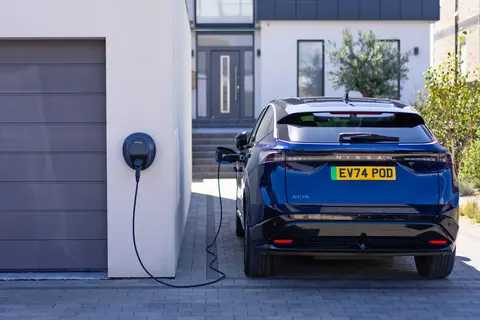
nissan rear view with a pod point solo 3S
Categories

If you’ve seen a green number plate and wondered what it means, this guide will tell you everything you need to know about them.

What are green number plates?
H2

Despite what the name suggests, these aren’t actually number plates that are completely green. Instead, they’re standard number plates with a green stripe on the left-hand side (as you’re looking at the front of the car from the outside).

Green number plates are for electric vehicles, and are used to identify them so that the driver can benefit from a range of electric car incentives. Specifically, however, they’re only used on cars that are either hydrogen fuel cell cars or fully electric vehicles. In other words, you won’t find a green number plate on a hybrid or non-electric car.

The UK isn’t the only country in the world to have them, either. Canada, China, Hungary and Norway have similar schemes in place that use number plates to identify cars as fully electric.

Why were green plates for EVs introduced?
H2

UK EV number plates fundamentally work the exact same way as they do with traditional petrol/diesel cars. However, the green stripe or “flash” was added to license plates back in December 2020 by the then-Transport Minister Rachel Maclean as part of the then-government’s wider net-zero strategies, specifically its goal of banning the sales of new petrol and diesel cars by 2035. The government at the time was looking for ways to encourage drivers to switch to EVs, and it was thought that the stripe on the number plate would help raise awareness around electric vehicles by showing drivers that more electric cars were on the roads and getting them thinking about switching.

At the time, the Department for Transport (DfT) were also hoping that EV drivers with the green number plate would start to see incentives offered by Local Authorities, such as free parking. However, these incentives were never set in stone, and fundamentally never came about, primarily due to concerns that non-electric car drivers could swap their number plates for a green number plate and claim the benefits without actually switching to an EV. There was also the fact that the DVLA already had records of what type of fuel each registered car used, meaning the green flash on the license plate wouldn’t be needed for councils to identify the car as electric.

What are the benefits of green number plates?
H2

Despite the DfT’s hoped-for benefits never formally materialising, there are still some benefits to having the green flash on your EV.

For starters, they still help to make it more obvious to Local Authorities how many drivers in their area are driving electric, which in turn could be used to eventually develop new policies that benefit EV drivers. Some schemes that have reportedly been considered include cheaper parking and the use of bus lanes, although how and when these are implemented could vary across councils. By having the green plates already implemented as a system, this would in turn future-proof EVs that have them fitted if and when these perks appear.

Even then, they still help to raise awareness with the public. Making EVs more visible is a great way to get the general public thinking about electric cars, especially considering the long list of environmental benefits to going electric.

And, if nothing else, being an EV driver with an electric car with a green number plate means you can show off your car’s zero-emissions credentials and the fact you’re contributing to the UK’s sustainability efforts.

How to get a green number plate
H2

If you fancy getting a green license plate, the good news is it’s easy to do, whether you’re about to buy an EV or already have one. Remember, these can only be fitted to 100% electric cars or hydrogen fuel cell vehicles, so if you have a hybrid you won’t be able to get one fitted. And don’t forget to update your insurance policy and other key documents once the new plates are fitted!

For new EV drivers

When buying a new electric car from a dealership, they should be able to swap out the traditional number plate for a green license plate if you ask them. But if they can’t, or you forget, then...

For existing EVs

If you already have an electric car, or you’re buying a second-hand EV, green plates can be retrofitted to eligible EVs easily provided you order the plates from a registered plate supplier. To do so, you’ll need to provide proof of your ID and evidence that you’re the owner of the car, which can be done with the V5C logbook, which should also indicate that the car is a zero-emissions vehicle as proof of eligibility for the green plate.

You can also potentially change the plates of a car you’re leasing or paying for via finance, but you’ll need to check with the lender first.

Are green number plates compulsory?
H2

Fortunately, you aren’t forced to have a green number plate on your EV if you don’t want to. This is because many zones like ULEZ and Clean Air Zones that charge a fee for driving in them use automatic number plate recognition (ANPR) technology to identify cars that are exempt from the fee. So if you’re driving an EV and it’s exempt from the fee, you won’t need to worry about not having a green license plate as the actual license plate will have records of what type of fuel your car uses and whether you need to pay or not.

Are there any limitations to getting a green number plate?
H2

As previously stated, the key thing to remember is that green number plates are only for pure electric vehicles and hydrogen fuel cell cars. This means if you have a hybrid, even a plug-in hybrid, you can’t get one (which could be another reason why you should buy an EV rather than a hybrid!).

Also, be mindful that if benefits are introduced by Local Authorities, they may not be applicable nationwide. Perks could vary by region, so you’ll want to check beforehand what perks, if any, the council you’re driving through offers.

For London drivers, another important thing to consider is the current rules around the capital’s ULEZ and Congestion Charge zones. Electric cars currently don’t need to pay either, but in December 2025 EVs will start having to pay the Congestion Charge – regardless of whether the car has a green number plate or not.

Similarly, other cities across the UK have their own Clean Air Zones, which electric cars are exempt from paying. However, you may find in the future that the exemption ends, and it’s unlikely that having a green number plate will keep your car exempt.

The future of green number plates in the UK
H2

Despite them not being compulsory, or specifically tied to unique incentives, it seems likely that green number plates will continue to exist. Having the system in place means that it will be easier to identify cars as fully electric if any future incentives come about as a result of rising EV adoption rates. That said, a similar or entirely different system could be used in the future, but that seems unlikely for now.

If nothing else, green number plates are now such a common sight on UK roads that the public have gotten used to seeing them. There’s little doubt that seeing so many EVs on the roads will have helped shape public attitudes towards them, and you could even argue that the green flash on the plate has become something of a symbol of the broad efforts to make transport more sustainable.

It would be a shame for the UK to retire the green number plate, given it’s so iconic. It’s become more than just a bit of green plastic, but rather a representation of a much wider movement, and the huge progress we’ve taken, towards a greener future.

So the next time you see a green number plate, you’ll know it’s a fully electric car producing zero tailpipe emissions. Why not join them?

Article read time
7 min read
H6
Summary
H2

Green number plates were introduced in the UK in December 2020 as part of the government’s wider push to net-zero. Essentially, a green number plate indicates that the car is either fully electric or a battery-electric vehicle (BEV), which means 100% of its power comes from an electric motor, or a hydrogen fuel cell car.

They’re becoming an increasingly common sight on UK roads thanks to the huge surge in drivers switching to electric cars, with the latest estimates suggesting there are over 1.6 million EVs in the UK today.

H6
Off

Member for

8 months 3 weeks
Off
Image
customer using pod home app
Categories

The ultimate guide to everything you need to know about dual-rate energy tariffs and why energy is cheaper overnight.

Understanding dual fuel energy tariffs
H2

The vast majority of homes in the UK use some form of gas, either for cooking or, more commonly, for central heating. This means most people in the UK will be familiar with the concept of having two different types of energy bill – gas and electric. Historically, these were billed, and provided, by separate suppliers, but it’s become increasingly common for energy suppliers to provide both.

This, broadly, is what is meant by a dual fuel – sometimes also known as two-rate or dual-rate – energy tariff is. It’s simply one provider supplying and billing for households that use both gas and electric. So if your home only uses electricity, you’ll only be billed for it, and you won’t be on a dual fuel tariff.

Naming conventions for these tariffs tend to vary, but you’ll generally see some popular ones cropping up if you do a quick search online such as Economy 7 (7 hours of cheaper energy overnight) and Economy 10 (10 hours of cheaper energy split between overnight and daytime, but with higher standing charges).

How do dual-rate energy tariffs work?
H2

Generally speaking, your energy will cost different amounts at different times of the day when you’re on a dual fuel tariff, which is defined as peak and off-peak hours:

  • Peak hours – these are usually during the day and early evening when energy demand is typically at its highest. In other words, peak times are when people use the most amount of energy, for example to run multiple appliances like cookers, TVs, washing machines, lights, and so on.
  • Off-peak hours – these are the times when energy demand is lowest. The most common off-peak time is overnight, but some tariffs also offer mid-day off-peak times to coincide with when people and families are at work or school.

Essentially, energy prices change when demand for energy is lowest because it’s cheaper for the UK’s energy grid to generate energy when it’s not as in demand. For example, overnight is the best off-peak time because the majority of us are asleep. This means all the lights are off, and very few appliances are running, so there’s less demand for energy.

The reason energy suppliers are keen to encourage more people to switch to using energy overnight is to better balance the overall demand for energy seen throughout the day. When demand spikes, such as when everyone gets home from work or school, the grid sometimes has to turn on extra generators to accommodate the demand. These are typically fossil-fuel burning power plants which are bad for the environment.

By spreading demand throughout the day, the grid will see fewer spikes and so they can avoid burning more fossil fuels, making the energy we use much greener and better for the planet. Fortunately for EV drivers, this coincides with how most of us charge, meaning we can all charge our electric cars for less.

Why dual fuel tariffs are great for electric vehicle owners
H2

Charging an electric at home can be very energy-intensive, especially when you factor in how long it takes for an EV to charge. Fortunately, a typical electric car can be fully charged, or at least to the sweet spot of 80%, in around 8 hours on a standard 7kW home charger, which happens to perfectly align with common dual-rate tariffs which offer around 7 hours of cheaper overnight charging.

This means EV drivers could see huge cost savings potential by switching their charging to overnight/off-peak hours. Let’s take a look at a quick example of a standard EV with a battery of ~54kWh:

  Off-peak rate Standard energy rate
Electricity cost per kWh 15.02p** 26.35p*
Cost of charging an EV £8.10 £14.30

*Based on the current Ofgem energy price cap

**Average cost of current Economy 7 rates according to Go Compare

As you can see, charging an electric car is a lot cheaper when you plug it in during off-peak hours, which can quickly add up to a huge cost saving.

Plus, as mentioned already, dual fuel tariffs encourage greener habits by getting more people to spread their demand over a wider period, reducing the need to turn on pollution-generating power plants. If you’re an EV driver, chances are you made the switch not only to save money but to do your bit for the planet. By charging overnight, you’ll not only get cheaper charging, but it’ll also be greener too! But how do you unlock this cheaper and green energy?

The role of smart EV home chargers and dual fuel tariffs
H2

In order to take advantage of dual rate tariffs, you’ll need to get a smart EV home charger, as well as a smart meter. These chargers include smart charging functionality which includes the ability to automatically schedule a charge for when energy is cheapest

So, rather than needing to manually plug in and start a charge at off-peak hours – which could involve staying up until the early hours of the morning – you can simply plug in before you go to bed and the charger will start charging once your cheaper energy rate kicks in. This also means you’ll never miss an opportunity to save money by charging when it’s cheapest.

But there are plenty of other benefits to getting a dedicated smart home EV charger installed. For example, they’re really just much more convenient to use. All the smart tech they include is designed to make life with an EV easier, such as the ability to easily monitor your energy usage or features that make your charging safer and more intelligent. The ultimate in convenience is waking up to a fully charged electric car, charged on cheaper and greener energy!

How to choose the best tariff for EV charging
H2

With more dual fuel tariffs becoming available, EV drivers are spoilt for choice, but that can make it tricky to choose the best deal for you. For example, dual-rate tariffs can either be fixed or variable, and one may be better for you than the other. Plus, there are some other types of tariff available:

  • Variable tariff: your energy price may go up or down depending on wholesale energy prices and Ofgem’s price cap
  • Fixed tariff: the price you pay for energy stays the same throughout the contract, regardless of what wholesale prices or Ofgem’s price cap are
  • Tracker tariff: these are fundamentally very similar to variable tariffs in that they change depending on market factors like Ofgem’s cap or wholesale prices. The key difference is that they tend to change much more frequently than variable rates, in some cases as often as every half an hour, which could make budgeting tricky but save you more
  • Deemed energy tariff: if you’ve recently moved home, or your contract has come to an end, you’ll be automatically put into a deemed tariff, which will likely have a higher rate than you could get by switching or entering into a new contract
  • Electric car tariff: EV drivers can also switch to a tariff explicitly designed for electric cars, with favourable overnight rates or discounted rates during the day
  • Green energy tariff: these are ideal for the environmentally-conscious as they prioritise supplying energy that’s come from renewable sources like hydro, solar, wind etc. They’re less common than other tariff types, and of course not all the energy will be 100% renewable, but it could be a great way to reduce your carbon footprint

Fortunately, there are plenty of price comparison websites online that will quickly and easily show you the best deals available for your area. This should include plenty of information, including frequently asked questions you might have. For example, you could save money by paying monthly via Direct Debit, and there might be exit fees with your current provider that you’ll need to take into consideration before switching.

Image
lightbulb icon

Tip: Pod’s award-winning Solo 3S charger is fully compatible with all dual fuel energy tariffs, and includes smart features like remote charge scheduling for the ultimate in convenient and easy home EV charging.

#F2F5CF
#000000
Should you switch to a dual-rate energy tariff?
H2

Depending on your current rates, moving over to a two-rate tariff could significantly reduce the costs of charging your electric car. If you have a smart home charger, you’ll be in a great position to maximise the convenience and savings benefits of being an EV driver.

That said, it’s important to do your research before switching. The energy tariff industry can be complicated, with many new providers offering unique and sometimes niche tariffs which may or may not benefit you. But if and when you decide to make the switch, you’ll have access to plenty of smart EV chargers, including our very own all-inclusive Pod Drive EV smart charging service from just £40 per month.

Article read time
7 min read
H6
Summary
H2

Dual fuel energy tariffs, sometimes also called two-rate or dual-rate tariffs, are special energy tariffs available in the UK that combine gas and electric fuels into a single energy bill. In other words, instead of having a supplier for each, both come from – and are billed by – the same provider.

These tariffs have become increasingly popular as energy prices have soared in recent years, helping households save money and manage their usage more intelligently. Plus, they integrate seamlessly with smart EV home chargers to further maximise the savings of going electric.

H6
Off

Member for

8 months 3 weeks
Off
Categories

A guide explaining the meaning of the Worldwide Harmonised Testing Procedure or WLTP and exploring tests that were previously used.

The meaning and importance of WLTP, NEDC and RDE
H2

As long as cars have existed, knowing how far you can travel before refuelling has been a key question among drivers. To address this, the first fuel consumption and emissions test for cars - the NEDC - was introduced in the 1980s. It was modified over time in an effort to keep up with changing cars and driving conditions. This test wasn’t very reliable, so in 2017, a new testing procedure - the WLTP - was implemented to provide more accurate range and emissions estimates.

What is WLTP?
What is WLTP?
H2

The World Light Vehicle Test Procedure or WLTP is a test used to determine the energy or fuel consumption and CO2 emissions of electric and combustion engine vehicles. Established to address criticisms and issues of the previous NEDC testing procedure, the WLTP has become the global standard in testing by assessing a variety of driving conditions.

How does the WLTP test your vehicle?
H2

WLTP tests take place on a rolling road. It’s machinery which allows the wheels to roll while the car remains stationary, meaning the procedure can be carried out indoors in a laboratory environment. The WLTP testing cycle was created using real-life driving data to better represent common driving habits and conditions. The cycle features braking, stopping and acceleration throughout, and is split into four cycles to measure consumption and emissions at different speeds, which are:

  1. Low (up to 56.6km/h)

  2. Medium (76.6km/h)

  3. High (97.4km/h)

  4. Extra high (up to 131.3km/h)

The default ambient testing temperature is set at 23°C and adjusted to 14°C to test CO2 emissions for a wider range of climates. Depending on where vehicles are tested, some regions will apply the WLTP test differently to correspond with local laws and conditions.

What is RDE?
What is RDE?
H2

The Real Driving Emissions Test or RDE is a test that is performed in addition to the WLTP to determine NOx emissions generated by the vehicle. This testing procedure checks if cars remain below the NOx emission limit of no more than 0.080g/km across various driving conditions.

There are two types of RDEs based on the approval and registration year of vehicles:

  • RDE1 – approved from September 2017 and registered from September 2019, up to 2.1x of maximum NOx

  • RDE2 – approved from January 2020 and registered from January 2021, up to 1.5x of maximum NOx

What is NEDC?
What is NEDC?
H2

The New European Driving Cycle or NEDC was a lab test introduced to assess fuel economy and emissions in the 1980s and was last updated in 1997. Similar to the WLTP, it was performed on a rolling road but has become outdated over the years, as driving conditions and technology changed. It has been officially replaced by the more reliable WLTP.

One of the key issues with the NEDC was that the testing cycle was too rigid, meaning it poorly reflected everyday driving.

Do electric cars have to do the NEDC?
H2

New electric cars don’t have to do the NEDC and will undergo the WTPL instead. Although EVs sold pre-2017 would have had their range tested using the NEDC, you’ll be able to find the estimated WTPL range for these models online.

What is the difference between NEDC and WLTP?
H2

NEDC

WLTP

Test cycle

20 minutes

Cycle distance

11 kilometres

Average speed

34km/h

Maximum speed

120km/h

Driving phases

Two set phases

Testing temperatures

20–30°C

Gear shifts

Fixed gear shift points

Should I use the WLTP or NEDC for my EV?
H2

The WLTP is the gold standard for vehicle consumption and emissions testing. It’s the most accurate standardised test used globally. With the WLTP range and emission figures, potential EV buyers can reliably compare performance across different cars to help them find the best vehicle to suit their needs.

Although the WLTP comes much closer to the real-life range EV drivers will experience than the now-defunct NEDC, it’s still not 100% accurate. The industry may look to develop another testing procedure to provide an even closer estimation of car ranges in the future.

Article read time
3 min read
H6
Summary
H2

The WLTP is a testing procedure carried out in a lab environment to determine the fuel or energy consumption and CO2 emissions of a vehicle. It’s used for electric and internal combustion engine cars.

H6
Off

Member for

9 months 4 weeks
On
Image
DJI_0431copy_2024-07-22-16132

Should you charge your car using a regular 3-pin plug or a dedicated home charger? We examine the key differences in this guide.

#heading1
Charging speeds: Home charger vs 3-pin plug
H2

Charging times will vary between all electric vehicles, however a typical 7.4kW home car charger will charge an electric vehicle up to 3 times faster than a conventional 3-pin plug. Take a look at the following table to see how quickly you can charge with a home charger.

Vehicle Charging Time*
3-Pin Socket 7.4kW Home Charger
Hyundai IONIQ 5  25 h 9 h
Tesla Model 3 36 h 12 h
Jaguar I-PACE 39 h 13 h
BMW i7 46 h 15 h


* Based on Pod Point estimates, charging rates can differ based on the ambient temperature, the state of the battery (e.g. empty or half full) and variation in charging rate.

Image
Smart Charge

Tip: For EVs with larger batteries (e.g. BMW i7 has a 101.7kWh battery), it is not feasible to fully charge overnight from a 3-pin plug. If you wanted to charge a car with a larger battery (to full) overnight, you would need at least a 7.4kW home charger. A 7.4kW charger offers more flexibility for all EVs vs 3-pin plugs.

#F2F5CF
#000000
#heading2
Is charging your car from a domestic socket safe?
H2

While 3-pin plug sockets can charge EVs, they are not designed to support the kinds of loads for the time periods that EVs require. These loads can cause heating that tests the quality of historic domestic wiring, as well as the socket. Our Pod Point Experts have seen many issues of overheating when attending to subsequently install homechargers.

Conversely, dedicated chargepoints are installed on new electrical circuits and are specifically designed for the purpose of handling car charging loads. Furthermore, chargepoints should meet a plethora of evolving regulatory standards to ensure they are safe from all feasible electrical risks. This makes dedicated homechargers far safer choices.

#heading3
What’s the easiest way to charge at home?
H2

Dedicated homechargers will be installed in a convenient spot, making it easy to plug in, where existing 3-Pin plug sockets often mean cables threaded through windows, doors and cat flaps.

Tethered homechargers are perhaps the pinnacle of ease of use, as the cable sits in its holster, needing only to be plugged in at one end.

Image
Smart Charge

Tip: Most domestic properties have single phase power which means the maximum charging rate for electric car home charging is 7.4kW. While faster chargepoints are available (such as a 22kW unit), these are usually found in commercial properties where there is a three phase power supply.

#F2F5CF
#000000
#heading4
H6
Image
Do-You-Need-a-Dedicated-Home-Charger?

Solo charger lifestyle image

#heading5
The smart future of charging an electric car at home
H2

As more people utilise electric car charging at home, chargepoints will likely need to solve new energy related challenges that will arise for drivers and networks. Home chargers will soon have to contain functionality that allows them to do exactly that, where 3-pin plugs do not.

Image
Smart Charge

Tip: Pod Point's Solo home charger also have the capability to receive over-the-air software updates that mean they can obtain new features, receive software fixes to EV related bugs and allow our support team to perform remote diagnostics.

#F2F5CF
#000000
#heading6
Can you take an EV Charger when you move?
H2

Yes, you can take your charger with you when you move. However having a qualified electrician remove the charger and install it on your new property does carry some cost. We would advise customers to check both moving a charger or having a new one installed to determine which is more cost effective. There will also be some cabling left at your old property that the new owners will be able to hook up to a charger of their own.

Article read time
4 min read
H6
Summary
H2

EV drivers should use dedicated chargepoints instead of 3-pin plug sockets for regular charging, as they are:

  • Quicker
  • Safer
  • Easier to use
  • Smarter
H6
Off

Member for

9 months 4 weeks
On
Image
Solo-3S-Electric-Vehicle-Charger-V2

The ultimate guide on the current electric vehicle grants available, what they offer, and the eligibility criteria.

#heading1
Grants for Residential and Commercial Properties
H2

Here is a quick overview of the current grants available for residential and commercial properties, for those who live in rented properties and flats, or own commercial or residential property.

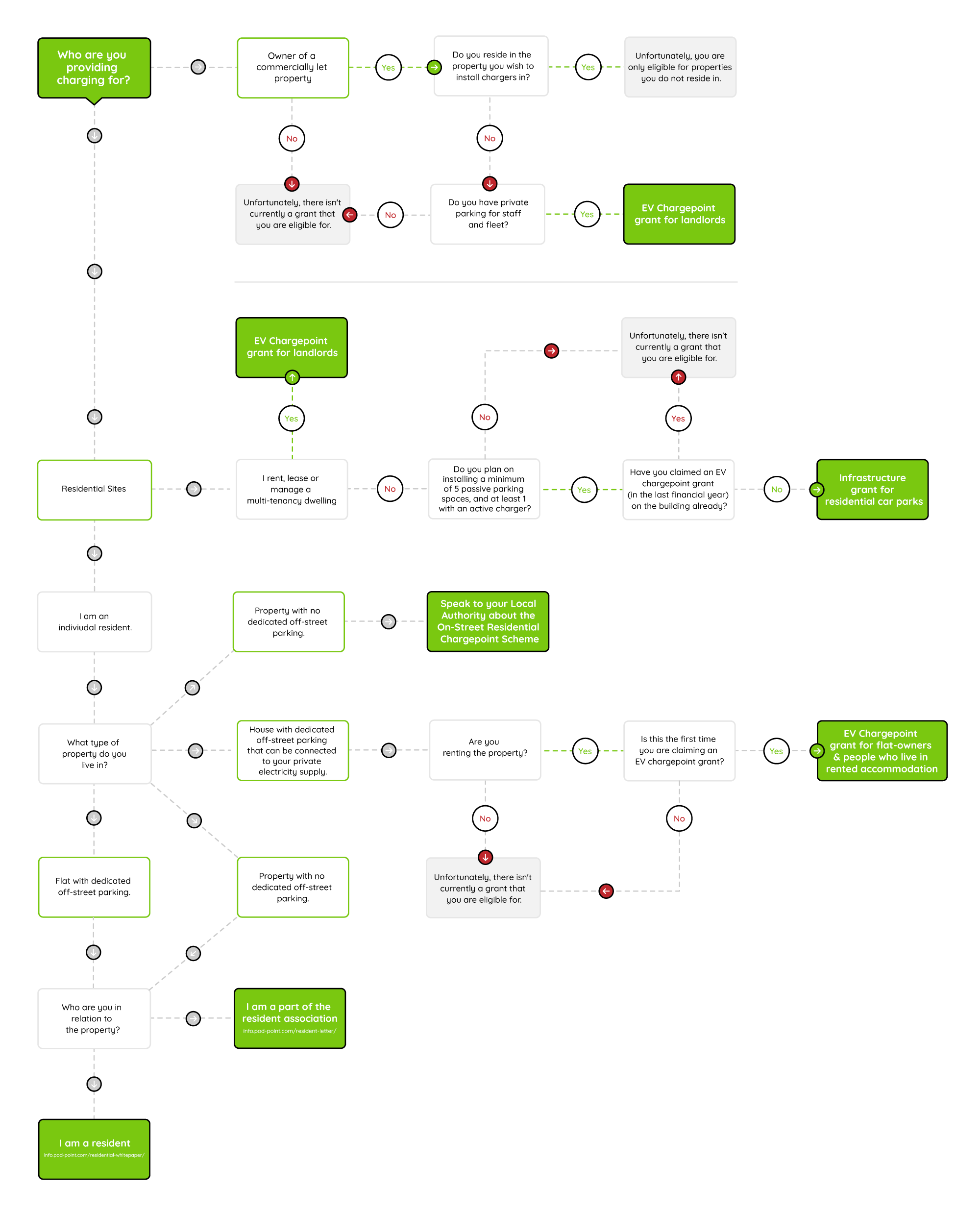
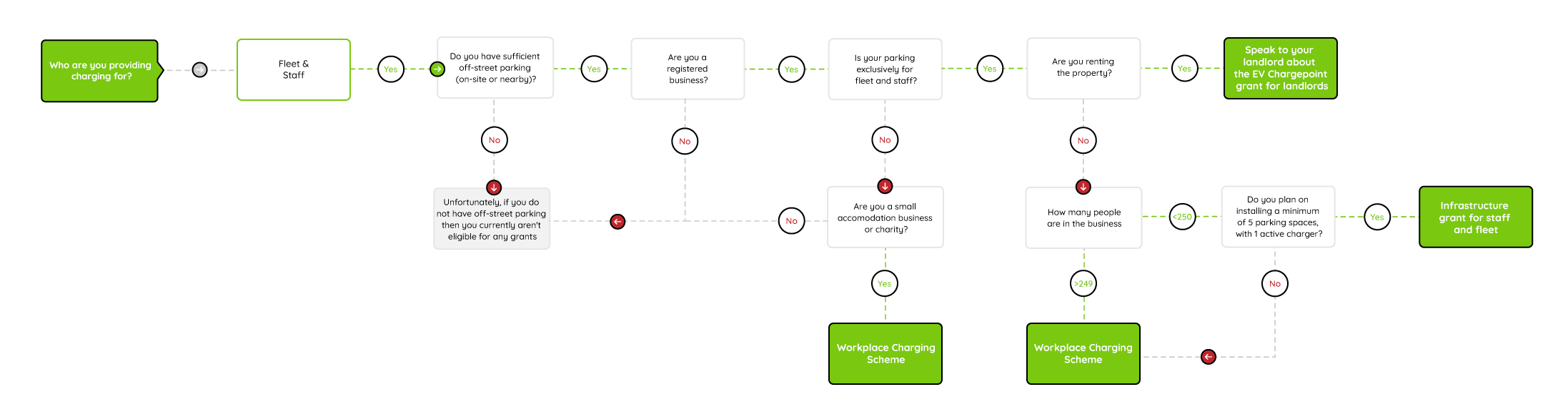
Check the residential and commercial grants flowchart for a visual breakdown of what grant applies to you. If you live in Scotland, you may be able to also apply for the Factored development chargepoint funding.

EV Chargepoint grant for tenants and flat owners

Image
Hit-the-road-happy-I

The Electric Vehicle (EV) Chargepoint grant allows people who live in rental accommodation or own a flat to reduce the cost of buying and installing a home charger by £350.

You can only claim one chargepoint per eligible vehicle and household, and must have dedicated off-street parking.

Additionally, you can’t claim this grant if you have previously claimed any other EV chargepoint grant.

Please note: the OZEV EV chargepoint grant replaced the Electric Vehicle Homecharge Scheme (EVHS) on the 1st of April 2022. There isn’t currently a grant available for those who own a house.


At Pod Point you can get a home EV charger, including standard installation, for as little as £999. Shop now.

#F2F5CF
#000000
#heading2
Infrastructure grant for residential car parks
H2
Image
Solo-3S-Charger-Mobile-Header

This grant applies to anyone renting, leasing or managing a multi-tenancy residential property. Charging infrastructure must be installed to a minimum of 5 parking spaces, with at least one active charger (cabling and chargepoint installed). The rest can have just passive infrastructure (cabling for chargepoint installed now, but not the chargepoint itself), if that is preferable.

You can claim up to £30,000 or 75% of the installation cost and can only claim one grant per building.

  • Up to £500 per passive parking space.

  • Up to £350 per active parking space.

You can claim up to 30 grants per financial year, and the grant can be used at the same site as the landlord grant (see further down for more on this), but not for the same charging points.  


For more information on the grant please get in touch with our team.

#F2F5CF
#000000
#heading3
EV Chargepoint grant for landlords (Residential and Commercial Properties)
H2
Image
Commercial-Charging-2

This grant is available for anyone leasing, renting or managing a commercial or residential property, and could reduce the cost of EV charger installations by 75%, up to £350 per charger.

It’s limited to one application per building, the application cannot have a mix of residential and commercial properties. However, you can apply for subsequent installations at the same property at a later date.

Up to 200 grants are allowed per financial year for residential properties, and 100 grants per financial year for commercial properties.

No tenants can reside in the commercial property, however there are currently no restrictions for residential properties. Importantly, there must be private parking for the fleet and staff.

For more information, or if you wish to claim the EV chargepoint landlord grant get in touch with our team.

#F2F5CF
#000000
#heading4
Factored development chargepoint funding (Scotland)
H2
Image
Workplace-header-V

This grant is available to reduce the cost of buying and installing charging infrastructure at factored developments in Scotland by up to 50%, covering a maximum of £20,000. This can be combined with other OZEV available grants to reduce costs even more.

Only property factors or another organisation managing the shared parking for residential properties can submit a claim. To apply you’ll need to:

You'll then receive a grant letter stating how much of the installation costs the grant will cover. After this, you’ll need to get the charging infrastructure installed and then claim back the money.

Get in touch with our team today to get your quote.

#F2F5CF
#000000
#heading5
Workplace grants
H2

There are two workplace grants, the first for larger businesses, the Workplace Charging Scheme (WCS), and the second for smaller businesses, the infrastructure grant for staff and fleet.

Check the fleet and staff grants flowchart for a visual breakdown of what grant applies to you.

Workplace Charging Scheme

Image
Government-grants-for-electric-vehicles-and-charging-infrastructure

The WCS uses a voucher based system. This scheme is available to businesses, charities, and public authorities, and is capped at £350 per socket, up to 40 sockets per applicant business.

See below for the eligibility criteria:

  • You must have off-street parking and be able to outline a business need for electric vehicle chargepoints.

  • Your chargepoints must be installed by an OZEV-approved installer (like Pod Point).

  • You must apply for a digital voucher and present it to your chosen installer.

Small accommodation businesses and charitable organisations have recently been added to the WCS grant. For these there are no restrictions on who can use the designated off-street parking.

#heading6
Workplace Charging Scheme for state-funded education institutions
H2
Image
Government-grants-for-electric-vehicles-and-charging-infrastructure

Alongside the Workplace Charging Scheme, there is also a grant available for state-funded schools and education institutions to install electric vehicle chargers at their sites. 

This grant offers up to 75% off the cost of purchasing and installing EV chargers, up to a maximum of £2,500 per socket, or 40 sockets across all sites (including any applications made previously via the Workplace Charging Scheme). 

Once the grant has been approved, and your application is successful you will receive a voucher, which is valid for 180 days. The work must be done in this time. 

For more information please visit our Workplace Charging Scheme guide.

#F2F5CF
#000000
#heading7
Infrastructure grant for staff and fleet
H2
Image
Work-Minor

Alongside the Workplace Charging Scheme, there is also a grant available to help small and medium sized businesses (with 249 employees or less) install the supporting infrastructure they need for chargepoints, both now and in the future. Both grants can be used at the same site, but not for the same charging points.

A business can receive up to 5 grants per financial year (only one grant per site).

The grant is capped at £15,000 per building, and will provide up to £500 for passive and an additional £350 (£850 total) for active infrastructure per parking space.

You must install infrastructure for a minimum of 5 private off-street parking spaces, with at least one active chargepoint. The chargepoints must be exclusively for staff or fleet use.

For more information, or if you want to claim the EV infrastructure grant for staff and fleets, get in touch with our team.

#F2F5CF
#000000
#heading8
Grants to reduce the cost of buying an electric vehicle
H2

Plug-in grant to help reduce the cost of vehicles

Image
Government-grants-for-electric-vehicles-and-charging-infrastructure

The OZEV plug-in vehicle grant is designed to promote the uptake of electric vehicles in the UK.

The grant provides a discount on the purchase price of a brand-new and eligible plug-in van or motorcycle (NB: cars are no longer eligible). The electric vehicle subsidy in the UK is applied at the time of purchase and is usually given as a discount on the purchase price of a vehicle.

Grants offered:

  • Motorcycles: up to £500

  • Mopeds: up to £150

  • Small vans: up to £2,500

  • Large vans: up to £5,000

  • Taxis: up to £7,500

For more information check out our Plug-In Grant Guide.

Article read time
9 min read
H6
Summary:
H2

With the push to transition to electric vehicles (EVs) and leave the internal combustion engines (ICE) in the past, the Office for Zero Emission Vehicles (OZEV) is offering a range of grants to help make the switch more cost-effective and easier.

As the number of grants increases, and frequently gets updated, it can get confusing. What grants apply to which situation, and how do you check if you’re eligible?

H2
Off

Member for

9 months 4 weeks
On
Image
Connecting-&-Troubleshooting -Wi-Fi-with-Your-Solo-3S
Categories

A guide to utilising the wi-fi functionality of your Pod Point charger. Giving you information on how to set it up, to improving your connection for even more reliable charging. 

#heading1
Connecting Your Solo 3S to your Wi-Fi
H2

Once you’ve paired your charger, head to the ‘At Home’ tab. Click the 3 dots in the top right corner of the tab.


1. Connect to Wi-Fi


Follow the on-screen instructions within the app to connect your charger to Wi-Fi. You may need your charger’s connection QR code. This is a sticker that is usually applied to your consumer unit (fuse box) after installation.

Note: Pod Point home chargers only support 2.4GHz Wi-Fi frequency.


2. You’re connected!


Once you’re connected to Wi-Fi, the solid blue LED light on the front of the charger may start flashing pink. This indicates that your charger is communicating with Pod Point. You’ll also see the same LED light on the ‘At Home’ tab and the charger status will be set to ‘Connected’.

#heading2
How to Update Your Home Charger's Wi-Fi Connection
H2

If you've recently changed your internet service provider or router, it's important to ensure that your Solo 3S is properly connected to the new network. Follow these steps to update your charger's Wi-Fi connection:


Step 1: Access the Solo 3S App User Guide

Please refer to our Solo 3S App User Guide. This guide will walk you through the entire process, ensuring a seamless transition to your new Wi-Fi network.


Step 2: Open the Pod Point App

Launch the Pod Point app on your mobile device.

Tap 'At Home' to access your charger's settings.


Step 3: Navigate to Wi-Fi Settings

In the top right corner, you'll find three dots. Tap on them to access the options menu.


Step 4: Connect to Wi-Fi

Look for the option labelled 'How to connect to Wi-Fi' and select it. This will initiate the process of connecting your Solo 3S to your current router.


Step 5: Follow On-Screen Instructions

The app will guide you through the necessary steps to establish a new wi-fi connection. Follow the on-screen instructions carefully to ensure a successful setup.

Note: Ensure You Have the Latest App Version

If you don't see the option 'How to connect to Wi-Fi', make sure you have the latest version of the Pod Point app installed on your device.

By following these steps, you'll easily update your Solo 3S Wi-Fi connection to work seamlessly with your new provider or router. If you encounter any difficulties during this process, please don't hesitate to contact our support team for further assistance.

#heading3
How to Improve the Wi-Fi Signal for your Solo 3S Home Charger
H2


1. Adjust Router Placement


  • If the signal strength between your router and the Solo home charger is weak, consider repositioning your router. Here's how you can do it:
  • Locate Central Position: Place your router in a central location, away from obstructions and electronic devices. This ensures the signal is distributed evenly.
  • Elevate the Router: Elevating your router to a higher position can help improve signal coverage. Try placing it on a shelf or wall mount.
  • Avoid Interference: Keep the router away from other electronic devices like microwaves, cordless phones, or Bluetooth devices, as they can interfere with the Wi-Fi signal.
  • Reduce Obstacles: Avoid placing your router behind large objects or in enclosed spaces. This can obstruct the signal.


2. Use a Wi-Fi Range Extender


  • A Wi-Fi range extender is an excellent solution if moving your router isn't feasible. It amplifies your existing Wi-Fi signal, extending its reach. Follow these steps:
  • Select a Suitable Location: Place the range extender midway between your router and the Solo home charger. Ensure it's within the range of your existing Wi-Fi network.
  • Set Up the Range Extender: Follow the manufacturer's instructions to set up the range extender. Typically, this involves connecting it to your existing Wi-Fi network.
  • Optimise Placement: If possible, position the range extender away from obstructions and electronic devices for optimal signal strength.

Note: Please avoid using Powerline adapters when choosing range extenders

These can interfere with the mains and may result in charging issues.


3. Perform a reconnect


Sometimes reconnecting to your Wi-Fi network can help refresh the connection and improve signal strength. To do this, simply follow the steps on page 6 of our Solo 3S App User Guide.


Additional Tips


Update Router Firmware: Ensure your router's firmware is up-to-date. Manufacturers often release updates that improve performance.
Upgrade Router or Modem: Older routers or modems may struggle to deliver strong signals. Consider upgrading to a more powerful model.


How to test your wi-fi strength


To gauge your Wi-Fi signal strength, perform a speed test from a smartphone near the charger. Focus on these key metrics:

  • Ping: Measures response time in milliseconds. Lower is better.
  • Download Speed: Indicates data retrieval speed from the internet. Higher is better.
  • Upload Speed: Reflects data transfer to the internet. Higher is better.

For optimal Scheduled Charging: The Ping should be below 100ms; The download speed should be above 5Mbps.

Remember, it may take some trial and error to find the best solution for your specific setup. Feel free to reach out to our Customer Support Team if you need further assistance, available 24/7.

#F2F5CF
#000000
#heading4
Frequently Asked Questions
H2


1. I can’t find the QR code sticker

The sticker should be applied to your consumer unit (fuse box), if you’re unable to find this please contact the Pod Point Customer Support Team on 020 7247 4114, available 24/7.


2. My QR code won’t scan

If the QR code won’t scan, select ‘Enter manually’ and type in the PSL number and charger’s Wi-Fi password, select ‘Continue’ to proceed.


3. I don’t get the option to scan my barcode

In order to scan the barcode, you need to grant the Pod Point App permission to access your device's camera. You should receive a pop-up requesting this permission. If you want to change this setting later, you can edit it by going to your phone's settings, searching for the Pod Point App, and adjusting the camera permission.


4. I'm unable to connect to the charger's access point

Please ensure that you are within range of the charger, that your details have been entered correctly and that the charger is still in access point mode.

Article read time
5 min read
H6
#F2F5CF
#000000
H6
Off