Member for

8 months 3 weeks
Off
Image
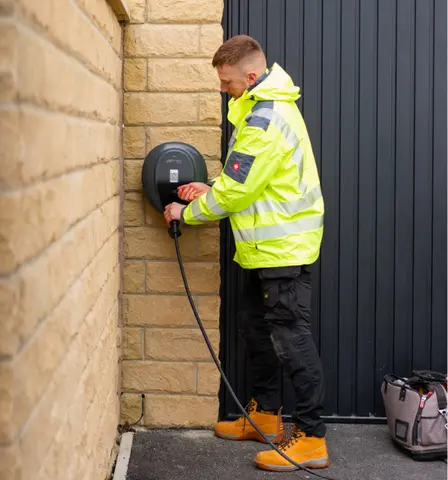
pod point ev charger on wall

A guide covering the two main types of charging subscriptions for homes and public charging, and how to decide whether to commit to one. 

What are EV charging subscriptions?
H2

Like many other kinds of subscriptions, an electric vehicle (EV) charging subscription is designed to make the experience of charging an electric car more affordable, more convenient, and more rewarding. 

There are two kinds of subscriptions available – for homes, and for public charging. 

  1. Public charging subscription 

Some network providers offer discounts and other incentives for using their chargers to paid subscribers. Whilst the details of how they work exactly can vary, the discounts are usually accessed via an associated app or physical card which replaces your debit or credit card. 

By paying a subscription cost each month, members usually get some sort of discount around the 20% mark, which can quickly add up if you frequently charge in public. Other bonuses can include a month’s subscription for free when signing up. 

  1. Home charging subscription 

Home EV charging subscriptions are similarly aimed at reducing costs, but specifically in the context of home charging. These subscriptions tend to be much higher than public charging subscriptions, but in exchange you’ll be able to get a dedicated home charging system at a significantly lower upfront cost. This is usually in the form of a one-off joining fee, which will still be much lower than the actual cost of the charger. 

In exchange for all this, the provider will often handle the smart charging for you, so all you need to do is plug in and let them do the rest. For example, they’ll usually try to get the cheapest available charging rate, and they may even pay you back for it – either in direct cash, or with miles. 

Tip: with Pod Drive, you’ll get an all-inclusive 3-year subscription that comes with a premium home charging system covered by a 48-hour lifetime warranty and up to 7,500 miles paid for, all for just £40 per month and a one-off £99 joining fee. 

#F2F5CF
#000000
Is an EV charging subscription right for you?
H2

A subscription can be a great way of reducing your overall charging costs, but you often need to commit to them for a long period of time. So there are some key factors you need to consider before committing to one: 

  1. How often you charge, and where 

If you never or rarely use public charging, then a subscription might not be worth it and could even cost you money in the long run. Similarly, there’s no need for a home charging subscription if you don’t (or can’t) charge at home. 

But how often you charge also matters, to an extent. If you rely solely on public charging, but very rarely need to charge, then again you might find you don’t need a subscription, whereas if you charge frequently then it could be worth considering. On the other hand, if you only charge at home, a charging subscription is much more likely to be beneficial.  That’s because of... 

  1. How much the subscription costs 

Charging subscription costs do obviously rack up over time, especially for home charging subscriptions which cost a fair bit more than public subscriptions. But even if you don’t need the rewards that come with a home charging subscription, it may pay off in other ways, such as reducing the upfront costs of getting the charger installed and spreading it over a more manageable timeframe. 

Whether a public charging subscription is worth it is purely down to your charging habits. Fortunately, the subscription will tell you what sort of discount/rewards you get for becoming a member, so it should be easy to make the decision. 

  1. What network the subscription covers 

For public charging, it’s worth considering which charging provider(s) your membership covers, and whether these are chargers you have reliable access to. This is because there’s no point getting a subscription for a service that have very few public charging stations in your area. 

On the other hand, some subscriptions cover multiple provider networks, so even if you have a preference for a specific company’s chargers, it may be worth getting a subscription if it gives you access to a wider range of chargers. 

  1. How flexible the contract is 

Home charging subscriptions that let you spread the cost of the charger will likely last for a long time, so you need to be sure you can be in a financial position to keep up with the monthly payments later down the line. 

Public charging contracts, by comparison, tend to be much more flexible, offering cancellations any time during the contract. This means you can trial the subscription for a month or two and easily compare the costs to see if it’s worth it, and then cancel if it’s not. 

So, which is best – a home or public charging subscription?
H2

Ultimately, which one you choose is largely a matter of preference. If you only ever charge in public, and don’t have access to a home charger, then a public subscription could be worth going for. 

However, if you have a home charger and want to charge frequently at home, then a home charging subscription would make the most financial sense. This is doubly the case for anyone that doesn’t have a charger yet but wants one, or is swapping out an older charger for something newer, as it will allow you to make the upgrade with more manageable monthly payments, rather than one lump sum. 

Tip: New Pod Drive customers get our latest charger, the Solo 3S, when they join for just £99. Our all-inclusive subscription makes charging easy, with our easy-to-use app doing all the hard work; just tell us when you need to be charged by, plug in, and we’ll do the rest! 

#F2F5CF
#000000
Article read time
5 min read
H6
Summary
H2

With an electric car charging subscription, EV drivers have the potential to save money, either on the costs of charging their car, installing a dedicated home charger, or both. They usually come with cheaper tariff rates and include other incentives like rewards, such as bonus miles, in exchange for allowing the subscription provider to handle your charging during a long-term commitment lasting multiple years. 

H6
Off

Member for

8 months 3 weeks
Off
Image
mum and daughter using smartphone
Categories

Moving house is a big deal, and it can be done in an eco-friendly way. Here are our top tips on how to move house with less waste.

Declutter responsibly
H2

Every good house move starts with a huge declutter. Spending the time to go through everything you have and get rid of anything you no longer need can keep your new house nice and tidy.

But it’s important to do this in a sustainable way, rather than simply taking everything to the landfill. One of our top eco-friendly moving tips is to simply make sure you recycle whatever you can, however you can, rather than just tipping it.

For example, selling unwanted items second-hand has never been easier or more popular, and there are many great options including eBay, Vinted, and Facebook Marketplace. This can give anything you consider clutter a new lease on life. Alternatively, you can donate some items to places like charity shops, homeless charities, or freecycling groups.

Upcycling is also another great option, which is where you take something old and unneeded – like old clothing or by-products like jars or packaging – and turn it into something new and useful – like a new piece of clothing, a storage container for food, that kind of thing.

Sustainable packaging materials
H2

One of the biggest contributors to a house move’s environmental impact is the packaging you use. Being smart and sustainable with your packaging is a great way to reduce your carbon footprint when moving.

Single-use plastics in particular are especially harmful to the planet because they don’t degrade over time and eventually get into our rivers and oceans. Bubble wrap is another hugely problematic material. But thankfully, there are sustainable alternatives that you should add to your green moving checklist including:

  • Reusable plastic boxes
  • Biodegradable packing peanuts
  • Recycled paper
  • Recyclable cardboard boxes

Another great option to is borrow packaging and storage from friends and family. This can be traditional solutions like unwanted boxes, but could also include suitcases, laundry bags, or even bin bags. Not only does this help the planet, but it also helps keep moving costs down.

Instead of bubble wrap, there are plenty of eco-friendly alternatives like towels, unwanted clothing, or even compostable wraps. Whatever you decide to use, make sure to source and dispose of it in a green way, and only use eco-friendly packaging products.

Choose low-emission transport
H2

Sustainable packing and transport go hand-in-hand for an eco-friendly house move. Just like packaging materials, there are plenty of green transporting options that will let you ditch the petrol or diesel car.

Electric vehicles are king when it comes to sustainable travel, as they’re undoubtedly better for the environment than traditional internal combustion engine (ICE) cars. If you can use an EV, you’ll already be well on your way to a lower carbon footprint. Even a plug-in hybrid (PHEV) is a better alternative, especially for doing multiple short trips if you’re moving locally, as the PHEV’s small battery should still allow for local zero-emissions trips.

Of course, if you don’t have access to an EV, there’s always the option to hire an electric or hybrid moving van. These may be more expensive than diesel-fuelled vans, but the planet will certainly thank you for using one!

If you simply can’t avoid using an ICE car for your house move, you could instead consider offsetting your emissions. There are plenty of excellent ways to offset your house move’s emissions, from initiatives that planet trees to schemes that invest directly into renewable energy sources like wind and solar power.

Image
lightbulb icon

Tip: if you don’t have an electric car and are moving to a home with off-street parking, making the switch to an EV would be a great way to reduce your future driving’s carbon impact and save you money. With our all-inclusive Pod Drive, you’ll get our award-winning Solo 3S home charging system with a lifetime warranty for just £40 per month plus a one-off £99 joining fee.

#F2F5CF
#000000
Clean green – at both ends
H2

The first thing you’ll want to do in your new home, and likely the last thing in your old home, is give it a good clean. But just like packaging products, some cleaning products can be harmful, either to the planet or ourselves.

Another eco-friendly moving tip is to buy non-toxic and biodegradable cleaning products. There are many companies that specialise in these, so you’ll have plenty of choice when it comes to sustainable cleaning chemicals.

A big way you can help the planet is by avoiding single-use wipes, and to be wary of products that claim to be flushable. Many in fact won’t break down once they’re flushed into sewer systems, and instead can clump together into huge “fatbergs” than can cause major blockages.

Similarly, avoid excessive use of paper towels, as their manufacturing relies on intensely damaging deforestation, not to mention huge amounts of water and electricity to produce. There are many alternatives you can use like reusable cloths or hand towels made from recycled materials like drinks cartons.

Make your new home sustainable from day one
H2

Going through the above is a great way to reduce your carbon footprint when moving. But even after having a sustainable house move, the last thing you’ll want to do is undo all your hard work by living unsustainably in your new home. Here are just a handful of ways to make your new house sustainable from day one:

Install an EV charger

Switching to an electric car and getting a dedicated home charger can be a great way to make the next chapter of your life eco-friendly. Not only will it help you save carbon emissions, but it can also help you cut the costs of driving. This is doubly the case if you can get a solar-compatible charger and a solar array system installed to power your EV with zero carbon and potentially zero cost renewable energy.

Image
lightbulb icon

Tip: as well as being solar compatible, our award-winning Solo 3S home charging system comes with a heap of smart functions designed to make your EV charging as easy, convenient, and cost-effective as possible. Find out more about the Solo 3S today!

#F2F5CF
#000000
H6

Switch to a renewable energy supplier

A green home is a happy home, and you could further reduce your carbon footprint and make your house move ultimately more sustainable by switching to an energy supplier that focuses on using or promoting renewable energy. There are plenty of green energy suppliers for UK households to choose from, so be sure to shop around for the best one that suits your needs.

Image
lightbulb icon

Tip: some energy tariffs have been designed with EV drivers in mind. With an EV energy tariff, you’ll typically get a reduced unit rate at specific times of the day – usually overnight, to encourage overnight charging when energy demand is lowest and energy is cheapest and greenest.

#F2F5CF
#000000
H6

Kit your new home out with smart tech

Whether you’re moving into a modern house or an older property, you’ll have a lot of options when it comes to sustainable technology. For example, smart thermostats can be a great way to track your energy usage and get the most out of your energy supply whilst also saving you money and reducing wasted energy.

Switching to LED lighting throughout your home is another eco-friendly way to go green due to their energy efficiency and long lifespan, which will help the planet and your energy bill.

If you have a loft, you could also consider getting an expert to come in and inspect it for possible improvements to the insulation. A well-insulated loft can help keep your home warmer during the colder months by keeping heat indoors, which can help reduce your reliance on radiators.

Easy low-emission house moves
H2

As you can see, your next (or current) house move doesn’t have to do harm to the planet, and there are plenty of eco-friendly alternatives to traditional packaging and transport solutions that will let you move house without producing waste.

Got your own low-emission house moving tips? Be sure to share them with your fellow movers or in community groups on social media and spread the good word about eco-friendly home moving!

Article read time
7 min read
H6
Summary
H2

Whether you meticulously plan every second of your house move, or you just wing it and hope for the best, chances are you’re going to generate a huge amount of waste in the process. From packing materials like boxes and bubble wrap and trips to the landfill to the multiple back-and-forths required to move everything to your new abode, there’s a lot involved with moving house that, unfortunately, isn’t great for the environment.

Fortunately, it’s entirely possible to do a sustainable house move keep your move’s impact on the planet to a minimum. This way, you can start your new home life off in a green and eco-friendly way.

H6
Off

Member for

8 months 3 weeks
Off
Image
pod point installer installing a new pod point ev charger
Categories

This complete guide covers everything you need to know about all the costs associated with installing an EV charger at home.

What’s included in the cost of a home EV charger?
H2

When you buy an electric car charger for your home, there are a few things that factor into the home EV charger installation costs:

The charger

Obviously a key component of the cost of is the charger itself, which can vary across providers and charger types, with smarter and more high-tech chargers usually costing more. For example, our award-winning Pod Point Solo 3S home charging system starts from £999.

Image
lightbulb icon

Tip: alternatively, you can get a Solo 3S charger for just £499 upfront with the rest spread across a fixed 2-year low-cost energy tariff supplied by EDF through the Plug & Power bundle.

#F2F5CF
#000000
H6

Installation

Home chargers need to be installed by professional and qualified electricians to ensure they’re installed correctly and safely. No matter where it’s installed, from the side of your house to the inside of your garage, this understandably comes at a cost to cover labour, materials, and any other costs that you may incur due to the nature of the installation. For example, more complex installations typically cost more as they often require more labour or additional materials like cabling or trunking to complete the installation.

Image
lightbulb icon

Tip: the price of a Solo 3S includes the cost of installation if it meets out standard installation criteria, so when you order yours you won’t be hit by any hidden costs. Order your Solo 3S today.

#F2F5CF
#000000
H6

Power supply panel upgrades

Most homeowners tend to have a 7kW home EV charger installed, which is more than sufficient for most charging needs. These rarely require upgrades to the home’s power supply to be installed, but older properties with older electrical panels may need an upgrade. Similarly, if you’re going for a faster 22kW you’ll likely need to upgrade your power supply as these chargers need three-phase power, where the majority of homes in the UK have single-phase power.

Optional extras

As mentioned, more advanced home chargers will likely incur a higher cost, especially smart chargers that give homeowners great control over their charging. But there could be other extras that may factor into the price like weatherproofing, although reliable home chargers will have been designed to withstand a range of weather types including rain, snow, and heat.

What affects the cost of installing an electric car charger?
H2

Some, but not all, providers include the cost of installation in the purchase price, giving you a relatively predictable measure of how much it should cost you. However, if you’re buying the charger separately and then sourcing an electrician to install it, how much it costs could be determined by many things such as their availability, the time of year, and where you live.

Of course, any installation cost assumes ideal conditions on the day, and anything that happens as a result of less-than-ideal conditions – like the weather, sickness, or unexpected complexity of the installation – could affect the cost.

For example, telling your installer where the charger is being installed relative to your home’s power supply lets them know ahead of the date what to expect in terms of how much trunking or trenching is needed, how long cable runs will be, and so on. This will result in a smooth installation day and avoid any headaches. Anything unexpected which could complicate the installation, like the need for groundworks, that your installer doesn’t know about will almost certainly impact the installation cost.

That’s why it’s important to properly prepare for your home EV charger’s installation in advance, such as:

  • Having the charger be in a sensible place so that it’s not too far from the power supply or your home’s Wi-Fi
  • Choosing a charging speed that your home can comfortably handle
  • Ensuring that the chosen charger type (tethered or untethered) is suitable for your needs, as swapping one out after the fact can be costly
  • Making sure to choose both a reliable charging provider and a reputable electrician to install it
Image
lightbulb icon

Tip: did you know? 90% of our installations are classed as standard, meaning the vast majority of our customers experience no extra costs during the installation. In the rare case that your installation is more complex, we’ll talk through these with you prior to your installation date and discuss how this might impact your costs.

#F2F5CF
#000000
How to reduce the costs of buying and installing a home EV charger
H2

When it comes to government grants, there are a number of incentives and rebates available to help homeowners install EV chargers for less, or that generally reduce the costs of EV ownership in general. The main grant currently available is the OZEV EV Chargepoint grant, provided by the UK Government’s Office for Zero Emission Vehicles (OZEV).

This provides up to £350 off the cost of buying and installing a home EV charger to people who lived in rented accommodation or who own a flat with a private parking space. It replaced the old Electric Vehicle Homecharge Scheme (EVHS) in April 2024.

Beyond this, there are a number of other grants aimed at reducing the cost of EVs, rather than charging, such as:

The Electric Car Grant

This is the newest grant introduced by the Department for Transport (DfT) in July 2025, which will give drivers discounts of up to £3750 on new electric cars with list prices below £37,000. Car manufacturers must submit their cars for eligibility, with the reduction being passed straight onto UK drivers.

The Motability Scheme for Electric Cars

This grant allows disabled drivers to exchange their mobility allowance for a new car, scooter, or wheelchair, with several plug-in vehicles (PHEVs) available under the scheme. This could save disabled drivers up to £1,000 a year in running costs.

The Plug-in Grant

An older grant that no longer runs, the Plug-in Grant offered a range of discounts on eligible motorcycles, mopeds, and vans. It ended in June 2022.

DIY versus professionals – who can install a home EV charger?
H2

In the UK, home EV chargers can only be installed by qualified and registered electricians. In order to qualify, they must hold certain qualifications and be registered with a Competent Person Scheme. This is to ensure the charger is installed safely and complies with various codes and regulations. 

Even if you consider yourself competent with electrical devices, you can’t install an EV charger yourself, and it’s always better to not take the risk and get someone qualified to install it, even if it comes at an extra cost. 

How to find a qualified installer

If you’re looking to claim a government grant, you’ll need to make sure that they’re an authorised EV charger installer. There are a few websites and tools you can use to find local electricians like Checkatrade and Airtasker. Alternatively, you can check out the government website to find authorised installers.

Besides simply asking them whether they’re qualified, the right electrician should also be able to demonstrate that they have specific qualifications that let them install EV chargers. This includes completing a Level 3 Award in the Design and Installation of Electric Vehicle Charging Equipment or a Level 3 Award in the Installation and Commissioning of Electric Vehicle Charging Equipment. This is on top of the other qualifications electricians need including 18th Edition, BS 7671, and so on.

Home electric car charging – worth the cost

Even accounting for the costs of buying and installing an EV charger, it’s worth considering for anyone who drivers an electric vehicle. Charging at home is the ultimate convenience, giving you the ability to charge overnight and wake up to a fully charged EV every day, so get your quote or consultation today!

Pod is a leading home charging provider, offering a Which? accredited standard installation included, 24/7 customer support, a comprehensive 5-year warranty, and more. Find out more about our home EV charger installation service.

Article read time
7 min read
H6
Summary
H2

If you’re able to get a dedicated home EV charging system installed, it’s well worth considering. Charging at home is often the cheapest way to charge an electric car, with a typical home charge costing just £13 compared to an average of £26 when charging in public, so having one installed could save you a lot of money.

Electric vehicle home chargers aren’t cheap pieces of kit, but what you get in return is a safe and convenient means of charging your EV every day. And, as you'll see, there are ways of making it cheaper to buy and install a home EV charger via a range of EV charger installation incentives or rebates.

H6
H6
Off

Member for

8 months 3 weeks
Off
Image
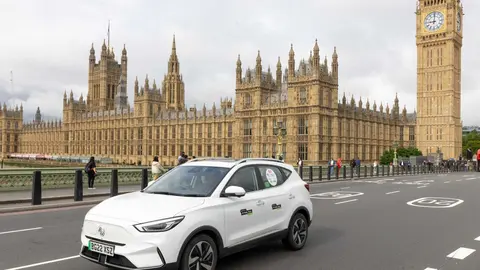
22024-ev-rally-london-brighton-2

This is the ultimate guide to the London Congestion Charge Zone, including whether EVs are exempt and how long they are exempt for.

What is the Congestion Charge Zone?
H2

The London Congestion Charge Zone (CCZ) was first introduced in 2003. Covering Central London, cars and other vehicles are charged a fee being driven inside it between 7am to 6pm Monday to Friday and 12pm to 6pm on the weekend. The current charge for entering the zone is £15, which covers the whole day. However, it’s expected that from January 2026 the charge will increase to £18.

Vehicles are recognised by automatic number-plate recognition (ANPR), with the charge managed by Transport for London (TfL). The zone itself has three main aims:

  1. To reduce traffic in Central London
  2. To reduce pollution in the city centre
  3. Raise funds for London’s transport system
When and how does the charge get applied?
H2

There are a few common scenarios where you might have to pay the charge. The Congestion Charge Zone covers Central London, so if you’re visiting London for a day, whether in your own car or a leased vehicle, you’re likely to enter the zone at some point, although there are plenty of routes you can take to avoid it.

The charge applies between the following times:

  • Monday to Friday: 7am to 6pm
  • Saturday and Sunday: 12pm to 6pm
  • All bank holidays

The only days of the year the charge isn’t applied are between Christmas Day and New Year’s Day.

Once incurred, the charge must be paid directly to TfL within three days. Alternatively, drivers who frequently pass through the zone can set up Auto Pay, which automatically pays the charge on their behalf at a discounted rate.

Do EVs pay the congestion charge?
H2

The simple answer is: currently, no, there is a congestion charge discount for EVs. Any vehicle with emissions below 75g/km and a zero-emissions range of 20 miles, which includes all EVs, is exempt from paying the charge.

This doesn’t apply to hybrid cars which, despite having batteries that do allow for limited zero-emissions travel, have had to pay the charge since October 2021. This means that, currently, only fully battery-electric vehicles (BEVs) and hydrogen fuel cars don’t need to pay the congestion charge.

However, it isn’t simply a case of not needing to pay. EV drivers must still register their vehicles with TfL and notify them that the car meets the above conditions. In return, they are given the Cleaner Vehicle Discount, which amounts to a 100% discount on the charge.

From 25th December 2025, the Cleaner Vehicle Discount, and thus London Congestion Charge exemption, will end, and electric vehicles will have to start paying the daily charge, currently priced at £15, for driving in Central London.

Image
lightbulb icon

Tip: non-UK registered electric cars with international number plates can’t get the discount, as the eligibility requirements are that the car must be registered in the UK or the European Economic Area (EEA). However, they may still be eligible for other London transport schemes.

#F2F5CF
#000000
How to register your EV for the Cleaner Vehicle Discount
H2

To apply for the discount:

  1. Go online to the TfL website and create a London Road User Charging account
  2. Log in to your account and follow the instructions
  3. Upload a photocopy or image of your car's V5C logbook issued by the DVLA
  4. Pay a £10 registration fee, which needs to be renewed each year
Penalties and mistakes to avoid
H2

The most common mistakes drivers make with the congestion zone are:

  • Not registering their electric car with TfL and assuming their vehicle is simply exempt from paying. If you fail to register your EV, you will need to pay the charge
  • Incorrectly thinking that their plug-in hybrid vehicle (PHEV) is exempt. PHEVs were exempt until October 2021, so all PHEV owners must pay the charge even if their car meets the other conditions for the discount
  • Driving through without any kind of exemption also means you’ll have to pay the charge, regardless of whether your vehicle meets the requirements for an exemption
  • Failing to pay within the time limit. Drivers have until midnight on the third day after travelling in the zone to pay. If you don’t, you’ll be issued a Penalty Charge Notice (PCN) of £180. If paid within 14 days, this drops to £90, but if it isn’t paid within 28 days a Charge Certificate is issued and it increases to £270 - and there are further penalties beyond this
What’s the difference between the congestion charge zone and ULEZ?
H2

It’s common for drivers to confuse the congestion charge zone with the Ultra Low Emission Zone (ULEZ), but they are in fact two different things. Electric cars are exempt from both under the Cleaner Vehicle Discount, but there are some key differences between them, most notably the area they cover and their hours of operation:

  Congestion Charge Zone (CCZ) Ultra Low Emission Zone (ULEZ)
Area covered Central London, including the City of London and the West End All London boroughs and the City of London
Hours of operation
  • Monday to Friday: 7am to 6pm
  • Saturday and Sunday: 12pm to 6pm
  • All bank holidays
  • No charge between Christmas Day and New Year’s Eve
24 hours a day, 7 days a week, every day of the year except Christmas Day
Charge cost per day £15 £12.50
EV exemption status Fully exempt until 25th December 2025 Fully exempt
How EVs claim the exemption Register through TfL No registration needed
Are PHEVs exempt? No Yes if they meet Euro 6 ( for diesel) or Euro 4 (for petrol) standards, otherwise no

It’s important to note that as they are different charges, drivers could potentially have to pay both charges for driving a non-exempt vehicle around London, totalling £27.50 for a full day.

Are EVs still worth it when they stop being exempt from the congestion charge?
H2

Exemption from both the congestion charge zone and ULEZ are key benefits to driving an electric car in London. Whilst losing their exemption status for the congestion charge will no doubt disappoint many EV drivers, it’s important to remember that it’s relatively easy to avoid the zone, and there are many other myriad benefits to going electric.

For example, even though you’ll have to pay the charge, electric cars are still better for the environment, and every zero-emission mile you drive still goes a long way towards helping the planet combat climate change.

It’s also worth staying registered with TfL to keep on top of any updates or future exemptions that may come into effect. Whilst there are no indications that exemption, either full or partial, will return from 2026 or beyond, EV drivers are still exempt from ULEZ for the foreseeable future, and there could be a new tiered system introduced with discounts. Either way, electric cars are still completely worth it, and you shouldn’t ditch your EV when the exemption ends.

Article read time
5 min read
H6
Summary
H2

Electric vehicles are currently exempt from paying the congestion charge until 25th December 2025, after which they will also need to pay the charge, which is currently set at £15 for the entire day.

H6
Off

Member for

9 months 4 weeks
On
Image
DJI_0431copy_2024-07-22-16132

Should you charge your car using a regular 3-pin plug or a dedicated home charger? We examine the key differences in this guide.

#heading1
Charging speeds: Home charger vs 3-pin plug
H2

Charging times will vary between all electric vehicles, however a typical 7.4kW home car charger will charge an electric vehicle up to 3 times faster than a conventional 3-pin plug. Take a look at the following table to see how quickly you can charge with a home charger.

Vehicle Charging Time*
3-Pin Socket 7.4kW Home Charger
Hyundai IONIQ 5  25 h 9 h
Tesla Model 3 36 h 12 h
Jaguar I-PACE 39 h 13 h
BMW i7 46 h 15 h


* Based on Pod Point estimates, charging rates can differ based on the ambient temperature, the state of the battery (e.g. empty or half full) and variation in charging rate.

Image
Smart Charge

Tip: For EVs with larger batteries (e.g. BMW i7 has a 101.7kWh battery), it is not feasible to fully charge overnight from a 3-pin plug. If you wanted to charge a car with a larger battery (to full) overnight, you would need at least a 7.4kW home charger. A 7.4kW charger offers more flexibility for all EVs vs 3-pin plugs.

#F2F5CF
#000000
#heading2
Is charging your car from a domestic socket safe?
H2

While 3-pin plug sockets can charge EVs, they are not designed to support the kinds of loads for the time periods that EVs require. These loads can cause heating that tests the quality of historic domestic wiring, as well as the socket. Our Pod Point Experts have seen many issues of overheating when attending to subsequently install homechargers.

Conversely, dedicated chargepoints are installed on new electrical circuits and are specifically designed for the purpose of handling car charging loads. Furthermore, chargepoints should meet a plethora of evolving regulatory standards to ensure they are safe from all feasible electrical risks. This makes dedicated homechargers far safer choices.

#heading3
What’s the easiest way to charge at home?
H2

Dedicated homechargers will be installed in a convenient spot, making it easy to plug in, where existing 3-Pin plug sockets often mean cables threaded through windows, doors and cat flaps.

Tethered homechargers are perhaps the pinnacle of ease of use, as the cable sits in its holster, needing only to be plugged in at one end.

Image
Smart Charge

Tip: Most domestic properties have single phase power which means the maximum charging rate for electric car home charging is 7.4kW. While faster chargepoints are available (such as a 22kW unit), these are usually found in commercial properties where there is a three phase power supply.

#F2F5CF
#000000
#heading4
H6
Image
Do-You-Need-a-Dedicated-Home-Charger?

Solo charger lifestyle image

#heading5
The smart future of charging an electric car at home
H2

As more people utilise electric car charging at home, chargepoints will likely need to solve new energy related challenges that will arise for drivers and networks. Home chargers will soon have to contain functionality that allows them to do exactly that, where 3-pin plugs do not.

Image
Smart Charge

Tip: Pod Point's Solo home charger also have the capability to receive over-the-air software updates that mean they can obtain new features, receive software fixes to EV related bugs and allow our support team to perform remote diagnostics.

#F2F5CF
#000000
#heading6
Can you take an EV Charger when you move?
H2

Yes, you can take your charger with you when you move. However having a qualified electrician remove the charger and install it on your new property does carry some cost. We would advise customers to check both moving a charger or having a new one installed to determine which is more cost effective. There will also be some cabling left at your old property that the new owners will be able to hook up to a charger of their own.

Article read time
4 min read
H6
Summary
H2

EV drivers should use dedicated chargepoints instead of 3-pin plug sockets for regular charging, as they are:

  • Quicker
  • Safer
  • Easier to use
  • Smarter
H6
Off

Member for

9 months 4 weeks
On
Image
Solo-3S-Electric-Vehicle-Charger-V2

The ultimate guide on the current electric vehicle grants available, what they offer, and the eligibility criteria.

#heading1
Grants for Residential and Commercial Properties
H2

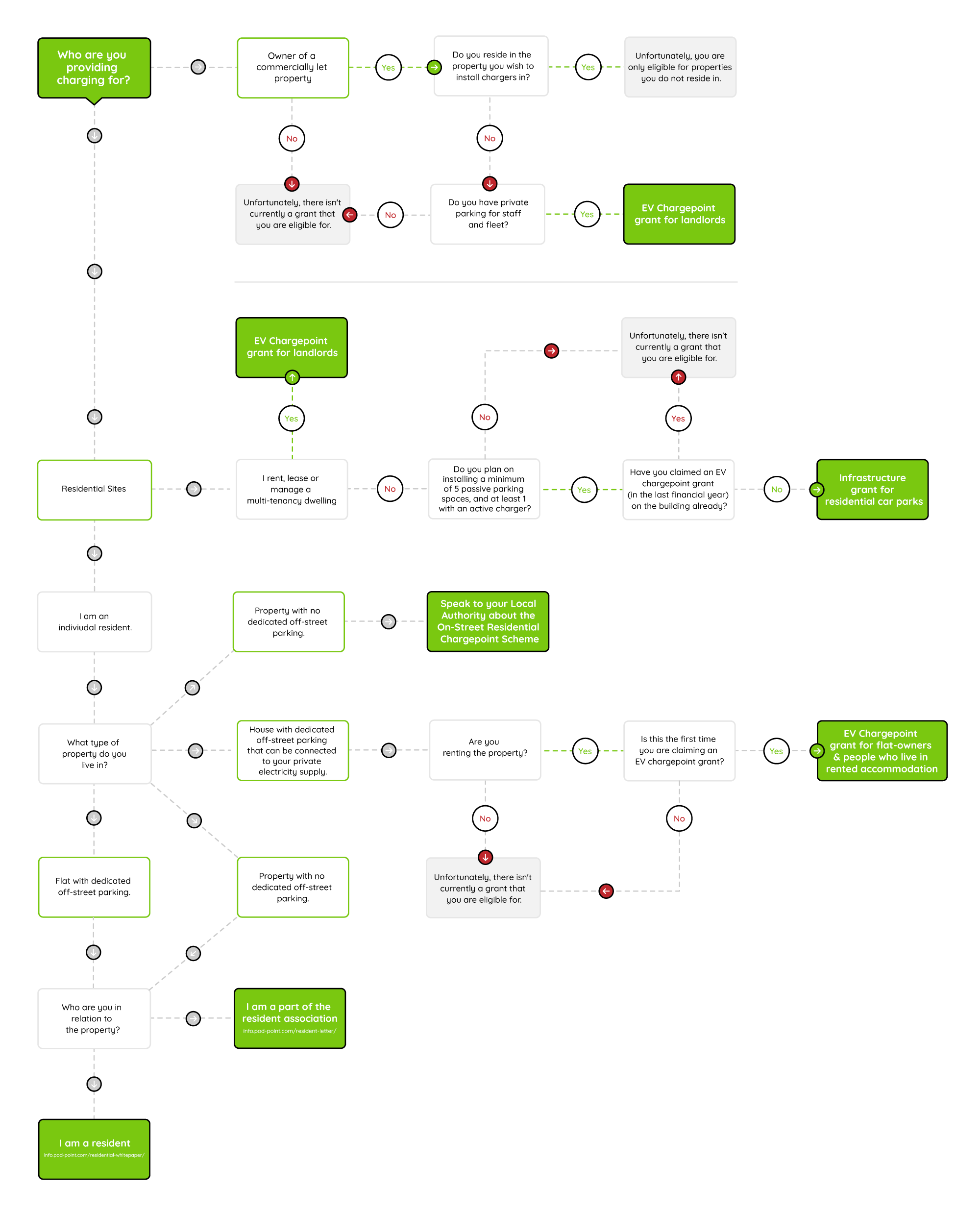
Here is a quick overview of the current grants available for residential and commercial properties, for those who live in rented properties and flats, or own commercial or residential property.

Check the residential and commercial grants flowchart for a visual breakdown of what grant applies to you. If you live in Scotland, you may be able to also apply for the Factored development chargepoint funding.

EV Chargepoint grant for tenants and flat owners

Image
Hit-the-road-happy-I

The Electric Vehicle (EV) Chargepoint grant allows people who live in rental accommodation or own a flat to reduce the cost of buying and installing a home charger by £350.

You can only claim one chargepoint per eligible vehicle and household, and must have dedicated off-street parking.

Additionally, you can’t claim this grant if you have previously claimed any other EV chargepoint grant.

Please note: the OZEV EV chargepoint grant replaced the Electric Vehicle Homecharge Scheme (EVHS) on the 1st of April 2022. There isn’t currently a grant available for those who own a house.


At Pod Point you can get a home EV charger, including standard installation, for as little as £999. Shop now.

#F2F5CF
#000000
#heading2
Infrastructure grant for residential car parks
H2
Image
Solo-3S-Charger-Mobile-Header

This grant applies to anyone renting, leasing or managing a multi-tenancy residential property. Charging infrastructure must be installed to a minimum of 5 parking spaces, with at least one active charger (cabling and chargepoint installed). The rest can have just passive infrastructure (cabling for chargepoint installed now, but not the chargepoint itself), if that is preferable.

You can claim up to £30,000 or 75% of the installation cost and can only claim one grant per building.

  • Up to £500 per passive parking space.

  • Up to £350 per active parking space.

You can claim up to 30 grants per financial year, and the grant can be used at the same site as the landlord grant (see further down for more on this), but not for the same charging points.  


For more information on the grant please get in touch with our team.

#F2F5CF
#000000
#heading3
EV Chargepoint grant for landlords (Residential and Commercial Properties)
H2
Image
Commercial-Charging-2

This grant is available for anyone leasing, renting or managing a commercial or residential property, and could reduce the cost of EV charger installations by 75%, up to £350 per charger.

It’s limited to one application per building, the application cannot have a mix of residential and commercial properties. However, you can apply for subsequent installations at the same property at a later date.

Up to 200 grants are allowed per financial year for residential properties, and 100 grants per financial year for commercial properties.

No tenants can reside in the commercial property, however there are currently no restrictions for residential properties. Importantly, there must be private parking for the fleet and staff.

For more information, or if you wish to claim the EV chargepoint landlord grant get in touch with our team.

#F2F5CF
#000000
#heading4
Factored development chargepoint funding (Scotland)
H2
Image
Workplace-header-V

This grant is available to reduce the cost of buying and installing charging infrastructure at factored developments in Scotland by up to 50%, covering a maximum of £20,000. This can be combined with other OZEV available grants to reduce costs even more.

Only property factors or another organisation managing the shared parking for residential properties can submit a claim. To apply you’ll need to:

You'll then receive a grant letter stating how much of the installation costs the grant will cover. After this, you’ll need to get the charging infrastructure installed and then claim back the money.

Get in touch with our team today to get your quote.

#F2F5CF
#000000
#heading5
Workplace grants
H2

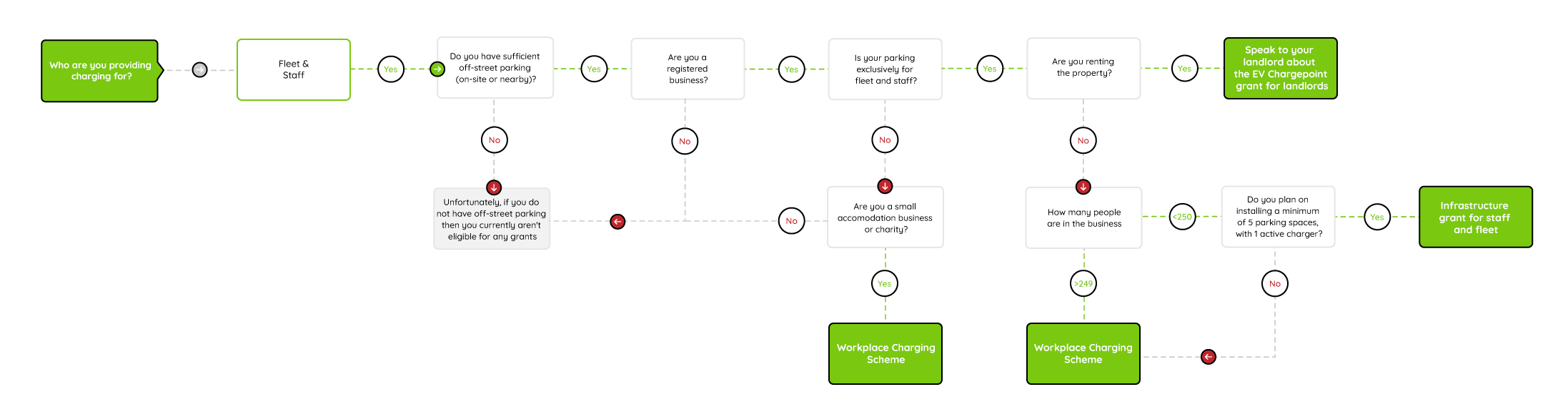
There are two workplace grants, the first for larger businesses, the Workplace Charging Scheme (WCS), and the second for smaller businesses, the infrastructure grant for staff and fleet.

Check the fleet and staff grants flowchart for a visual breakdown of what grant applies to you.

Workplace Charging Scheme

Image
Government-grants-for-electric-vehicles-and-charging-infrastructure

The WCS uses a voucher based system. This scheme is available to businesses, charities, and public authorities, and is capped at £350 per socket, up to 40 sockets per applicant business.

See below for the eligibility criteria:

  • You must have off-street parking and be able to outline a business need for electric vehicle chargepoints.

  • Your chargepoints must be installed by an OZEV-approved installer (like Pod Point).

  • You must apply for a digital voucher and present it to your chosen installer.

Small accommodation businesses and charitable organisations have recently been added to the WCS grant. For these there are no restrictions on who can use the designated off-street parking.

#heading6
Workplace Charging Scheme for state-funded education institutions
H2
Image
Government-grants-for-electric-vehicles-and-charging-infrastructure

Alongside the Workplace Charging Scheme, there is also a grant available for state-funded schools and education institutions to install electric vehicle chargers at their sites. 

This grant offers up to 75% off the cost of purchasing and installing EV chargers, up to a maximum of £2,500 per socket, or 40 sockets across all sites (including any applications made previously via the Workplace Charging Scheme). 

Once the grant has been approved, and your application is successful you will receive a voucher, which is valid for 180 days. The work must be done in this time. 

For more information please visit our Workplace Charging Scheme guide.

#F2F5CF
#000000
#heading7
Infrastructure grant for staff and fleet
H2
Image
Work-Minor

Alongside the Workplace Charging Scheme, there is also a grant available to help small and medium sized businesses (with 249 employees or less) install the supporting infrastructure they need for chargepoints, both now and in the future. Both grants can be used at the same site, but not for the same charging points.

A business can receive up to 5 grants per financial year (only one grant per site).

The grant is capped at £15,000 per building, and will provide up to £500 for passive and an additional £350 (£850 total) for active infrastructure per parking space.

You must install infrastructure for a minimum of 5 private off-street parking spaces, with at least one active chargepoint. The chargepoints must be exclusively for staff or fleet use.

For more information, or if you want to claim the EV infrastructure grant for staff and fleets, get in touch with our team.

#F2F5CF
#000000
#heading8
Grants to reduce the cost of buying an electric vehicle
H2

Plug-in grant to help reduce the cost of vehicles

Image
Government-grants-for-electric-vehicles-and-charging-infrastructure

The OZEV plug-in vehicle grant is designed to promote the uptake of electric vehicles in the UK.

The grant provides a discount on the purchase price of a brand-new and eligible plug-in van or motorcycle (NB: cars are no longer eligible). The electric vehicle subsidy in the UK is applied at the time of purchase and is usually given as a discount on the purchase price of a vehicle.

Grants offered:

  • Motorcycles: up to £500

  • Mopeds: up to £150

  • Small vans: up to £2,500

  • Large vans: up to £5,000

  • Taxis: up to £7,500

For more information check out our Plug-In Grant Guide.

Article read time
9 min read
H6
Summary:
H2

With the push to transition to electric vehicles (EVs) and leave the internal combustion engines (ICE) in the past, the Office for Zero Emission Vehicles (OZEV) is offering a range of grants to help make the switch more cost-effective and easier.

As the number of grants increases, and frequently gets updated, it can get confusing. What grants apply to which situation, and how do you check if you’re eligible?

H2
Off

Member for

9 months 4 weeks
On
Image
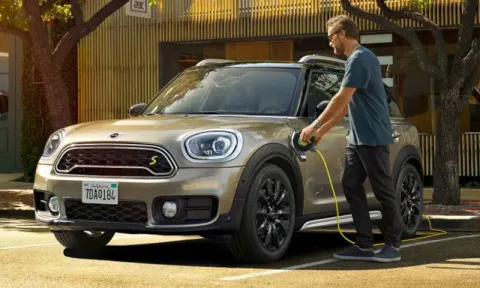
Mini-Lifestyle-Image
Categories

A guide to electric car leasing comparing the pros and cons to other financing options to help you decide what is best for you.

#heading1
Benefits of leasing an EV
H2

Leasing typically works out cheaper than buying

Electric cars tend to have a higher list price than similar petrol or diesel cars. When you lease an EV, you're essentially renting it for a fixed period, often 2–3 years. You pay an initial deposit and set monthly payments as part of your leasing agreement. This typically works out cheaper than buying a new EV using other financing options.

Depreciation is not a concern

Cars depreciate in value over time, and in the first few years, your car loses most of its value. Numbers show that a petrol or diesel car that was bought new is worth up to 60% less three years after leaving the dealership. So an ICE car that was brand new three years ago could be worth less than half of its original purchase price.

In contrast, EVs depreciate in value at a slower rate than petrol or diesel cars. By year three, an electric car only loses 40 to 49% of its value.

When you lease, the responsibility for the car’s resale value does not fall on your shoulders. This gives you the flexibility to upgrade your electric car once your lease ends without having to worry about the resale value.

Choose from a wide range of EVs

Leasing offers a broad range of EVs to choose and test, including the latest models with advanced features and technology. When your circumstances change, it’s easy to also change the type of car you drive at the end of your lease.

Maybe you want to size up from a hatchback to an SUV to fit a growing family, or pick a model with more range to take you further on your journeys. Leasing lets you try the car out first without having to commit to the full cost of buying.

Avoid an ageing and degrading battery

An EV battery starts to degrade as soon as it’s manufactured, but your use of the car impacts the rate at which battery capacity reduces. If you drive a lot, regularly use rapid chargers, and heavily accelerate and brake, the battery will wear out quicker.

While most EV batteries are covered by a 7- or 8-year warranty, repairs or replacements typically only happen once the battery’s initial capacity drops below 70%. When leasing, you don’t have to worry about an ageing battery and likely won’t feel the effects of degradation, as you get to change your car every few years.

Option to add a maintenance package

As part of a lease agreement, you’re generally required to service your EV every 12 months. You may have the option to add a maintenance package to your lease which commonly includes servicing, MOTs and breakdown recovery.

A maintenance package helps you spread the cost of routine servicing and maintenance over the period of your lease, meaning you won’t have to save for these expenses.

Enjoy the latest EV technology

Leasing allows you to experience the latest EV technology, because innovation in this space moves at a rapid pace. As electric car batteries evolve constantly, you’ll be able to benefit from an ever-increasing range when you change your leased EV every few years.

From battery type to infotainment equipment, so much can change in just a few years and leasing gives you the option to make the most of it.

Reducing environmental impact

If you switch from an internal combustion engine (ICE) car to an electric car, you’re eliminating the CO2 emissions that come from your tailpipe, improving air quality in your immediate area. Just one journey in an EV means one less journey in a petrol or diesel car.

It benefits you and your family’s health, and brings everyone closer to phasing out petrol and diesel vehicles, as new sales will be banned in the UK from 2035.

#heading2
Drawbacks of leasing an EV
H2

Set mileage limit

Lease agreements typically have mileage limits, and exceeding them can result in additional costs. You’ll be charged a set fee for every mile over the limit, typically around 3 to 30 pence per mile.

Mileage penalty charges ultimately lead you to pay more than you would have if your mileage limit was set correctly in the first place. To avoid excessive charges, carefully consider your average weekly mileage and any longer road journeys you’re expecting during the lease to set your limit accordingly.

Charges for excessive damage

During a lease, the dealership expects a normal amount of wear and tear to happen, but any damage beyond normal usage can lead to additional charges when the lease is up. This applies to electric cars as well as petrol and diesel vehicles.

Your leasing partner will use the British Vehicle Rental and Leasing Association (BVRLA) Fair Wear & Tear Guide to fairly assess the returned car. Damage outside of wear and tear will result in end of contract charges.

Additional battery leasing

You may need to pay a separate fee to rent your EV's battery, also known as battery leasing. It’s an extra cost to consider, but this option is becoming increasingly rare. Renault currently offers full battery purchase and battery leasing for its battery electric car Zoe.

#heading3
Are other finance options available?
H2

Hire purchase (HP)

With HP, you make fixed monthly payments for 1 to 5 years until you've paid off the entire cost of the car, after which you own it outright. A key benefit of a hire purchase is the unlimited mileage you get as a result of full ownership.

Lenders charge interest on HPs, so you’ll pay more throughout the contract than if you had bought the car outright. As with any financing option, if you miss a payment, the car can be taken away.

It’s worth taking note that if you purchase an EV using HP, the car’s technology and battery may not be up-to-date by the time you’ve fully paid it off. If you want to upgrade, you’ll have to take that into account that the resale value will be reduced.

Personal Contract Purchase (PCP)

PCP combines leasing and buying. You make lower monthly payments and have the option to purchase the car at the end of the agreement or simply return it.

The deposit you pay at the start of the PCP and monthly payments equal the car’s estimated depreciation over the financing term. Similar to a lease, you’ll have the benefit of switching to a different EV at the end of the PCP term if you want the newest technology or more space.

Alternatively, if you’re happy with the car and want full ownership, you pay the remaining sum and the car is yours.

Salary sacrifice

Salary sacrifice allows you to lease an EV through your employer's scheme. The monthly leasing fee is deducted from your gross pay, resulting in Income Tax and National Insurance savings.

Salary sacrifice schemes offered through employers typically include a maintenance package, so your servicing, MOTs and breakdown cover are included in the price. Thanks to the tax benefit, this option is cheaper than leasing the same car directly from a dealership.

When you end your employment, you will likely have to end your lease through the salary sacrifice scheme, unless your new employer is willing to take on the lease.

Learn more about salary sacrifice in our guide.

#heading4
Is leasing cheaper than buying an EV?
H2

The answer to this question is not a simple yes or no. Whether leasing or buying an EV is cheaper depends on your individual circumstances, driving habits, and financial goals.

Leasing offers lower upfront costs than buying and can come with lower monthly payments depending on the make and model whilst letting you test the waters with an EV first, making it a more affordable choice for some.

However, if you plan to keep the vehicle for an extended period of time and are concerned about mileage limits, buying might be a more cost-effective option in the long run.

Which option is better?

In the end, whether leasing or buying an electric car is better for you depends on your personal situation and priorities. Consider factors like your budget, how long you plan to keep the car, your driving habits, and your desire for the latest technology.

By weighing these factors up carefully, you can make the choice that suits your needs and contributes to a more sustainable future.

Article read time
9 min read
H6
Summary
H2

Electric car leasing is most suited to drivers who want to change their cars every few years to enjoy the latest technology and don’t have a very high mileage, or those who first want to test the waters with an EV without committing to buying. If full ownership is important to you and you’re likely to drive a lot of miles every year, buying may be better suited to your personal circumstances.

In the UK, more than 90% of drivers purchase their new cars using finance. Leasing is one of these financing options, and the number of cars leased has been on the rise in recent years.

With the push toward a greener and more sustainable future, you may be considering leasing an electric car instead of buying, but is it worth it? Leasing is attractive to some, because it gives you the option to upgrade to a newer car every few years, set fixed monthly payments and avoid dealing with depreciation.

Here are the main financing options available to drivers:

  • Leasing

  • Personal Contract Purchase (PCP)

  • Hire Purchase (HP)

  • Salary Sacrifice

  • Buying outright

In this guide, we’ll compare the benefits and drawbacks of leasing an electric car vs buying a new one, so you can understand which is better for you.

H6
Off

Member for

9 months 4 weeks
On
Image
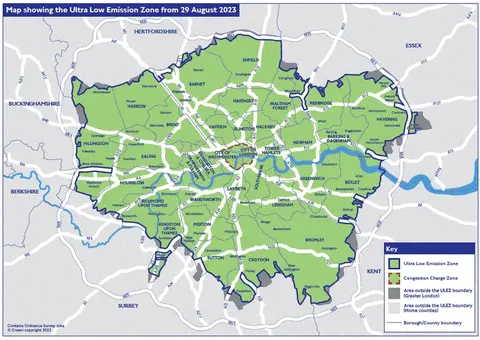
ulezdetailedmapgif

With London’s Ultra Low Emission Zone (ULEZ) now expanded, this guide explains how the zone works and the fees you’ll need to pay.

#heading1
What is an Ultra Low Emission Zone (ULEZ)?
H2

Ultra Low Emission Zones (ULEZ) are a concept to tackle urban air quality challenges in the United Kingdom.


Purpose

Vehicle transport is the primary source of air pollutants such as oxides of Nitrogen (NOx), Sulphur Dioxide (SO2), Carbon Monoxide (CO) and exhaust particulate matter.

A ULEZ is predominantly about improving the air quality within the zone by discouraging those vehicles that produce more harmful emissions through an additional financial charge.

These zones will typically be established in areas of high population density, high traffic congestion and resultant poor air quality.


Enforcement

Authorities will typically use ANPR cameras to establish which vehicles have entered the zone and are therefore required to pay the ULEZ charge.

That charge will typically have a daily fee attached, while regular users can set up automatic payments.

There are penalty fees for those who fail to pay the charge correctly.


Vehicles Affected

Initially, only the cleanest petrol or diesel cars will make the cut, though it is likely that rules will be tightened over time to push motorists towards zero emission options.

Image
Smart Charge

Tip: While some charges relate to discouraging car use in an urban centre to ease congestion, ULEZs aim to improve air quality. And as such, they are likely to remain in force 24/7, rather than just during traditionally busy periods.

#F2F5CF
#000000
#heading2
The London ULEZ
H2

The first ULEZ came into force on 8th April 2019 in London and was recently expanded in 2023. Here are the key details.


Area

The ULEZ operates in across all London boroughs and the City of London. The M25 is not in the zone. 

Image
ulezdetailedmapgif

London ULEZ


Hours of Operation

The ULEZ is permanent.

Operating 24 hours a day, 7 days a week, every day of the year except Christmas Day (25th December).

Conversely, the “Congestion Charge” is only in effect from 07:00-22:00 on weekdays, excluding Christmas Day.


Minimum Emission Standards

  • Petrol: Euro 4
  • Diesel: Euro 6

These standards are more stringent for diesel (due to higher air quality impact), but they are both met by all plug-in hybrid vehicles (PHEV) and, of course, all full battery electric vehicles (BEVs).

Image
Smart Charge

Tip: A nice feature for low emission vehicle drivers of the ULEZ is there is no need to pre-register and pay an annual fee to claim your exemption - unlike the Congestion Charge system. The ULEZ portal simply calculates what fee is owed per day from your vehicle registration number.

#F2F5CF
#000000
#heading3
Discounts and Exemptions
H2

The following can claim some form of discount or exemption:

  • Vehicles for disabled users

  • Taxis

  • Wheelchair accessible private hire vehicles

  • Historic vehicles (built more than 40 years ago)

  • Agricultural, military, non-road going vehicles than can use the highway (e.g. excavators), some mobile cranes

  • Vehicles used for shows or performance

  • Not-for-profit minibuses

  • Heavier vehicles, including lorries (over 3.5 tonnes) and buses/coaches (over 5 tonnes)

Rules for each vary from blanket exemption to time-limited 100% exemption to partial discount. If these are relevant to your vehicle we recommend reading more about discounts and exemptions.

Pricing

  • £12.50 for most vehicle types, including cars, motorcycles and vans (up to and including 3.5 tonnes)

Payment

Payment must be made by midnight on the third day following the journey.

The following payment methods are accepted:

Online Payment

Pay via the payment portal that calculates what is due based on the day of access to the ULEZ and your vehicle’s registration number.

Phone Payment

You can pay over the phone with lines open Monday to Friday: 08:00-20:00 (excluding bank holidays).

  • UK: 0343 222 2222 (TfL call charges)

  • International: +44 343 222 2222

  • Textphone: 020 7649 9123 (if you have impaired hearing)

Auto Pay

Auto Pay bills you automatically every month for any Congestion Charges and ULEZ charges you may owe. Set up Auto Pay.

TfL Pay to drive in London app

TfL’s free app helps you pay your Congestion Charge, ULEZ and Low Emission Zone (LEZ) charges and manages the whole process.

Image
Smart Charge

Tip:

Whilst it can appear confusing which charges are owed for your trip, we strongly recommend using the online payment portal which calculates what is due based on the day of access to the ULEZ and your vehicle’s registration number.
 

The best way to set up Auto Pay for up to 5 vehicles and manage your details is through the app or by setting up a “London Road User Charging account” through the website.

#F2F5CF
#000000
#heading4
H2

Penalties and Enforcement

If you fail to pay (or make an error on your number plate or date of travel), you will be liable for the following penalty fees.

Vehicle Gross Vehicle Weight Penalty charge If paid within 14 days
Cars, vans, motorcycles, motor tricycles and mopeds 3.5 tonnes or less £160 £80
Motor caravans, ambulances 2.5 - 3.5 tonnes £160 £80
Minibuses (more than 8 passenger seats) 5 tonnes or less £160 £80
Image
Smart Charge

Tip: Paying the charge is much less painful than paying the penalty!

Better yet, drive an EV and forget all about it!

#F2F5CF
#000000
#heading5
London ULEZ vs LEZ vs Congestion Charge
H2

This section explains the difference between London’s three different traffic charging schemes.

ULEZ

Detailed above.

Low Emission Zone (LEZ)

The LEZ covers a wider area and affects commercial vehicles from large HGVs to small vans, pickup trucks and utility 4x4s. It is also permanently in effect. Full details about the Low Emission Zone are here.

Image
ez-london

Low Emission Zone (LEZ)

Congestion Charge Zone

Introduced in February 2003, the Congestion Charge Zone requires drivers to pay a fee for entering the centre of London between the hours of 07:00 and 22:00 each working day. Full battery electric and hydrogen fuel cell cars are exempt from the Congestion Charge Zone, though vehicles must pre-register each year to claim the exemption, and there are other exemptions.

Image
Smart Charge

Tip: Whilst it can appear confusing which charges are due for your trip, we strongly recommend using this portal which calculates what is due based on the day of access to the ULEZ and your vehicle's registration number.

#F2F5CF
#000000
Article read time
6 min read
H6
Summary
H2
  • Originally covering the same area as the London Congestion Charge zone, ULEZ expanded on 25 October 2021 to include the area up to (but not including) the North Circular and South Circular roads.

  • Financial charges are used to disincentivise drivers of the most polluting vehicles from driving within the zone.

  • These financial charges under the London ULEZ are in addition to the Congestion Charge, and failure to pay can result in penalty fees.

  • The London ULEZ is distinct from the Low Emissions Zone (LEZ) which covers a wider area and mainly affects commercial vehicles.

H6
Off

Member for

9 months 4 weeks
On
Image
Road-Tax-on-Electric-Cars
Categories

A complete guide to EV road tax in the UK, including how electric vehicle road tax is calculated and how much it costs.

#heading1
H2

What is electric vehicle road tax?

The UK’s VED, also known as road or car tax, is a tax used by the government to fund road maintenance and upgrades. It’s an annual payment that car drivers must pay if their car is used or parked on public roads. Prior to 2025, zero-emission vehicles, as well as electric cars, were exempt from paying road tax. But, as of 1st April 2025, EV owners have been required to pay it.

#F2F5CF
#000000
#heading2
How Road Tax/Vehicle Excise Duty (VED) is calculated
H2

Road tax is applied in bands, with these being based on a number of factors:

  • The size of the engine
  • Its fuel type
  • Its tailpipe emissions
  • The list price

It also matters when it was registered. Cars registered between 1st March 2001 and 31st March 2017 are split across 13 bands ranging from A to M, with lower emissions vehicles having lower road tax. Those registered from 1st April 2017 onwards are taxed in one of three bands – zero, standard, or premium.

To find out your car’s tax band, and how much it costs, you can check online by using your car’s registration date, which you can find in its V5C logbook.

Image
Smart Charge

Note: The government has recently announced the introduction of VED for zero emission vehicles from April 2025. For more specific details please see the Government VED page.

#F2F5CF
#000000
#heading3
H2

Do you have to pay road tax on an EV?

With very few exceptions, all vehicles driven on roads in the UK need to pay road tax, and EVs are no longer exempt from this. However, the road tax rate is significantly smaller for cheaper electric cars that cost less than £40,000 as vehicles with list prices above this need to pay a “luxury” car tax supplement.

#heading4
How much will Road Tax/Vehicle Excise Duty (VED) for an electric car cost?
H2

As of 1st April 2025, EVs are now required to pay VED. How much you pay depends chiefly on its emissions:

Standard rate (SR) 2023-24

CO2 emissions (g/km) First year rate Standard rate (second year onwards)*
0 £10 £195
1-50 £110 £195
51-75 £130 £195
76-90 £270 £195
91-100 £350 £195
101-110 £390 £195
111-130 £440 £195
131-150 £540 £195
151-170 £1,360 £195
171-190 £2,190 £195
191-225 £3,300 £195
226-255 £4,680 £195
256+ £5,490 £195

Zero emission cars (including BEVs)

For the first year of registration, new EVs registered after the 1st of April pay the lowest VED “showroom” rate of £10. This rate applies to any vehicle with CO2 emissions between 1 to 50g/km.

From the second year onwards, the standard rate applies, which is £195. This rate also applies to zero-emission cars that were first registered between 1st April 2017 and 31st March 2025.

Any zero emission cars that were registered before this – between 1st March 2001 and 30th March 2017 – will move from Band A to Band B, which is £20 a year.

Hybrid cars (including plug-in hybrids/PHEVs)

Hybrid cars, which use a mixture of petrol or diesel fuel and electric power, also need to pay road tax. They used to have a £10 annual discount, but this was removed, meaning the rate they pay now depends on when the vehicle was first registered.

Road tax rates for PHEVs registered before 1st April 2017 will depend on the car’s emissions. Tax bands for these can be found online on the gov.uk website. Hybrids registered after 1st April 2017 pay the standard rate of £195.

Note that because they also use fossil fuels, hybrid cars are also subject to Fuel Duty rates. This is a tax paid on petrol and diesel, which PHEVs used.

Expensive Car Supplement (cars over £40,000)

Any car, whether it’s a BEV, PHEV, or other, with a list price above £40,000 will have to pay an additional tax of £425. This is on top of the £195 standard rate, bringing the total road tax for “premium” cars to £620 per year.

What does this all mean for EV drivers?

Electric cars have long enjoyed exemption from road tax, so the addition of a £195 annual road tax is certainly going to impact EV drivers. However, they’re still fundamentally cheaper to run than petrol/diesel equivalents, and there are plenty of ways to save money charging and driving an electric vehicle:

  • Charge at home: charging your car at home with a dedicated home charger is undoubtedly one of the cheapest ways you can keep your EV topped up
  • Take advantage of overnight charging: homeowners on dual-rate energy tariffs can get cheaper energy rates overnight, helping them save on their charging costs by plugging in just before going to sleep. It’s also a green time to charge as energy demand is lowest, so you’ll be saving money and the planet
  • Use government grants where possible: the government’s EV chargepoint grant reduces the cost of buying and installing a home charger by up to £350 for people living in rented properties or flats
Image
Smart Charge

Tip: one of the largest expenses of EV ownership is the cost of the charger. With Pod Drive, you’ll get a premium Pod Point charger with a lifetime warranty, low-cost charging, and up to 7,500 miles paid for in one all-inclusive EV smart charging subscription – all for just £40 a month and a one-off £99 joining fee! Find out more about Pod Drive today.

#F2F5CF
#000000
Article read time
5 min read
H6
Summary
H2

UK road tax, known officially as Vehicle Excise Duty (VED), is calculated based on the CO2 tailpipe emissions of the vehicle, its list price, and which year it was registered.

  • Before April 2025, purely batter-electric vehicles (BEVs) were exempt from paying VED
  • Electric car tax works the same way as any other car, with VED costing EV owners £195 a year
  • An Expensive Car supplement applies an additional rate of £425 to any new EV registered after April 2025 with a list price exceeding £40,000
#F2F5CF
#000000
H6
Off

Member for

9 months 4 weeks
On
Image
Tesco-Braunton-Low-Res-27

A guide investigating the rate of electric vehicle (EV) depreciation and how it compares to internal combustion engine (ICE) cars.

#heading1
Unpacking EV depreciation
H2

Buying a brand new vehicle, whether it’s an EV or not, is a big financial decision for most of us. You’ll likely spend hours researching, test driving and thinking about a potential purchase. If you plan to sell your car in a few years, understanding the factors that impact its value is important. In this guide, we’ll be looking at EV depreciation, one of the key factors that will dictate the value of a used car.

#heading2
Do EVs actually depreciate faster than petrol or diesel cars?
H2

Historically, EVs tended to depreciate much faster than petrol cars, mostly due to concerns over battery life and technology obsolescence. However, the gap is narrowing.

Advances in battery technology, increasing public charging infrastructure, and growing consumer acceptance have all played a role in improving the resale value of electric cars. With the upcoming ban of new ICE car sales in 2035, many drivers are wondering if they should make the jump to electric driving or stick to fuel-powered cars for now.

According to data from AutoTrader, EV depreciation within the first 12 months is higher than for petrol or diesel cars. After this point, the rate of depreciation slows significantly, matching that of ICE cars over time.

#heading3
Factors that impact the value of your EV
H2

Certain factors impact how well an EV holds its value. Many of these points also apply to petrol and diesel car, but some are unique to electric cars:

  • Mileage

  • Number of owners

  • Service history

  • Brand and model

  • Condition

  • Battery health

  • Modifications


Mileage

A higher mileage typically leads to a lower resale value. Cars that have covered many miles experience more wear and tear, increasing the chance for costly repairs and maintenance.


Number of owners

EVs that had fewer previous owners tend to keep more of their value than cars with many ex-owners. A history of multiple owners isn’t always a bad thing, but changes in ownership after just a few months or years can be a sign of serious problems with the car.


Service history

A well-documented service history without gaps provides reassurance that an EV has been maintained frequently. Regular servicing is essential to avoid issues and keep the car in good condition, which brings us to the next point.


Condition

An EV that appears to be in good or even excellent condition will always attract a higher resale value than a car of the same model and make in bad condition.


Battery health

For EVs, battery health and remaining capacity is key when it comes to depreciation. A healthy batter with high capacity, so one that can hold its charge well, will be worth significantly more than an electric car with a battery in poor condition.


Brand and model

Certain brands and models are known for their good quality, durability and long life, which can increase demand and the price buyers are willing to pay.


Modifications

Modifications typically narrow the pool of potential buyers and can decrease resale value. Although less common, some EV modifications can fetch sellers a higher selling price, but this is very much dependent on the modification and market.

#heading4
Are there any EVs that don’t depreciate faster than petrol or diesel?
H2

Certain EVs tend to hold their value better than some petrol and diesel cars. Generally, EVs that depreciate at a lower rate than the average fuel-powered car are:

Article read time
4 min read
H6
Summary
H2

Yes, EVs tend to depreciate more quickly than ICE vehicles, but this gap is closing, and is set to match their depreciation level over time. There are several factors which contribute to this depreciation which will be outlined throughout this guide.

H6
Off