What to do if Your EV Runs Out of Charge on the Road
Range anxiety is a common concern amongst EV drivers, so here’s everything you need to know about what happens if you run out of charge.
Summary
Whether you’re new to electric cars or a seasoned EV veteran, you’ll likely at some point feel worried about range. We call this range anxiety, and it's fundamentally the fear of running out of charge mid-way through a journey. Fortunately, it’s very rare to actually happen, and in the unlikely event it does, it’s entirely fixable. Plus, with the right preparation, you can easily avoid it from happening to you.
What happens if an EV runs out of charge?
If, for whatever reason, you’re on the road and your EV runs out of charge, the best thing to do is to not panic. Just like any issue when on the road, your priority should be to get your car (and, thus, you) somewhere safe. That means popping your hazard lights on and pulling into a lay-by or quiet road where you can pull up on the kerb and park, or in the case of motorways trying to exit or, failing that, using the hard shoulder. This way, you can come to a controlled stop.
Fortunately, when the battery does reach zero, the car doesn’t come to an immediate stop, so you have time to react. In fact, you’ll get plenty of warning before it actually happens, giving you enough time to prepare if you know you won’t be able to get a charge before it happens.
Once it reaches zero, the car itself will gradually lose power, and eventually come to a stop. Your EV should also have safety systems in place which will help you pull over safely.
What to do once your EV has stopped
Just like any stranded car, you should immediately put your hazard lights on once you know your battery will go flat, and do your best to pull over somewhere safe that’s out of the way of other road users. Then, you should contact roadside assistance, who will then have a number of recovery options available.
It’s very important at this stage that you call roadside assistance and don’t attempt to get your EV towed instead. Towing an electric car can cause damage to the drivetrain if done improperly, especially traditional two-wheel towing which can inadvertently cause the motor to generate electricity, which could damage other systems.
Recovery options for EVs with no battery
Unlike petrol cars, EVs need specialist help, as you can’t simply walk to the nearest station and refill the battery yourself. Thankfully, electric car roadside assistance is getting better, and EV drivers now have a few different options available:
-
Flatbed tow truck
This is by far the most common method of recovery for stranded EVs. As mentioned, towing an electric car isn’t always possible, and it’s much safer and more reliable to put the EV onto a flatbed truck. This way, all four wheels are off the ground and not potentially generating electricity or doing damage to the car’s motor.
-
Roadside mobile charging
Some providers now offer mobile charging services that can charge your EV on the roadside. Although rare, they are becoming more frequent, designed to charge your car enough for you to drive to a public charging station for a full charge. Think of it as an emergency top-up.
Regardless of which recovery option is used, once you’re recovered and safe, your next immediate step should be to give your car a charge to about 80%, whether that’s at a public charging station or at home if possible.
Why you shouldn’t let your EV battery drain to 0%
Obviously it goes without saying that you should avoid hitting 0% whilst driving, as it can be unsafe. But you equally shouldn’t let your battery ever get to 0% before giving it a charge. This is because of the way that EV batteries work. Essentially, longer charges, especially when starting from close to 0%, puts a lot of strain on the battery, which can cause it to degrade a lot quicker over time.
This equally means you should never charge completely to 100%. Instead, the sweet spot for charging is between 20% to 80%. Not only will this keep your battery – arguably the most important component of an EV – healthier for longer, but it also takes less time than to charge from 0% to 100%.
Tip: it’s highly unlikely your EV will naturally get to 0% on its own. That’s because electric cars don’t lose that much charge when parked, so you should never encounter a situation where you try drive your EV only to find the battery is flat!
How to avoid running out of charge
Fortunately, running out of charge is rare, and it’s easy enough to avoid. Here are our top tips for avoiding hitting 0% charge in an EV:
Plan charging stops in advance
There are loads of apps that can be used to pre-plan where you’re going to stop for a charge before you set off, and with over 82,000 public EV charging stations in the UK, getting access to one shouldn’t be a problem.
That said, always make sure to have back-up options available, just in case your preferred choice is in use by another driver. Also, if you’re planning to use rapid chargers, make sure you’ve checked ahead of time that your EV can actually make use of rapid charging speeds. Even if your car can still connect to it, if your EV can’t charge at those speeds (50+ kW) you could be stopping someone else who could take advantage of the faster rate.
Charge smart at home
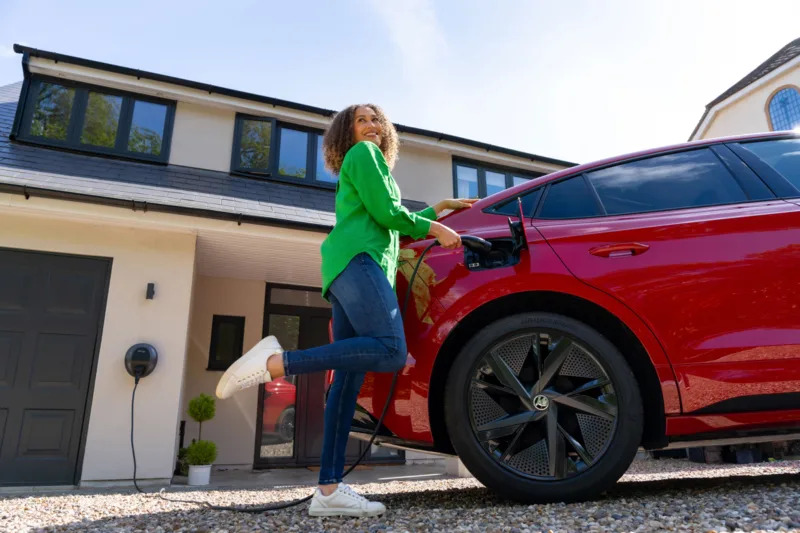
Charging at home is undoubtedly the best way to keep an electric car charged. By plugging in overnight, you can wake up to a fully charged cat in the morning and start your journey with the maximum number of miles available. This is much better than setting off with low charge, which increases the risk of running out altogether!
There are plenty of other benefits to having a home EV charger installed as well, such as getting access to cheaper overnight charging, especially if you install a charger with smart charging functionality.
Know you EV’s limits
When you buy an electric car, you should be told, or be able to find out, what its maximum range is, which should tell you how far you can drive it before needing to recharge. But don’t always take this at face value.
The figure you’ll usually be quoted will have been determined by the WLTP, or the Worldwide Harmonised Testing Procedure. Simply put, it’s a test designed to determine the fyuel or energy consumption, and emissions, of a car, be it petrol, diesel, or electric.
Among this, the car’s maximum range will be tested. However, the test is done in a controlled laboratory environment, under assumed ideal conditions, including road surface, weather, driving speed, and so on. As a result, the WLTP gives you an idea of what the range is, but what you may end up with can vary drastically depending on factors like the weather, how you drive, whether you’re on motorways or not, the age of the car etc.
That’s why cars listed in our vehicle guides include both the WLTP – i.e. “official” - range of an EV, our own “confidence range”. As a general rule of thumb, take off about 15% of the WLTP range and you’ll have a much more realistic idea of the car’s actual range in real-world conditions.
Take advantage of regenerative braking
Regen braking is a handy piece of tech that you’ll find in virtually any modern electric car. Essentially, it allows the car to take the energy that’s typically used when you brake and use it to slightly recharge the battery. As well as giving your battery a little boost whenever you brake, it makes the car overall more efficient as less energy is lost or wasted.
That doesn’t mean you can complete a journey entirely with regen braking, as the charge isn’t going to be enough to counter the amount lost from driving the car. But it will reduce your overall energy consumption, so it’s worth using it when you can.
Tip: with Pod Drive, you can significantly reduce the upfront costs of installing our award-winning Solo 3S dedicated home charging system to just £40 per month plus a one-off £99 joining fee. Find out more about our all-inclusive Pod Drive service.
There’s no need to worry about running out of charge
The key takeaway from this should be that yes, the idea of running out of charge on the road is a scary prospect. But it’s not something that happens often, and if it does it isn’t the end of the world as there are plenty of recovery options.
If it is something that still concerns you, deciding against going electric isn’t the solution. Instead, you just need to get used to a little bit more planning than you might normally need to do with a petrol/diesel car to keep your car charged before, during, and after your journey. And if you need them, we have plenty of tips for optimising your EV’s range!
Ready to start your EV journey? Explore our award-winning Solo 3S home charging system today.