Member for

10 months
On
Image
cdn-www_pod-point_com-home-hero-bg-800
Categories

Planning a road trip in your EV? Here are some tips on making the journey as smooth as you can.

#heading1
Essential pre-departure checks for your electric vehicle
H2

Vehicle inspection checklist

  1. Charge your battery to 80% or more
  2. Make sure all lights work
  3. Test your brakes
  4. Ensure your tyres have the correct pressure for the expected load
  5. Pack your charging cable

Battery status and range assessment 

When going a long way, a bit of planning goes a longer way. Before you set off, it’s critical that you're aware of your battery status and range to make it from A to B:
 

  1. How far you can (realistically) travel on one charge and thus how many en route charges you require. Check out our vehicle guides for more details on your specific EV.
  2. The type of en route rapid charger you can use (CCS / CHAdeMO / Type 2 / Tesla Supercharger).
  3. The power of en route rapid charge your car can accept (and thus how long you will be waiting during any charging pit stops).

If you are going to go further than your car can comfortably travel on one charge, you will need to use an en route charger. 

Image
Smart Charge

Tip: If you can avoid an en route charger and charge at a destination, particularly overnight, that is always a more convenient (and often cheaper) experience. Picking a hotel/long stay destination with a 7kW-22KW charger is always a great win.

#F2F5CF
#000000
#heading2
Locating rapid charging stations along your route
H2

Utilising your electric car’s built-in route planner

Some car’s usefully host chargepoint data in their sat nav, and some will build charging stops into their route planners. Perhaps the most convenient system for EV route planning comes with Tesla vehicles, whose sat nav calculates drivers’ required charging stops and likely charging duration and routes them to their own dedicated “Supercharger” en route charging network.

Leveraging third-party mapping solutions

Outside the car’s sat nav, the following tools and apps are recommended. But only when you are stationary and not driving!

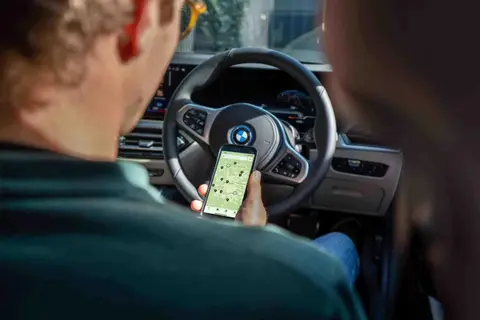
  1. Pod Point Network - First check the Pod Point App. If there’s a conveniently located and suitable Pod Point for your journey, then you know your car will be charged reliably.
  2. ZapMap - Crowd sourcing and direct data feeds have made ZapMap the UK’s number one universal charge point map. You can filter to the types of chargers and/or networks that you need.

And for those travelling into Europe.

  1. PlugShare - PlugShare is a community based tool that guides users to public charging locations throughout Europe (and further afield). Driver participation means there are reviews and photos of thousands of chargepoints.
  2. Chargemap - Chargemap offers an alternative to Plugshare. Again, drivers can contribute to enhance Chargemap’s information via their mobile app, by adding pictures, comments, charging stations and even edit useful information.
Image
G5

Pod Point network

Image
Smart Charge

Tip: We recommend not using the very last possible rapid charger; use the one before the penultimate charger en route. Flying by the seat of your pants may briefly feel thrilling, but if that charger fails, or there’s a queue, or you end up using more power than expected (e.g. uphill), then the waiting around is in no way a thrilling experience!

#F2F5CF
#000000
#heading3
What to anticipate at rapid charging stations
H2

Understanding different access methods

The common methods include apps, contactless card readers, RFID cards and some just plug and play (Tesla Superchargers). For details on these, please see our guide on public charging access methods.

Evaluating charger availability

When choosing an en route rapid charging location, you should consider the likelihood that it is available when you arrive. Some rapid chargers show their live status, but ultimately this is liable to change while you are driving to the site, which means the best bet is to pick sites with numerous chargers (particularly if you can see there are several available at that time).

This facet of EV motoring is starting to improve, but many sites only have 1 or 2 chargers, so there is a chance that you have an occasional wait.

Deciphering charging speed and expected waiting time

How fast your car rapid charges depends on how much power the chargers can offer and how much power your car can accept - but also where you are in the state of charge (and a little on the ambient temperature). Unlike a 7kW charger which almost exclusively charges at 7kW regardless of how full your battery is, electric cars manage their rapid charge rate to protect the battery.

Different cars’ rapid charging profiles vary, but an approximate typical profile is shown below. This illustrates that it's quickest to charge from 20% to 80%, but charging to 100% can take a long time.

Image
G6

Source: Pod Point

Image
Smart Charge

Tip: We recommend rapid charging from something like ~20% to ~80% full to minimise the time spent at the charger. If you arrive almost empty the charge rate will take a little time to “warm up”, while the last few kWhs typically take longer to fill than it’s worth waiting for vs heading for the next charging opportunity.

#F2F5CF
#000000
#heading4
Essential tips and insights for long range EV road trips
H2

Ultimately long journeys in electric cars are similar to long road trips in conventional cars, so the following tips are valid for all.

  • Perform important vehicle checks before you set off
  • Take regular breaks (you’ll soon notice how well this fits with en route charging!)
  • Stop when you are tired
  • Take snacks and drinks (whilst being careful to ensure they do not unduly distract the driver)
  • It is better to get there late than in a damaged car/not at all
  • Stay zen, the traffic does not improve no matter how angry you get
Article read time
6 min read
H6
Summary
H2

Before you set off on a long-distance journey in an electric vehicle, it's important to do a small amount of preparation. In this guide you'll find some key recommendations that will allow you to charge effectively en route.

  • Check how far your EV can travel and the type of chargers it's compatible with.
  • Plan your journey to include stops with en route chargers.
  • Consider the fact that some chargers might not be immediately available, so factor in extra time to complete your journey.
H6
Off

Member for

10 months
On
Image
02-CRS05484-Stats
Categories

A guide explaining the new MHHS reform by Ofgem, why it’s being introduced, and how it aims to modernise the UK’s electricity system.

#heading1
What is MHHS?
H2

Essentially, the new rules are all about modernising the way energy is tracked and billed to make the UK’s energy network more flexible and smarter.

The reforms will improve how we record energy consumption by mandating that energy usage is settled in half-hour intervals. With more frequent energy settlements, the electricity sector will have a much more detailed overview of consumers’ energy usage by making readings more accurate and transparent.

To comply with MHHS, businesses will be required to install modern smart meters capable of making half-hourly recordings.

#heading2
When will MHHS reforms take effect?
H2

Although a lot of work has already been going on behind the scenes to get systems and processes ready, industry regulator Ofgem has announced its timeframe for the reforms. Its phased approach ensures energy providers and businesses have enough time to switch over to the new system.

Key dates including:

  • September 2025: the beginning of an 18-month industry-wide ‘migration’ to the new MHHS system
  • May 2026 to May 2027: all MPANs (the unique number that identifies your electricity meter) will migrate over to the new model during this period
  • July 2027: the target completion, at which point the industry will be on a four-month settlement timetable, rather than the current 14 months
#heading3
Why are the MHHS reforms being introduced?
H2

MHHS, and more specifically the half-hourly settlement, is a necessary step towards wider industry reforms that will change the way the UK buys, generates, and stores energy.

More accurate data

Changing to a half-hourly settlement gives more accurate meter readings, which in turn gives an overall more accurate picture of how consumers use energy. This will help the industry make better predictions about demand and enable it to meet future energy needs now.

Flexibility

With more accurate data, energy suppliers will be incentivised to offer their customers new products and time-of-use tariffs that are based on flexible energy usage. In particular, the reforms will encourage consumers to shift their usage to off-peak times (like overnight), helping to balance the grid and avoiding the need for extra fossil fuel-burning generators when demand peaks.

Cost savings

By adopting flexible energy schemes and tariffs, it’s hoped the reforms will allow businesses to lower their energy bills, with Ofgem predicting benefits to British consumers of between £1.5 billion to £4.5 billion by 2025.

#heading4
What are the benefits for businesses?
H2

The MHHS reforms are expected to benefit businesses in different ways:

SMEs

With more accurate billing based on actual usage, rather than estimates, smaller businesses will benefit greatly from MHHS as it gives them a more accurate picture of how and when they use energy.

This should allow them to create data-driven energy saving strategies that could reduce their costs. But it will also create a more competitive energy market, which could result in SMEs having a wider range of, and more tailored, tariffs to choose from.

Larger businesses

Although most large businesses are already operating within half-hourly contracts, such as large industrial and commercial consumers, the detailed data they will have access to will in turn allow them to further optimise their operations and access to more competitive energy tariffs.

Plus, MHHS supports sustainability objectives and Corporate Social Responsibility (CSR) goals by encouraging more effective energy management systems and give businesses a more accurate way of measuring their carbon emission reductions.

#heading5
How will MHHS affect consumers?
H2

Just like with businesses, energy customers (i.e. households) will similarly have access to even more granular data under MHHS, as well as smarter meters and a wider range of time-of-use energy tariffs to choose from.

These should reduce energy bills for consumers, whilst also allowing them to help the UK’s energy network to balance demand and stabilise the grid.

However, consumers should be aware that if their energy isn’t settled half-hourly, there isn’t currently an option to make the switch to half-hourly settlements, as this is entirely dictated by the energy supplier – although this could change in the future. This unfortunately means for customers not on half-hourly settlement, they can’t take advantage of reactive and flexible smart charging.

Article read time
4 min read
H6
Summary
H2

Market-wide half-hourly settlement (MHHS) is a new programme of sweeping reforms designed to modernise the UK’s energy industry. The significant reforms are being led by energy regulator Ofgem, and are expected to bring a wide range of benefits to businesses and consumers, with the main changes due to come into effect between May 2026 and May 2027.

H6
Off

Member for

10 months
On
Image
couple-packing-electric-vehicle

Everything you need to know about the recently announced Electric Car Grant, ahead of discounts for private buyers being applied to eligible EV models in the upcoming weeks

#heading1
What is the Electric Car Grant?
H2

Announced on 16th July 2025, the new grant applies a discount to the purchase price of certain electric vehicles, with the size of the discount (either £3,750 - Band 1 or £1,500 - Band 2) being determined by sustainability criteria set by the DfT.

#heading2
How does the Electric Car Grant work?
H2

In order for drivers to benefit from the available discounts, electric car manufacturers must first successfully apply for the grant, which is then applied to the purchase price that they can then offer to customers. In other words, unlike other grants, drivers don’t need to do anything to apply. To be successful, the vehicle must meet some technical standards, including:

  • A list price of less than £37,000
  • Be a new car with no previous ownership, or be pre-registered
  • Producing zero tailpipe emissions (0g CO2/km)
  • A minimum WLTP range of 100 miles
  • A minimum vehicle warranty of 3 years or 60,000 miles, whichever is reached first
  • A minimum battery and drivetrain warranty of 8 years or 100,000 miles

In addition, the manufacturer must also hold a Science Based Target (SBT), which is essentially a commitment to reduce emissions or achieve net-zero in line with the latest climate science research.

Without a valid SBT, the manufacturer can’t apply any vehicle for eligibility, even if meets all the other criteria. In the case of companies with split ownership, the joint-owners will both have to hold valid SBTs.

#heading3
Which EVs are eligible for the Electric Car Grant?
H2

Any electric car that meets the requirements above can be eligible for the discount, with eligibility assessed by the DfT and the Vehicle Certification Agency (VCA).

Regarding the list price, this doesn’t include optional extras or different trim levels of a car. For example, an EV that costs more than £37,000 may be eligible if a model with the same combination of battery and motor, but with a different trim, has a list price below £37,000.

Additionally, if an EV is approved as eligible and a new variant is released in the future, that new car isn’t automatically deemed as eligible, and the manufacturer will need to apply for that particular variant to be approved under the scheme.

However, for an EV to be eligible the manufacturer must submit an application and be approved. This means no cars are currently eligible at this stage. We’ll keep you informed as the first electric cars start to be approved under the scheme.

#heading4
How long will the Electric Car Grant last?
H2

A total of £650 million has been ring-fenced for the scheme, which is set to be available until 31st March 2029 unless the funding for the scheme is used up. However, the government has said that the scheme can be amended without notice, which could include how long it’s available for.

#heading5
When will approved EVs be discounted for drivers?
H2

This all depends on how long it takes for manufacturers to submit their application, and how long it takes for their electric vehicle(s) to be approved.

However, once a car has been deemed eligible, it should be quick for the discount to be available for the driver, as there isn’t anything drivers have to do to apply for it. Instead, the discount will be taken off the vehicle’s purchase price as it’s sold by the dealership.

#heading6
Vehicles eligible for the Electric Car Grant
H2

Band 1 (up to £3,750 included as discount off purchase price)

  • Ford E-Tourneo Courier
  • Ford Puma Gen-E 

Band 2 (up to £1,500 included as discount off purchase price)
 

#heading7
Our thoughts on the Electric Car Grant
H2

Like many in the EV industry, we welcome the new grant as a means of encouraging electric car ownership levels across the UK by reducing costs for households who want to make the switch. It’s a positive step from the UK government in supporting the country’s EV transition, where high upfront costs have prevented drivers from making the switch in the past.

CEO of Pod, Melanie Lane, said: "We’re really pleased to see this new incentive to help drivers manage the cost of switching to an EV. We know that living with an EV makes good sense for the wallet as well as the planet, but we need to continue innovating and incentivising the switch to ensure the electric low carbon ecosystem of the future is both robust and investable."

Article read time
5 min read
H6
Summary
H2

The UK Government’s Department for Transport (DfT) has announced a new £650 million grant scheme to reduce the purchase price of certain electric vehicles as part of their wider efforts to support the EV transition across the country. Under the scheme, discounts of up to £3,750 will be available to UK drivers on new electric cars with a list price of under £37,000 to significantly reduce the costs of switching or upgrading to an EV.

H6
Off

Member for

10 months
On
Image
Solo-3S-lf

A complete guide to charging an electric car at home, including how to charge at home, how much it costs and how long it takes.

H2
Image
Smart Charge

Tip: If you are looking for information on how to use your home charger, go to our user guides.

#F2F5CF
#000000
#heading1
How to charge an electric car at home
H2

To charge an electric car at home, you should have a home charging point installed where you park your electric car. You can use an EVSE supply cable for a 3 pin plug socket as an occasional back up.

  • Drivers usually choose a dedicated home charging point because it's faster and has built-in safety features.
  • A home charger is a compact weatherproof unit that mounts to a wall with a connected charging cable or a socket for plugging in a portable charging cable.
  • Dedicated EV chargers for your home are installed by qualified specialist installers like Pod Point.

Find out more about the benefits of a home charger here.

Image
test

Tip: An electric car will have either a Type 1 or a Type 2 connector and you'll need to choose a home charger that's compatible with it. To make it easy, we offer a untethered charger, which can connect to both types of cable.

#F2F5CF
#000000
#heading2
H2
Image
g4

Cost of installing a dedicated home charger

A fully installed home charging point costs from £999.

  • Once installed, you only pay for the electricity you use to charge.
  • The typical electricity rate in the UK is just over 24.5p per kWh*, while on Economy 7 tariffs the typical overnight electricity rate in the UK is 11p per kWh**.
  • By switching to an electricity tariff designed specifically for Pod Point EV drivers, you could reduce this to just 8.49p per kWh***.

Visit “Cost of charging an electric car” to learn more about the cost of charging at home.

*Average in the UK in 2024 according to ofgem. Please note, energy prices vary and can go up and down. To find your current cost per kWh, please check your electricity bill or contact your provider.

** Average Economy 7 night time price according to nimblefins.

*** EV charging based on using a 7.4kW home charger and Pod Point's EV Exclusive tariff with EDF.

#heading3
How fast you can charge an electric car at home
H2

Charging speed for electric cars is measured in kilowatts (kW).

Home charging points charge your car at 3.6kW or 7.4kW giving about 15-30 miles of range per hour of charge (compared to 2.3kW from a 3 pin plug which provides up to 8 miles of range per hour). 

Maximum charging speed may be limited by your vehicle’s onboard charger. If your car allows up to 3.6kW charging rate, using a 7.4kW charger will not damage the car.

For more details on the time it takes to charge at home, please visit “How Long Does It Take to Charge an Electric Car?”.

Image
test

Tip: Most domestic properties have single phase power which means the maximum charging rate is 7.4kW. While faster chargepoints are available (such as a 22kW unit), these are usually found in commercial properties where there is a three phase power supply. Find out about the difference of single and three phase power in our EV Dictionary.

#F2F5CF
#000000
#heading4
How to get an electric car charging point installed at home
H2

Electric car charging points need to be professionally installed. A certified charging provider will include installation cost in the price of the unit.

  • The home installation involves wall mounting the chargepoint on an exterior wall or garage, near to where you park and connecting it safely to the mains electricity supply.
  • An installation should take around three hours to complete, depending on the individual requirements of the driver and the complexity of the installation.
  • Installations can be booked directly online, over the phone or through car dealerships, with most providers happy to provide free advice and talk through the options available.
Image
Smart Charge

Tip: It’s always wise to be at home during your install: The best charging providers will install a chargepoint in the most convenient and neat location for you, but also demonstrate how to charge your car and answer any questions you have.

#F2F5CF
#000000
#heading5
H2
Image
Artboard-3
Image
Smart Charge

At Pod Point you can get a home EV charger, including standard installation, installed in as little as 2 hours. Shop now.

#F2F5CF
#000000
#heading6
How often should you charge an electric car at home
H2

You can charge your electric car at home as often as you need to. It can be treated the same as charging a mobile phone, fully charging overnight and topping up in the day if necessary.

While it is not necessary for most to charge every day, many drivers plug in each time they leave their car out of habit, giving them maximum flexibility should they have to make an unexpected journey.

  • By charging overnight, electric car drivers can take advantage of cheap nighttime electricity rates and drive for as little as 2p per mile.
  • Overnight charging also ensures that the car’s battery is full each morning for the day ahead. You don’t need to unplug once the battery is full, charging will stop automatically with a dedicated home charger.
  • Most drivers also make use of charging facilities at their workplace or public destinations to top up charge.
Image
Smart Charge

Tip: Most cars will allow you to set a top charging limit. Always follow your manufacturer’s advice on how “full” to charge your car. Some will recommend setting a limit of a 90% charge to allow the battery management system to rotate the charging of cells evenly.

#F2F5CF
#000000
#heading7
Optimising charging at home
H2

As more people charge their electric cars at home, smart home chargers are a way to tackle new energy related challenges that will arise for drivers and networks.

Cheaper energy

While an EV driver is saving money overall by powering their car with electricity rather than fossil fuels, their home energy bill will still be bigger than it was before. The good news is, unlike fossil fuels, there are lots of things that can be done to understand and reduce the cost of electricity to get further savings.

By adjusting your charging schedule to take place at certain times, it is possible to take advantage of time of use tariffs which have specific periods when electricity is cheaper. It is possible to schedule when your car charges either via most electric cars/associated apps, or via a smart home charger’s app.

Many smart home chargers monitor home and EV energy usage so you can get a clear understanding of cost per kWh, which enables you to determine how much you are spending and switch to cheaper tariffs.

Image
Smart Charge

Tip: Unlock the full benefits of EV ownership and drive for less than 2.5p per mile* with Pod Point’s smart home charger and EDF’s Exclusive Electric tariff.

**To see claims visit https://podenergy.com/edf-claims.

#F2F5CF
#000000
#heading8
H2

Greener energy

Today an electric car is already greener than a combustion engine vehicle, but charging with ever more renewable energy makes electric car driving even more environmentally friendly.

The UK's grid is continually getting greener with more and more renewable energy generation, such as wind power. While this means charging electric cars is getting more environmentally friendly overall,  you can switch to one of the many renewable energy providers to make charging at home even greener. 

#F2F5CF
#000000
#heading9
Managing load on home energy supply
H2

Charging an electric car at home places additional load on your electrical supply. Depending on the max charging rate of your chargepoint and vehicle, this load can damage your main fuse.

To avoid overloading your main fuse, some smart home chargers automatically balance the power drawn by your chargepoint with the rest of your home, ensuring it never causes your total demand to exceed the max available supply.

Another benefit of this feature is the ability to have more than one chargepoint installed so that you can charge cars simultaneously without having to manually switch between them.

Image
Smart Charge

Pod Point's EV home charger features Auto Power Balancing that adjusts your charge so your electric supply doesn't get overloaded.

#F2F5CF
#000000
H6
#heading10
H2

Managing load on the grid

As electric cars become more widely adopted, the demand for power on the national grid will increase. There is a tendency for a lot of charging to be started when drivers arrive home after work and peak around 20:00. Unmanaged this could cause demand spikes that can put too much load on the local networks
 

Smart home chargers will be able to react to and/or anticipate this and manage the rate of charge across thousands of vehicles to smooth out these peaks. Thankfully this will be virtually unnoticeable for an individual driver (according to Pod Point data EV drivers only use their chargers approximately 25% of the time they are plugged in overnight). The net effect will be that everyone gets a full charge over a fractionally longer time, but the grid will be protected.

#F2F5CF
#000000
Article read time
8 min read
H6
Summary
H2

You can charge an electric car at home using a dedicated home charger (a standard 3 pin plug with an Electric Vehicle Supply Equipment (EVSE) cable should only be used as a last resort).

  • Electric car drivers choose a home charging point to benefit from faster charging speeds and built-in safety features.
  • Charging an electric car is like charging a mobile phone - plug in overnight and top up during the day.
  • Certain electricity tariffs offer much cheaper electricity at specific periods (usually late at night) and scheduling to charge your car, either via the Pod Point App or the car itself, can save you money.
H2
Off

Member for

10 months
On
Image
ORA-Funky-cat-Bristol
Categories

A guide looking into the process, benefits and cost of an internal combustion engine (ICE) car to electric vehicle (EV) conversion.

#heading1
Why convert a car into an electric vehicle?
H2

The shift from ICE cars to EVs presents a much-needed opportunity to reduce the CO2 generated by private and public transportation. If you have a petrol or diesel car that you want to keep and future-proof, converting it to an electric vehicle is an option.

Simply buying a brand new EV may be easier, but there are many reasons why people are keen to convert a traditional combustion engine car to an electric motor and battery. They include wanting to be more environmentally friendly, reducing running costs and creating a unique vehicle that’ll turn heads - especially if it’s a vintage car they’re converting. You can see an example of a converted classic car in our video with automotive journalist and TV presenter, Alexandra Legouix. In this article, we’ll help you learn about electric vehicle conversions as an option to start driving electric.

#heading2
How to convert an ICE vehicle into an EV
H2

There are two main ways to convert an ICE vehicle into an EV:

  • Professional conversion – a specialist company will source components, modify the car, and remove old and fit new parts

  • DIY conversion – using a conversion kit, you swap out combustion engine parts with components needed for electric driving, such as the motor and battery

Please note that a DIY conversion should only be carried out if you have the necessary knowledge and skills to remove and install mechanical and electric components safely. Alternatively, you can task a qualified mechanic with the installation of the conversion kit.

#heading3
Can I legally convert my car into an EV?
H2

Yes, it’s legal to convert a car into an EV in the UK, as long as you follow some steps to meet basic legal requirements.

Registration

  • Re-registration of your vehicle – Once converted, your now-EV must be re-registered via the vehicle registration section on GOV.UK as a rebuilt vehicle or radically altered vehicle. Ensure it meets UK road vehicles regulations before you begin the registration process.

  • Registration forms and documentation – You must submit a completed V55/4 or V55/5 form to register and provide the following:
    • ID such as a copy of a driving licence or passport

    • Vehicle Excise Duty (VED), also called road tax, and a £55 registration fee

    • A valid MOT certificate for vehicles older than three years

    • A completed V627/1 form

    • Evidence of type approval (if applicable)

    • The original vehicle’s registration certificate

    • Receipts for any major parts purchased

    • Photographs of the care before and after conversion

MOT

For converted EVs, an annual MOT is still required unless the car is a classic that’s over 40 years old. The fee is the same as for an ICE car, although your converted EV won’t need an exhaust emissions test.

Insurance

You must inform your insurance provider about a car-to-EV conversion. If you don’t, it will invalidate your insurance policy. A change in your car’s specifications might also affect your insurance premium, leading to an increase in what you pay. Make sure to have documents and photos ready to evidence the conversion.

Vehicle safety

The overall weight of the car post-conversion should not exceed the limit on the original VIN plate to maintain crash performance standards. Lithium-ion batteries, commonly used in EV conversions, are considered safe if installed and managed correctly but can carry a considerable weight that must be accounted for.
 

How much does an EV conversion cost?

By far the easiest option is handing your car to a specialist company for a turnkey EV conversion. The price of a professional ICE to electric car conversion starts at around £30,000 and can exceed £500,000 for a luxury or top-quality classic car. Labour, specialist parts, high-capacity batteries, complicated modifications and restorations add to the overall cost of a professional conversion.

If you go down the DIY route, you can save a considerable amount of money. Sourcing a conversion kit or individual parts will cost around £10,000 or more for elevated performance and longer range. But unless you’re capable of conducting the conversion yourself or can outsource the labour to a trusted mechanic, this option is likely not for you.

#heading4
Benefits of converting your ICE vehicle into an EV
H2

Converting an ICE vehicle into an EV has a number of benefits, making it an appealing option for car enthusiasts and environmentally conscious drivers alike:

  • Unique driving experience – A conversion from ICE car to EV offers the opportunity to create a unique vehicle that’ll stand out in performance and looks

  • Competitive vehicle pricing – If you already own an ICE car, converting it may be cheaper than purchasing a new EV

  • Better for the environment – By converting a used car, you significantly reduce vehicle emissions from the production of a new EV and when driving your car

  • Lower running costs – EVs are generally cheaper to run than ICE cars, with fewer mechanical parts that can break, low charging rates at home and exemptions from Clean Air Zone and ULEZ charges
Article read time
5 min read
H6
Summary
H2

It’s possible, and legal, to convert a petrol or diesel car to use electric power instead, but there are some things that need to be considered. The conversion should only be carried out by someone confident with the work required, and the converted EV must be re-registered, insured and meet UK regulations.

H6
Off

Member for

10 months
On
Image
CRS09195

A guide to safely charging your EV in the rain using a home, public or workplace charger, or standard 3-pin plug socket.

#heading1
Can you charge an EV in the rain? Is it safe to do so?
H2

It’s no surprise people are concerned about water and electrical components coming into contact with each other, because it can cause a charger to short circuit or sustain other damage.

But don’t worry; EVs and domestic chargepoints are built to be weatherproof, meaning they’re water-resistant even when in use. This makes charging more accessible to people, because you don’t need shelter to charge in the rain. Your EV will be just fine plugged into a charger while parked on your drive or in a parking lot in wet conditions.

There’s one exception to the rule: adverse weather. If you’re experiencing unusually harsh conditions outside, like a heavy storm or high winds, it’s best to refrain from charging in the open. While EV chargers are typically fine in standard weather such as light to heavy rain, they’re not made to withstand extreme weather.

#heading2
Home charging your EV in the rain
H2

If you have a professionally fitted home charger, you can charge your EV outdoors come rain or shine. These types of domestic chargers can be fitted outdoors or indoors, think drive or garage, so are meant to handle a range of weather conditions without impacting the use of the device.

Having a weatherproof EV charger at home means your daily life won’t be disrupted because of some rain. You can continue to charge your electric car even if it’s wet outside.

#heading3
Public charging your EV in the rain
H2

Whether you have access to a charger at home or not, you may be using public charging from time to time. If you’re wondering whether public EV chargers are safe to use in the rain, we’ve got good news for you. Public chargers are generally made for outdoor use, so they can deal with a range of weather conditions.

Rapid, fast and slower destination chargers at public charging stations are all built to be weatherproof, especially as most of them are located out in the open. However, in the event of extreme weather like torrential rain and strong winds, it’s safer to wait and charge once the weather is back to normal.

#heading4
Workplace charging your EV in the rain
H2

Any workplace chargers located outdoors will be perfectly safe to use in all weather conditions. EV charging stations at your office will be water-resistant to ensure you can use them during rain, snow or sunshine.

Workplace EV chargers share the same high safety standards as their public and home charging counterparts. The use of protective components ensures no electric parts come into contact with water, keeping you and your EV safe from damage.

#heading5
3-pin charging your EV in the rain
H2

A standard 3-pin charger, so one that will be plugged into a traditional socket in or outside your home, is generally considered safe. The key concern with a 3-pin charger in rainy conditions is the chance that water can get into contact with the socket. That could be an outdoor socket or one inside if you’re draping the cable through an open window or door.

3-pin chargers should be used with caution during rain if you don’t have access to an alternative. Make sure the cable you use is water-resistant, and you check the plug and socket are dry before connecting them. This should reduce the chances of any issues.

#heading6
How can I make sure my charger is weatherproof?
H2

Professionally installed home chargers typically have weatherproofing built-in. They’ll come with high IP (Ingress Protection) ratings, which makes them ideal for outdoor use. The Pod Point Solo 3S charger has an IP rating of 54 and is incredibly resistant to rain and dust ingress.

For additional peace of mind, consider the location of your charger. If possible, opt for a spot that offers some protection from the elements like under a carport.

#heading7
What is an IP rating?
H2

An IP rating is a two-digit grading system that measures the level of protection surrounding electrical equipment. It’s a commonly recognised measurement for how resilient an EV charger is against the elements.

The first digital indicates the protection against solids like dust, and the second digital refers to protection from liquids like water. The higher the number, the better the protection. For an electric car charger, a high IP number guarantees a good level of safety and durability when exposed to conditions like rain.

Article read time
5 min read
H6
Summary
H2

The short answer is yes, charging your EV in the rain is safe. Rainy weather is a regular occurrence in the UK, so electric cars and chargers are made to withstand all normal weather conditions including rain.

H6
Off

Member for

10 months
On
Image
CRS09749
Categories

A guide investigating if it’s possible to take an electric car charger with you when moving home.

#heading1
Moving your electric car charger
H2

As electric vehicles (EVs) become increasingly popular in the UK, a growing number of households are deciding to make the switch to electric driving. Many EV drivers will install a home charger to benefit from the convenience and low cost of domestic charging. But what happens to your EV charger when you move?

The purchase and installation of a charger, even a basic model, will set you back hundreds of pounds. It’s an investment in your EV ownership, so you may be thinking about what you should do when the time comes to move. We’ll find out if it’s technically and logistically possible to take a chargepoint with you when you pack up and move to a new home.

#heading2
Can you move an electric car charger?
H2

The short answer is yes, it is in most cases physically possible to move a home charger to another home or spot on the same property. However, relocating isn’t always a straightforward process that is worth the time or cost.

For starters, modern regulations mandate that every EV charger sold must be ‘smart’, meaning it must include the ability to schedule a charge. So if you have an older charger that doesn’t have smart features, you can still move it, but you might be better off upgrading to a more modern home charger.

From a technical standpoint, cables will have to be left behind and new cabling will need to be installed in the home you’re moving to. If the current state of the property requires groundwork like digging a trench for cables, this will add extra time and another cost.

You’ll also likely have to pay a fee for relocating your EV charger when moving house. In some instances, this can cost as much as, or even more than, the original home charger purchase and installation. So, it could be worth leaving your charger behind and installing a new one at the home you’re moving to, especially as a chargepoint could add value to your new home.

There is also the warranty to bear in mind. Depending on the provider, your warranty could become void if you relocate it, or don’t follow their procedure.

Logistically, you will also need to time the move of your EV charger right. If you have a short window between moving out and moving into a new property, it may be challenging to arrange for an installer to relocate the chargepoint.

#heading3
Tips for moving your EV charger
H2

If you’re considering moving your EV charger to a new house, here are some practical tips to make the transition smoother:

  • Check your warranty first - The warranty on a Pod Point home charger will be void if it’s relocated by an external electrician without Pod Point’s certification. This may be the same for other providers, so be sure to check this first before doing anything else.

  • Consult with an expert – A qualified electrician will be able to evaluate how feasible it is to move an EV charger from one to another property. It’s important the existing wiring and fusebox are inspected to ensure moving the chargepoint is safe or to identify required work.

  • Assess the cost – In some cases, the cost of moving an EV charger to a different home will be the same or more than a new charger. You can relocate your Solo charger by booking a certified electrician through us.

  • Consider the value increase – If you’re selling your home, a chargepoint can increase the list price. Instead of moving your charger, you could use the higher selling price to buy and install a newer and potentially more modern charger once you’ve moved.

  • Check local authority rules – You normally wouldn’t need permission to install an electric car charger. However, there are some exceptions like listed buildings or houses with on-street parking only, so it’s worth contacting the local authority to ensure you comply with the rules.
Article read time
4 min read
H6
Summary
H2

Yes, you can take an EV charger with you when moving, but it’s not always the best choice practically and financially. You should compare moving your charger to getting a new one before making a decision.

H6
Off

Member for

10 months
On
Image
Stock-2
Categories

A guide exploring the option of installing an electric vehicle (EV) home charger inside a garage.

#heading1
Installing an EV charger in a garage
H2

As the number of EVs increases steadily on UK roads, the demand for convenient home charging solutions is growing among EV owners. Many people with off-street parking have opted to install a chargepoint like the Solo 3S on the exterior of their homes. 

But what if you have a garage and want to fit a charger there? Is it possible? To help answer this question, we’ll look into the possibility of setting up an EV charger in your garage and address common questions and considerations.

#heading2
Can I install an EV charger in a garage?
H2

Yes, you can install an EV charger in your garage. For many EV drivers, this can be the perfect location for a chargepoint.

However, there are a few factors to consider before committing to a charger installation in your garage:

  • Space – Ensure your garage has enough space to accommodate your electric car and the charging equipment without creating unwanted obstacles.

  • Vehicle-side connector location – Check if the connector on your vehicle is conveniently positioned to reach the charger when parked in the garage.

  • Distance from the fuse box – Your garage needs to be close enough to your home’s power supply, particularly the fuse box, to make the installation straightforward and cost-effective.

  • Wi-Fi connectivity – If your EV charger model requires a Wi-Fi connection for features like scheduling and monitoring charging sessions, ensure your garage receives a strong enough signal.

#heading3
Pros and cons of installing an EV charger in a garage
H2

Pros:

  • Protected from the elements – Charging your EV inside a garage means the charger is less exposed to weather-related wear and tear.

  • Increased security – An indoor charger reduces the risk of vandalism or tampering.

  • Convenience – Charging within your garage is generally more convenient, especially in bad weather.

Cons:

  • Space restrictions – Not all garages can comfortably fit a vehicle and a charger, especially if used for storage or other purposes.

  • Installation challenges – Some garages might require additional work to install proper wiring or improve Wi-Fi connectivity.

  • Vehicle positioning – Depending on the location of your vehicle-side connector, the layout of your garage may not be optimal.

#heading4
Is installing a charger in a garage more expensive?
H2

It depends. The cost of installing an EV charger in your garage is generally comparable to an installation on an external wall, provided that you meet the standard installation criteria. Factors that can influence the cost include the distance from the power supply and any necessary upgrades to your garage’s electrical wiring or Wi-Fi. If you meet standard installation requirements, fitting your Solo 3S home charger is included in the purchase price. 

#heading5
Time to consider installing an EV charger in your garage
H2

Installing an EV charger in your garage is absolutely possible, given electricity and Wi-Fi connectivity are available or can be improved. Placing your chargepoint in a garage offers security, protection from harsh weather and convenience.

Ready to order an EV home charger? Find out how to prepare for a home charger installation and start the process today.

No access to a garage or other off-street parking? No problem. It’s possible to charge your EV without a driveway, check out  our guide.

Article read time
3 min read
H6
Summary
H2

You can install an EV charger in your garage given you have enough space, access to the power supply, and get a reliable Wi-Fi signal.

H6
Off

Member for

10 months
On
Image
Solo-3-BMW-i4-App-IIIII-1

A guide explaining how to claim for charging an electric company car at home and the difference between private and business use for tax purposes.

#heading1
Electric company cars are on the rise
H2

As the UK moves to a green transport future, spurred by the planned ban of new diesel and petrol car sales in 2035, many businesses are replacing their internal combustion engine (ICE) fleets with battery electric cars and vans. With this move, you might be wondering if you can claim the expense of charging an electric vehicle (EV) at home, just as you would refuelling a company car at a petrol station.

#heading2
The transition to electric company cars in the UK
H2

In recent years, the UK has seen a notable increase in electric vehicles as company cars. In Q1 of 2024 alone, 41% of new business contract hires were electric vehicles. This transition is encouraged by a number of incentives aimed at reducing carbon emissions and promoting greener travel.

Employees enjoy lower Benefit in Kind (BiK) tax rates on electric company cars than petrol or diesel ones. The rate is currently frozen at 2% until April 2025, after which it will increase by 1 percentage point every year until 2028. The government also offers grants to eligible drivers, cutting the cost of buying and installing an EV home charger like the Solo 3S by up to £350. 

#heading3
Policies on claiming charging expenses
H2

Not too long ago, reimbursements for charging an electric company car at home were seen as taxable earnings by HMRC and treated as such. Luckily, a recent review of the rules has changed this and reimbursements for home charging of company EVs are now exempt in the Income Tax (Earnings and Pensions) Act 2003, making them tax-free.

HMRC provides an advisory rate of 11p per mile. Alternatively, employers can make other arrangements to reimburse employees for charging. Your employer can agree to include a monthly charging allowance in your pay, reimburse per kWh used at home for charging, or provide you with a dedicated company debit or credit card for public charging.

Drivers must provide VAT receipts for reimbursements. Obtaining a VAT invoice for public charging can be tricky, making home charging even more attractive. Modern home chargers can track and show exactly how much electricity was used to charge an EV, which will help you when claiming charging expenses.

#heading4
Private vs business use
H2

The tax-free status only applies to miles covered for business purposes. The HMRC makes it clear that commuting to your workplace from your home or any other place that isn’t your home, like a friend’s house, counts as private use.

Here are two examples to demonstrate different types of use:

  • Private use – You travel to the office with your electric company car Monday to Friday, or you use your car to go grocery shopping after work. Your employer can reimburse the mileage for this journey if they offer it, but you will have to pay taxes on the reimbursement.

  • Business use – You travel to a client’s site while at work or use the electric company car to run errands for your job. Your mileage reimbursement for these trips is tax-free, meaning you keep 100% of the money.

Find more information on taxation of commuting and private travel on the HMRC site.

#heading5
How to claim charging expenses in the UK
H2
  • Check employer’s guidelines – Familiarise yourself with the process. Your employer will set out clear requirements for claiming expenses to ensure compliance with HMRC.

  • Keep a record – Maintain a detailed log of your business mileage to avoid confusing personal and business use. This is important to back your claim.

  • Calculate electricity costs – Use the advisory rate provided by HMRC or the rate agreed with your employer. Here, you either have to estimate using your overall kWh usage or check your charging app for exact numbers.

  • Submit your claim – Provide your employer with the documentation, including your mileage log and charging cost calculation. Your employer will typically reimburse you through payroll.

Article read time
4 min read
H6
Summary
H2

Yes, you can claim expenses for charging an electric company car at home, but the reimbursement is tax-free for business travel only. Reimbursed charging expenses for private use are taxable.

H6
Off

Member for

10 months
On
Image
web1

A complete guide that covers the primary benefits of electric cars for drivers.

#heading1
Environmental benefits to electric cars
H2

Electric vehicles, as the name suggests, run on electricity rather than fossil fuels like petrol or diesel, which means zero tailpipe emissions. Car emissions contribute significantly to climate change, so driving electric can have a hugely positive benefit on the environment.  

Plus, EV energy sources are greener. Unlike petrol and diesel cars, EVs can be powered by renewable energy sources that don’t harm the environment, like wind and solar, or from the country’s increasingly decarbonised energy grid. And because they're more efficient (as we’ll come onto), an electric car using electricity generated by burning fossil fuels is still better for the planet than an equivalent petrol or diesel car. 

Granted, the manufacturing process still creates some emissions, but even after accounting for this, EVs are still better for the environment. And with demand increasing, economies of scale and mass production will work to reduce the carbon intensity of the manufacturing of EVs. 

Additionally, many car brands including BMW, Tesla and Volkswagen are taking great strides towards cutting and off-setting emissions from manufacturing.  

Harmful air pollutants are a combination of gases (like NOx and CO) and particulates, found in soot from (particularly diesel) combustion, but also tyre, road, brake and engine wear. Electric cars still release particulates from tyre, road and brake wear, but brake wear is much reduced because of regenerative braking. If air pollution remains at high levels after all vehicles are zero emission (a big if, because a lot of progress will be made), the tyre and road surface industries will be targets for improvements. 

Image
test

Tip: Harmful air pollutants are a combination of gases (like NOx and CO) and particulates, found in soot from (particularly diesel) combustion, but also tyre, road, brake and engine wear. Electric cars still release particulates from tyre, road and brake wear, but brake wear is much reduced because of regenerative braking. If air pollution remains at high levels after all vehicles are zero emission (a big if, because a lot of progress will be made), the tyre and road surface industries will be targets for improvements.

#F2F5CF
#000000
#heading2
Energy efficiency
H2

When an engine is running, a not-insignificant portion of the energy used to power it gets wasted, mainly by heat as the parts move or through friction as the parts interact. But an electric motor has significantly fewer moving parts than an internal combustion engine, which means more energy goes to powering the vehicle and less gets wasted, resulting in higher efficiency. 

This also means less energy is needed to propel the car. Less energy used means less produced, which in turn means less CO2 emissions produced by non-renewable energy sources and the wider energy supply chain as a whole. All possible because EVs are more energy efficient than internal combustion engine cars.

Image
g3

Tesla model X lifestyle image

#heading3
EVs are better for our health
H2

Petrol and diesel cars emit harmful exhaust gases and soot, which are known to be linked to numerous health problems. This is particularly important in densely populated areas like large cities where pollution, including CO2, from vehicle exhausts is high. 

But EVs can also combat noise pollution as they’re much quieter than equivalent internal combustion engine cars, with noise pollution linked to many issues ranging from hearing loss to depression and even insomnia. 

#heading4
Electric cars perform better
H2

EVs are fundamentally superior to combustion vehicles in terms of power, torque, and acceleration, which in turn makes them great fun to drive. On the whole they handle better too due to their low centre of gravity, with their heavy batteries mounted in the chassis. 

Combustion engine cars do still beat EVs for long distances for the time being, as their hugely energy-dense fuel gives them better ranges. But electric car ranges continue to impress and improve, whilst improvements in battery energy densities and better public charging options will mean it’s only a matter of time until the EV becomes the king of long journeys. 

Image
test

Tip: When choosing between an internal combustion engine vehicle and an electric car you may have to sacrifice performance. But only if you choose the car with the internal combustion engine.

#F2F5CF
#000000
#heading5
Cheaper running costs
H2

Despite the currently high energy prices, electric cars can still be cheaper to run than petrol/diesel equivalents. Whilst this does depend on your home’s energy tariff and how efficient your particular EV is (likely very high!), there are plenty of other cost benefits that make EVs cheaper to run. For example, electric car maintenance costs tend to be lower as their drivetrains contain far fewer moving parts, so there are fewer things that may need fixing or replacing. Plus, the lack of a clutch system means there’s less metal-on-metal wear. Prices in general for EVs are also gradually coming down, thanks in part to falling battery costs at ~20% per year, and also simply due to the huge demand for mass-market and affordable electric cars from drivers looking to make the switch. This means we’ll soon reach a point where a fully battery-electric vehicle is the same price than an equivalent petrol or diesel car. Plus, there are still some government grants to make charging infrastructure cheaper, including the OZEV EV ChargePoint grant. Aimed at people either living in rented properties or who own a flat with dedicated off-street parking, it provides up to £350 off the cost of buying and installing a home charger.

Image
test

Tip: In Norway electric cars are often as cheap, or cheaper to buy than internal combustion engine cars, due to tax incentives. Despite other barriers (limited range of early models, infrastructure challenges, one of the world’s least hospitable environments for electric motoring) more than 85% of Norway’s new cars are electric.

#F2F5CF
#000000
#heading6
Electric cars are far more convenient to own
H2

If you drive a petrol or diesel car, it’s definitely not fuelling itself whilst you read this. Sure, you can stand there holding the pump whilst looking at your phone, but your car can’t fuel itself without your help (plus, we don’t recommend this for safety reasons!). But if you own an EV, it’s entirely possible. 

That’s because when you need to recharge, you don’t need to detour to a petrol pump and waiting for it to refuel whilst standing in a smelly forecourt. Instead, you can simply plug it in to charge, walk away, and do something better with your time (like remind yourself of why your EV is so great by reading this article). 

Plus, cars spend around 95% of their lifetime parked. With an electric car, you can make use of that time to put energy into them either at their destination or, more importantly, at home – something combustion vehicle owners can only dream of! 

Modern EVs also often have ranges of 200+ miles, so even if you commute to work every day it’s unlikely you’ll need to recharge every day. But, importantly, you have the ability to when you get home, and wake up every morning to a fully charged car. It’s hard to explain what a quantum leap in convenience this is until you try it for yourself. 

Image
test

Tip: Pre-heating is one of the true convenience wins of electric car driving. You won’t fully understand convenience until you have walked to your pre-heated, fully charged car on a freezing day!

#F2F5CF
#000000
Article read time
7 min read
H6
The benefits of driving an EV
H2

Electric cars offer numerous financial, performance, and environmental benefits, especially when compared with petrol or diesel cars with internal combustion engines. EVs are:

  • Greener
  • Better for our physical and mental health
  • Faster
  • Cheaper to run
  • More convenient
  • Becoming cheaper to buy or lease
#F2F5CF
#000000
H6
Off