Member for

9 months 4 weeks
On
Image
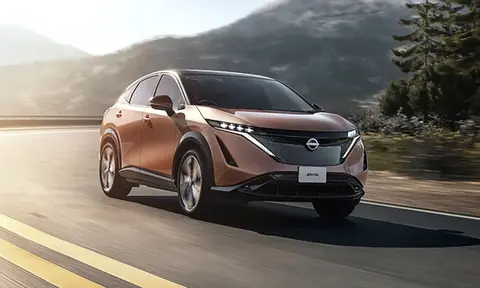
nissan-ariya-advance-lifestyle
Categories

So is switching from ICEs to EVs really a greener option? We explore the question in this guide.

#heading1
How are EVs greener than petrol/diesel cars?
H2

Perhaps the most obvious way is their lack of emissions. No exhaust means no harmful exhaust gases, which is a particular problem in densely populated urban areas like London.

But there are plenty of other things about electric cars that make them much better than ICE equivalents.

Renewable energy sources

The UK has dramatically decarbonised its power generation in recent years by using less emitting natural gases and increasing its supply of renewables. The country also brought an end to the use of coal to generate electricity with the closure of its last coal-fired power plant in October 2024. With the country reducing its reliance on gas and turning instead to more renewable sources, its energy grid continues to get greener every year.

Importantly, EVs can be powered by these renewable energy sources, which makes them even better for the planet than ICE cars which can only run by burning fossil fuels.

Image
Smart Charge

Tip: our award-winning Solo 3S home charging system lets drivers with solar panels use their excess solar energy to charge their EVs, allowing them to charge and drive using the ultimate renewable energy source – the Sun!

#F2F5CF
#000000
#heading2
Efficiency
H2

Generally speaking, EVs are much more efficient at using their energy than equivalent ICE cars. For starters, electric cars can benefit from a process called regenerative braking, where the car is able to capture the energy lost during braking to recharge the battery. Not only is this more energy-efficient, but it also reduces wear and tear on the brakes. 

But crucially, electric car drive trains have significantly fewer moving parts than engines found in petrol or diesel cars. As a result, EVs lose far less energy via heat or friction between parts. This means even if an EV’s electricity is generated by coal (which, in the UK at least, is no longer possible), it will still be more energy-efficient than an ICE equivalent as it will use that energy more efficiently. 

Tip: you can find the average efficiency of different electric cars in our vehicle guides.

Image
Smart Charge

Tip: you can find the average efficiency of different electric cars in our vehicle guides.

#F2F5CF
#000000
#heading3
Less noise pollution
H2

Air pollution is a big concern, especially in major urban centres, as many harmful gases contribute to climate change and the negative effects it brings. But noise pollution is also a significant issue that is linked to numerous health problems, from the more obvious things like hearing loss and tinnitus to migraines, anxiety, depression, and even sleep-related disorders.

Electric cars are quiet because they’re powered by an electric motor, meaning the only sound they actually produce comes from the tyres. In fact, the sounds they do produce are less than the legal limit for vehicles, currently 72 decibels in the UK. This means EVs are better not just for air quality, but also combating noise pollution.

Image
Smart Charge

Tip: EVs are so much quieter that there are some safety concerns that pedestrians can’t hear them. However, they are legally required to emit a sound of 56+ decibels, precisely to keep pedestrians alert and safe, whilst still being overall quieter than petrol or diesel engines.

#F2F5CF
#000000
#heading4
H2

What about lithium-ion EV batteries?

When talking about electric cars being greener, questions are inevitably raised around the environmental impact of their lithium-ion batteries, and with good reason.

Lithium is the most commonly used element in the production of EV batteries for a number of reasons:

  • It can carry a high amount of energy
  • It has a high power-to-weight ratio
  • It has high energy efficiency
  • It has a low self-discharge rate

Whilst these make it ideal for use in EV batteries, it is recognised that the process of mining lithium poses environmental challenges, including air and water pollution, contamination of groundwater, and the degradation of nearby land. It’s also an energy intensive process, although notably less so than the CO2 released during the production and use of other fossil fuels.

With demand for EVs on the rise, the global demand for lithium has increased, with many car brands exploring other battery types or more sustainable mining methods.

That said, the energy used to extract it and the environmental impact are offset over the lifetime of the electric car, due to the lower fuel production emissions and lack of tailpipe emissions. This means when you take into account everything else, EVs are still ultimately greener than ICE cars.

Image
Smart Charge

Tip: you can further improve the positive environmental impact of your EV by pairing it with a renewable energy tariff. The Pod Point Plug & Power bundle includes an award-winning Solo 3S home charging system and an exclusive 2-year fixed low-cost energy tariff supplied by EDF, the UK’s largest zero-carbon energy provider.

#F2F5CF
#000000
#heading5
Driving style also affects a car’s impact on the environment
H2

Whatever kind of car you drive, you will use less energy if you pull away gently, and longer journeys use more carbon per mile and thus create more pollutants. Whilst the latter is less of a concern for EVs due to their lack of emissions and drawing power from renewables, the former still holds true; driving more efficiently and carefully means your car will be overall more efficient and waste less energy.

When you charge matters as much as how

The UK energy grid’s carbon intensity varies depending on how much power is currently in demand and what mixture of sources are in use. For example, the UK’s grid is greener on windier days as more energy will be supplied by wind farms. Or, if you have solar panels, you’ll naturally generate more solar energy than on cloudier days. Similarly, energy demand is typically lowest overnight when we’re all in bed, making it a greener (and often cheaper) time to charge.

Whilst it’s not entirely practical to always try and time your charges for these periods, you can use various tools to see the grid’s current carbon intensity, and use that information to make your charging greener.

Image
Smart Charge

Tip: the Pod Point App has a feature called Grid CO2 Insights, a 48-hour forecast of the grid’s carbon intensity in your region, provided by National Grid. By using it, you can charge during periods of lower carbon intensity and further reduce your carbon footprint.

#F2F5CF
#000000
Article read time
6 min read
H6
Summary
H2

With electric vehicles (EVs) becoming more popular due to their better performance and being more sustainable, drivers often ask how much greener they are than internal combustion engine (ICE) cars.

By moving from petrol or diesel to an equivalent electric car, drivers can significantly reduce their carbon footprint, combat noise and air pollution, and improve the UK's environment.
H6
Off

Member for

9 months 4 weeks
On
Image
Heat-Pumps-Everything-You-Need-to-Know
Categories

We are proud to be supporting the UK government #WarmAndFuzzy campaign to grow awareness of the most energy-efficient and green way to heat your home, all year round. Let’s talk about what a heat pump is, how they work, and how you can save money from installing one in your home.

H2

At Pod Point, we know that an eco-friendly lifestyle doesn’t just start and end with purchasing an EV home charger. There are a whole host of other things you can do to reduce your carbon footprint, whilst also decreasing your monthly energy bills.

One such thing which achieves both is installing a trusty heat pump for your home. In this guide we will dive into what exactly a heat pump is, how they work, and how you can save money on installing one in your home.

#heading1
What is a Heat Pump?
H2

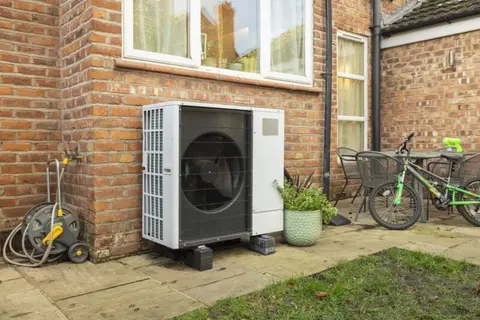
A heat pump is a device that transfers heat from one place to another – from outside your home, to inside – and uses electricity to move heat rather than generating it itself like a traditional radiator. This makes it highly efficient for both heating and cooling.

Image
Heat-Pumps-Everything-You-Need-to-Know
#heading2
How do Heat Pumps Work?
H2

A heat pump heats your home using electricity, meaning that you can also use your solar panels to power this unit – making for a much more sustainable use of energy. It works by taking heat from the air or ground, increasing it to a higher temperature and transferring it to your home to provide heating and hot water.

The heat pump unit is fixed on the outside of a property. Contrary to popular belief, the units, when properly installed and maintained, operate quietly with sound levels similar to a boiler.

For more information and advice on heat pumps, visit the Energy Saving Trust, Nesta or The MCS Foundation.

#heading3
What are the benefits of installing a heat pump?
H2

There are myriad benefits of installing a heat pump in your home, including:

  • They’re greener – installing one can lead to carbon savings of up to 70% compared to a gas boiler
  • They’re more efficient – they’re 3 times more energy efficient than traditional gas boilers
  • They’re more secure – they remove the need for any imported gas in your home, contributing to UK energy security
  • They get better over time – they’ll become greener every year as the UK electricity grid continues to decarbonise
#heading4
How much do heat pumps cost
H2

This depends on the type of heat pump you are looking at and whether the installation is standard or something a little more complicated. There are three main types of heat pump, these are:

  • Air-to-air heat pumps
  • Air-to-water heat pumps
  • Ground source heat pumps

The prices for these units can vary quite dramatically, alongside the installation costs which can rapidly rack up depending on the layout of your home. You can get an air source heat pump from our partners at EDF. Prices start at £3,180 after the Boiler Upgrade Scheme grant has been added (more on that later).

There are some factors which will contribute to the installation cost if you want to get the most out of your unit. For example, your pipes may need to be replaced to allow for higher flow rates, or if you don’t have a fully insulated home, this can make the heat pump far less efficient.

#heading5
Available Heat Pump Grants
H2

So, how can you make purchasing and installing a heat pump in your home more affordable?

We're supporting the government's new #WarmAndFuzzy campaign, which seeks to bring more awareness to the new government grant of £7,500 for anyone to upgrade their boiler to a heat pump.

Image
Heat-Pumps-Everything-You-Need-to-Know

These grants work the same way they do for any of the EV grants, making these fantastic bits of kit more affordable for all UK residents. To find out more about making your home smarter, greener, and more energy efficient, visit the government campaign page.

If you want to know more about heat pumps, there are also loads of stories from real customers’ experiences on the Gov website. Even houses built in the 1930s or homes which are fully off-grid are being able to benefit from the installation of a heat pump. Read their stories here.

Article read time
4 min read
H6
Summary
H2
  • Heat Pumps are an Efficient and Sustainable Heating Solution – Heat pumps transfer heat rather than generating it, making them three times more energy-efficient than gas boilers. They also integrate well with solar panels, helping to reduce carbon footprints by up to 70%.
  • Cost and Installation Factors – The cost of a heat pump varies depending on the type (air-to-air, air-to-water, or ground source) and the complexity of installation. Prices start at £3,180 with government grants, but additional costs may arise if home modifications (e.g., upgraded pipes or insulation) are needed.
  • Government Grants Make Heat Pumps More Affordable – The UK government offers a £7,500 grant to help homeowners switch from boilers to heat pumps, making them a more accessible and cost-effective option for many households.
H6
Off

Member for

9 months 4 weeks
On
Image
renault-megane-e-tech-white-background
Categories

A guide explaining regenerative braking technology and how it works.

#heading1
Regenerative braking in EVs
H2

Regenerative braking might sound like jargon straight out of a car enthusiast's glossary, but trust us, it's not as complex as it sounds. In fact, understanding this feature can add a whole new layer of appreciation for electric vehicles (EVs).

So, what exactly is regenerative braking, which cars come equipped with it, and why should it matter to you? Let's gently press on the brake pedal and find out.

#heading2
What is regenerative braking and how does it work?
H2

When you hit the brakes in an ICE car, the brake pads clamp the brake discs to slow the wheel down. This generates heat which is wasted during the process. Similarly, if you just take your foot off the accelerator, the car’s momentum as it gradually coasts and slows down is also lost.

All EVs have the same standard hydraulic system like ICE cars using brake pads. But some also have regenerative braking or regen braking, a clever piece of technology that takes energy from the car’s motor and uses it to recharge the car's battery and improve overall efficiency.

In EVs, the electric motor that powers the vehicle can operate forwards and backwards. Operating forwards, the motor powers the wheels. But with an electric car with regen braking, when you lift your foot off the accelerator, the motor reverses and becomes a generator. The car’s forward momentum feeds energy through this generator back into the battery, recharging it.

You’ll be able to tell when your EV uses regenerative braking because it feels like someone is applying the brakes when you take your foot off the accelerator. It’s similar to using engine braking to slow down an ICE car. If you don’t like the feeling of regen braking, some EVs will let you adjust its intensity or fully turn it off.

#heading3
What are the benefits of regenerative braking?
H2

Understanding the advantages of regenerative braking is key to recognising its value. Here's a breakdown:

  • Enhanced energy efficiency: By capturing energy that would otherwise be lost, regenerative braking systems make EVs more energy-efficient, extending their range.

  • Reduced wear and tear on brakes: This system takes some of the heavy lifting off traditional braking components (the brake pads and discs), leading to less wear and tear and lower maintenance costs.

  • Environmentally friendly: Less reliance on the conventional braking system means fewer emissions, making regenerative braking a greener option.

Improves battery life: By continually and slowly recharging the battery, regenerative braking can help improve the overall battery lifespan.

#heading4
Do all EVs have regenerative braking?
H2

The short answer is that most modern electric vehicles come equipped with regenerative braking systems, including fully battery electric and hybrid vehicles. However, the extent to which they harness this technology depends on the car.

Some models allow drivers to adjust the level of regenerative braking for a more personalised driving experience. Many have something called one-pedal driving, which feels like using the brake when your foot is fully off the acceleration pedal.

So, while regenerative braking is a common feature among EVs, the way it's implemented can differ from one model to another.

#heading5
Do the brake lights come on with regenerative braking?
H2

Yes, the brake lights come on when using regenerative braking in most make and models. It’s an effective signal to drivers behind you to notice you slow down and avoid potential accidents.

In EVs with regenerative braking, the brake lights aren’t solely controlled by pressing the brake pedal. They’ll also light up when you take your foot off the brake entirely at higher speeds, causing the car to decelerate significantly

#heading6
Learning more about EVs
H2

Regenerative braking is more than just a fancy feature. It's a symbol of how far driving technology has come in making vehicles more efficient, environmentally friendly and economical to run. Whether you're a seasoned EV driver or someone curious about making the switch, understanding how regenerative braking works can greatly enhance your driving experience and appreciation for sustainable technologies.

Want to learn more about EVs? Check out our EV buying guide for everything you need to know before switching to electric or our guide on range anxiety and how to beat it.

Article read time
4 min read
H6
Summary
H2

Regenerative braking captures the energy typically lost during braking to recharge an electric vehicle’s (EV) battery.

H6
Off

Member for

9 months 4 weeks
On
Image
Full-Solution-Solo-3
Categories

A glossary of terms related to electric vehicle charging - from EV types to key concepts.

#heading1
Vehicle types
H2


Term Definition
Battery Electric Vehicle (BEV) A car that runs purely on electric power, stored in an on-board battery that is charged from mains electricity (typically at a dedicated chargepoint).
Plug-in hybrid electric vehicle (PHEV) A car with a combination of a traditional internal combustion engine and a rechargeable battery, allowing for either pure electric-powered driving or extended range from a combination of the petrol engine and electric motor.
Plug-in vehicle (PiV) A blanket term for any vehicle with a plug socket, including BEVs and PHEVs.
Electric vehicle (EV) Can be used as a catch-all term for BEVs, PHEVs and REx, but often used to refer to pure electric vehicles i.e. BEVs.
Ultra Low Emission Vehicle (ULEV) A car that has official tailpipe carbon dioxide emissions of less than 75g/km, and is therefore eligible for grants and benefits from the UK government.
Range-extended EV (REx) An EV that has only an electric drivetrain, but a small petrol generator to charge the battery when range is depleted for longer trips. Often considered a type of PHEV.
Hybrid Car A catch all term for any vehicle that has a petrol or diesel engine and an electric motor. The main types are full, mild and plug-in hybrid.
Full Hybrid or
“Self-Charging” Hybrid
A 100% fossil fuelled hybrid car. The most common is the Toyota Prius. A small battery is charged through regenerative braking that generates some electric power in combination with a combustion engine, but the car’s energy originates from petrol. The electric motor can only power the car itself for short periods at low speeds.
Mild Hybrid Mild hybrids also have a small electric motor, but unlike full hybrids, it is solely used to assist the petrol engine. The car cannot drive on battery power alone.
Fuel Cell Electric Vehicle (FCEV) This term refers to an EV which uses a hydrogen fuel cell to power its electric motor. The fuel cells create the electricity to power the car. One example of an FCEV is the Toyota Mirai.
Alternative Fuel Vehicle This term is used for a vehicle that runs on a fuel other than traditional petrol or diesel. It includes engines that don't solely rely on petroleum such as PHEV, EV, FCEVS, but also includes HEVs.

Browse EVs that are available in the U

#heading2
EV charging connector types
H2
Term Definition
Type 1
 
A five pin plug that also features a clip, this connector is common in the US and is typically found on EVs manufactured by Asian and US brands (e.g. Nissan, Mitsubishi and GM/Vauxhall/Opel). However its prominence is fading as Nissan have moved to Type 2.
Type 2

 
A seven pin plug with one flat edge, this connector was originally favoured by European brands e.g. BMW, VW group, but is now becoming the most popular on all cars. Can carry three-phase power and locks into the socket of a charging point.
CHAdeMO

 
A round four pin plug, this connector is only used for rapid charging points and is typically compatible with EVs manufactured by Asian brands e.g. Mitsubishi and Nissan. Can offer Vehicle to Grid (V2G) but has less power than CCS and requires two separate sockets.
Combined Charging System (CCS)

 
Standardised by the EU, this connector combines two DC pins arranged below the Type 2 AC connector and uses 3 of the Type 2s pins. Found on most Type 2 BEVs.
UK 3 pin

 
The plug for a standard UK electrical outlet. This connector can be used to charge some EVs in an emergency but lacks the safety, speed and security features of a dedicated chargepoint.


Find out more about EV connector types

#heading3
Key concepts
H2
Term Definition
Top Up Charging The practice of plugging in your electric vehicle whenever you park while out and about, making use of the time your car is not in use to add charge to your battery. This helps avoid range anxiety and means you will rarely find yourself waiting for your car to charge.


Public Pod Points are ideal for top up charging and can be found using our free app.
Home Charging Plugging your electric car in to charge while it is parked at home, typically overnight. A dedicated home charging point is the best and safest way of doing this.
En-route Charging En route charging typically requires high powered rapid chargers, that put >100 miles into your electric car in the time it takes to grab a coffee, a snack and use the facilities. This enables you to take long-distance trips in your electric car, but is not needed day-to-day.
ICE'ing When a chargepoint is occupied by a vehicle with an internal combustion engine (ICE) , preventing an EV from charging. A polite note left on their windscreen with your phone number is generally the best response.
RFID Cards Using the same technology used in public transport travel cards, these cards are used by many older chargepoints to allow access to EV charging. Find out the pros and cons of this method on our How to Access Public Charging guide 
The Pod Point Network On the Pod Point Network you can charge your EV without RFID cards or membership. Simply use the Pod Point app to find a chargepoint and start your charge. Alternatively, some Pod Point rapid chargers can be used with just the tap of your contactless bank card.
Contactless Payment Available on some rapid chargers, it is possible to start and pay for your charging session with the tap of your contactless credit/debit card.
Range Anxiety The term given to a fear of running out of charge while driving a plug-in electric vehicle. This fear can be avoided by top-up charging wherever you park throughout the day and en-route charging on longer journeys.
Range per hour (RPH) Miles of range per hour of charge.
Kilowatt hour (kWh) A unit of energy equivalent to the energy transferred in one hour by one thousand watts of power. Electric car batteries are typically measured in kilowatt hours. 1 kilowatt hour is typically 3-4 miles of range in a BEV.
Smart charging A catch-all term for a series of functions that a Wi-Fi connected chargepoint can perform. Typically this refers to things like load balancing, energy monitoring and “managed charging”, i.e. shifting charging periods away from periods of high grid demand and/or low grid supply and to periods of low grid demand and/or high grid supply.
Vehicle to Grid (V2G) The concept of using your electric car battery to release power back through the charger either for use in the local building or back into the grid at large during time of high grid demand. Find our thoughts on the Vehicle to Grid blog.
Single-phase Power Typically found in most UK homes and some businesses, this is what all standard 3 pin plug sockets provide. A single-phase electricity supply can power a dedicated chargepoint up to .
Three-phase Power Often found on commercial and industrial sites, this provides three alternating currents and allows for 22kW AC charging. Significant three-phase power availability is also a prerequisite for DC rapid charger installation.
The Rapid Charge Paradox The counter-intuitive realisation that it is only at the fastest chargers where EV drivers typically spend time waiting to charge. This is because most charging is done at slower chargepoints that charge the car while the driver is otherwise occupied. Find out more about EV Charging Etiquette on our guide.
Ultra Low Emission Zone (ULEZ) A ULEZ is predominantly about improving the air quality within the zone by discouraging those vehicles that produce more harmful emissions through an additional financial charge.The minimum emission standards are Petrol: Euro, Diesel: Euro 6. These standards are more stringent for diesel (due to higher air quality impact), but they are both met by all plug-in hybrid vehicles (PHEV) and, of course, all full battery electric vehicles (BEVs).


Learn how to charge an electric car

#heading4
Types of charging
H2
Term Definition
Trickle Charging The slowest type of charging, this is best reserved for long overnight charges at home and is either provided safely by de-rated dedicated chargepoints, or through a standard 3 pin plug, which lacks certain safety features.
Slow Charging A better option for home charging, this allows for both top up and overnight charging through a dedicated chargepoint. The 3.7kW Pod Point Solo is a good example of this type of charging point and provides faster charging times than a 3 pin socket.
Fast Charging Ideal for top up charging, most fast chargepoints offer 7kW, ideal for keeping you going while out and about. Typically found in homes, workplaces and in public car parks where people typically spend circa 40 mins or more. Maximum charging speed may be limited by your vehicle’s onboard charger. You can find more information on our vehicle guides
Rapid Charging Typically used for en-route charging on long distance journeys, rapid chargers can also be used as occasional “caught short” chargers, particularly if available somewhere convenient, e.g. a supermarket. Rapid charging takes place from 43kW power and above. Maximum charging speed may be limited by your vehicle’s onboard charger. You can find more information on our vehicle guides.


Find out more about EV charging speeds

#heading5
Measures of electric range and efficiency
H2
Term Definition
Manufacturer’s Claimed Range and Efficiency This has traditionally been the most optimistic measure, achievable in specific circumstances. Often the manufacturers would use numbers derived from the “NEDC” cycle, however the "WLTP" measure is more frequently used nowadays.
NEDC A cautionary tale in use of the word “new”, the New European Driving Cycle (NEDC), last updated in 1997, was designed to assess the emission levels of car engines and fuel economy in passenger cars. It has fallen out of favour as manufacturers were configuring their cars’ performance for the NEDC test, rather than the NEDC measuring their cars’ real world performance. When it comes to electric vehicles, the NEDC gives quite a generous assessment of range. WLTP is a much more favourable measure in the present day. 
WLTP The Worldwide harmonized Light vehicles Test Procedure (WLTP) is the more thorough emissions and efficiency testing regime that is now used as the official standard, replacing NEDC. The test provides a less optimistic verdict on real world electric range, but it is arguably still more optimistic than a vehicle’s actual real world range.
EPA The USA’s Environmental Protection Agency (EPA) has established its own testing methodology for electric range which is arguably the toughest, and thus closest to real world performance of the available metrics. Find out more about how the EPA rates EVs in this article. 
Article read time
9 min read
H6
H6
Off

Member for

9 months 4 weeks
On
Image
CRS09433

Electric cars are still a bit more expensive to buy than an internal combustion engine vehicle, but overall they require much less maintenance and cost less to service and maintain as a result.

#heading1
Electric drive trains are simpler, so EVs require less maintenance
H2

How difficult a machine is to maintain is usually directly proportional to its number of moving parts. The number of moving parts in an electric drivetrain is vastly lower than in an internal combustion engine and therefore maintenance is much easier. But there is also no metal on metal wear in the same way as, for example, a clutch system.

Of course, plug-in hybrid maintenance is more like conventional car maintenance, as they still have conventional components like exhausts, clutches, gear boxes etc.

We focus this guide on maintaining the pure electric cars.

Are electric cars cheaper to maintain?

Electric cars can be cheaper to maintain, especially as servicing tends to cost less on average when compared to an ICE car. In addition to saving on servicing costs, the lower cost of using electricity to power your car when charging at home can add up over time, increasing your savings even more.

While there are aspects of electric car ownership that are clearly cheaper costs associated with an ICE car, you can expect traditional car parts such as tyres and brake pads to cost roughly the same.

Image
Smart Charge

Tip: The maintenance costs for an EV will vary significantly by make and model of the vehicle. As such, this guide gives you pointers on how and where to find the outline costs of a maintenance item, rather than specifics.

#F2F5CF
#000000
#heading2
Battery repair/replacement
H2

Though manufacturers tend to offer compelling warranties (e.g. 8 year from Jaguar, Nissan, Renault and Tesla) on the longevity of EV batteries, battery degradation has been a big worry for many about electric cars. In particular, the fear that replacing the battery will be necessary and expensive.

While different car manufacturers are experiencing slightly varying results, overall evidence from the real world is that the rate of decay is much less than feared - and some manufacturers are now expecting their batteries to outlast the rest of the vehicle.

Below’s crowd-sourced data on Tesla’s battery degradation shows ~7% degradation after an incredible 250,000 miles.

Image
Electric-Car-Maintenance-Costs

Though it is rare, should you notice a significant depreciation in the range of your battery, it is possible that the battery pack is experiencing some undue decay. With most pure electric cars on the road today still in warranty, the first task is to contact the manufacturer who can look to service the battery.

Battery repair usually means replacing some sub-optimal cells, rather than the entire battery pack. So this can be thought of like a major engine repair in a conventionally fuelled car.

But we must stress - this is rare!

An estimate from Book My Garage puts the average EV battery replacement cost at £5,378.43. We want to be clear - this is only an estimate. Battery repair/replacement costs will vary between manufacturers and will almost certainly have to be undertaken by the manufacturer themselves. Therefore, in order to establish specific costs, we recommend contacting the EV manufacturer directly - and be sure to check to see if your issue is covered within the vehicle warranty.

Image
Smart Charge

Tip: To extend the battery life of your electric vehicle, try not to leave your car charged to 100%, unless you are about to set off on a long trip. Likewise try not to leave the battery nearly empty for long periods. Charging to 80 or 90% and topping up as soon as possible when you’re getting low is optimal.

#F2F5CF
#000000
#heading3
Tyres and brakes
H2

our electric car still has tyres and brakes and thus brake discs just like a petrol or diesel car.

Tyres

Pressure:

Tyres should be maintained at the recommended pressures (usually listed on a plate inside the door frame). You can do this with a pump at home or at a petrol station (where you can amuse yourself with the price of petrol). Tyres that are running under pressure can significantly reduce your car’s efficiency and thus reduce their range, while over-pressure tyres have reduced lifespan.

You can expect to budget anywhere between £45 for a budget tyre replacement to £220 for a top-end tyre. Replacement including labour for a mid-range tyre will set you back £75 (according to Checkatrade).
 

Wear:


Electric cars are generally heavier than their equivalent conventionally fuelled vehicles, this can lead to slightly accelerated tyre wear. Tyres should be regularly checked for wear and changed once they have worn down the tyre wear indicators.

Tyre prices vary according to their size and how common that size of wheel is. Generally, smaller, more common tyres are cheaper.

In order to get prices, establish the width of the tread that meets the road and the thickness (or profile) of the tyre between the wheel rim (both in mm) and the diameter of your EV’s wheels (in inches).

For example, a smaller Nissan LEAF wheel requires 205mm/55mm 16inch tyres. You can then use the size to search for quotes from tyre supply and/or fitting companies.

Image
Smart Charge

Tip: Your tyre tread should protrude no less than 1.6mm from the central ¾ of the tyre. To assess this, many tyres have tyre wear indicators in the grooves of the tyres.

Once the tread has reached the indicator level, it is time to replace them.

Alternatively, a quick check is to hold a 20p to the tyre. If the edge of the 20p is obscured by the tread, they are still legal, but if you can see the edge of the 20p, it’s time to change.

#F2F5CF
#000000
#heading4
Brakes
H2

While electric cars have fairly conventional disc brakes, they are really used just as emergency back up to the more regularly used regenerative braking. This means substantially reduced brake wear to the extent that Elon Musk recently stated that brake pads actually outlast the life of Tesla vehicles.

Image
Electric-Car-Maintenance-Costs

This is incorrect. Vast majority of vehicle motion is returned to the battery, as the electric motors act like a generator in reverse. Brake pads on a Tesla literally never need to be replaced for lifetime of the car.

Elon Musk (@elonmusk) 26 December 2018

#F2F5CF
#000000
Image
Smart Charge

Tip: Taking regenerative braking to the max, the latest NissTesla Model S and Audi Q8 e-tronan LEAF models have an “e-pedal” feature that allows the regenerative braking to decelerate the car to a complete stop, meaning complete trips can be made without using the brake pads.

If you have to change your brake pads and discs, you can expect to pay £251.99 on average (data from WhoCanFixMyCar). The cost of this service can greatly vary between locations and car make, so it’s worth shopping around.

#F2F5CF
#000000
#heading6
Windscreens, wipers and washer fluid
H2

Electric cars’ windscreens are just as liable to chips and cracks, and they use their wipers and washer fluid every bit as much as conventionally fuelled cars. So you need to maintain the windscreen, replace the blades when they wear and keep the fluid topped up just the same.

Image
Smart Charge

Tip: Washer fluid and blades should be in the <£50 range from the likes of Halfords, but clearly windscreens are more expensive items. To determine prices we recommend contacting windscreen repair specialists (e.g. Autoglass) but also checking with your electric car insurance provider to see if these costs can be covered by your policy (sometimes with no impact on your premiums).

#F2F5CF
#000000
#heading7
Wear and tear
H2

Of course, electric cars are still machines. They still have plenty of components. And those components do occasionally go wrong. For example, the author of this guide has had an issue with parking sensors and a door handle on his BEV. Clearly neither had anything to do with the car’s drivetrain!

As such, be on your guard for niggles and such, but in general forget the oily rags, EVs make for a far easier life for their owners.

What does it cost to service an electric car?

Surprisingly to some, it costs less to service an electric car than a petrol or diesel car. The average cost for a full service of an EV currently is £143.75, whereas the average cost for an ICE car comes to £174.23 - around 18% more (according to WhoCanFixMyCar).

One of the reasons for a lower service cost is the testing and time required. An electric car has far fewer components than an ICE car, and doesn’t require services such as replacement of filters and oil changes.

Any checks associated with the internal combustion engine are replaced by straightforward diagnostic reports on electric components and the battery, and visual check for damage. Inspection of standard parts such as brakes, tyres, lights, steering and suspension remain the same.
 

MOT costs for electric cars

MOTs are no more expensive for electric cars than for petrol or diesel cars. The Driving & Vehicle Licensing Agency (DVLA) sets a maximum charge for any MOT, whether that’s for a 9-seater van, motorbike or small car. The current charge for a 4-wheel car like the Tesla Model S and Audi Q8 e-tron is £54.85.

Article read time
8 min read
H6
Summary
H2

Electric drive trains have far fewer moving parts than internal combustion engines (ICE), meaning that electric car service costs are much lower when compared to ICE vehicles.

Despite that, they do still require some regular maintenance that incurs cost, such as:

  • Tyres and brakes
  • Windscreens, wiper blades and washer fluid
  • Battery repair or replacement (rare!)
  • General wear and tear
     
H6
Off

Member for

9 months 4 weeks
On
Image
Velocity-charger-image-Low-res-23

A guide to the etiquette around the use of public and workplace EV charging points.

#heading1
The Golden Rule of EV Charging Etiquette
H2
Image
Smart Charge

Electric vehicle charging points are for charging plug-in vehicles only

#F2F5CF
#000000
#heading2
H2

A seemingly obvious statement, but there are two parts:

1. Plug-in vehicles only!

Unless your car can make use of a charging point then this bay is not for you. Parking an “Internal Combustion Engined” (ICE) car in a charging bay is known as “ICE'ing”. It will win no one any friends, nor admiration.

2. Charging only!

Even if it is a preferable space, you should only park in the bay by the EV chargepoint if you are going to charge!

When you are at a public chargepoint it’s also considerate to move once you have completed charging to allow another driver use of the chargepoint.

Of course there are some chargepoints where this isn’t possible, e.g. at airports or train stations - so use your initiative.

Image
Smart Charge

Tip: You often don’t need to charge to 100% before moving. It is likely you can continue your journey with less, so consider moving once you have got to what you consider an appropriate threshold. However, someone using a top-up AC chargepoint to charge their car is never wrong - that is what the charger is for. If other drivers need to charge too then the solution is to get more chargepoints!

#heading3
H2
Image
Rapid-charger-header

Rapid charging

#heading4
Rapid charging etiquette
H2

1. Do not block the bay with an internal combustion engine vehicle.

This is the equivalent to finding you are blocked from entering a petrol station you really need by someone parking across the only available entrance. The rage is palpable.

2. Don’t use a rapid charger if your plug-in vehicle can’t rapid charge.

Some rapid chargers have AC sockets which some EVs that can’t rapid charge can technically top-up charge on.

Most PHEVs (and some BEVs) can only charge at the slower AC charging rates. If not an emergency for a BEV driver, they should avoid rapid chargers while PHEV drivers should do the same, as they can continue travelling using fossil fuel by virtue of being a PHEV.

It is not an appropriate use of a rapid charger to charge at 3.6kW or 7kW, potentially for hours, blocking a BEV who needs to use it for their onward journey.

3. As soon as you have charged as much as you need, unplug and vacate the bay straight away.

The rapid charger is not for parking at. It’s for charging and moving on from. This is one of the reasons for The Rapid Charge Paradox (“The faster the charger, the longer you spend watching your car charge”) - you can’t go far from a rapid charger while using it. While inconvenient this is about being considerate to other users. And increasingly drivers who leave their car charged and plugged in will be hit with “idle fees” for overstaying.

Image
Smart Charge

Tip: Not only is it kind to head off before your car has rapid charged to 100%, it is an efficient use of time. The last 10% of your battery typically charges quite slowly, so it is quicker to get going when you reach circa 85% either to charge at the next en route rapid charger, or, better still, to charge at your destination.

#F2F5CF
#000000
#heading5
The 5 Chargepoint Commandments
H2
  • Thou shalt not ICE.
  • Thou shalt not park in a charging bay, unless to use the chargepoint.
  • Thou shalt not unplug thy neighbour.
  • Thou shalt leave the rapid charger as soon as you have finished charging for your onward journey.
  • Thou shalt not covet the (appropriately used) charger of thy neighbour.


Can someone unplug my electric car?

Unplugging someone’s car is usually impossible in practice, there are locking mechanisms in the car-side Type 2 socket and some Type 1 sockets. However, some Type 1 cars can still be unplugged by a 3rd party.

While it’s not illegal for someone to unplug your electric car without your consent, it’s bad EV charging etiquette. As long as you vacate your spot once you’re done charging, this shouldn’t be an issue.

Image
Workplace-header-V4

Workplace charging

#heading6
Workplace charging pointers
H2

You are unlikely to need the charger for the whole day, but depending on your job/how busy your day is, it can be tricky to move. Thus:

  • Try to move if there’s demand from other drivers - maybe leave a note with your number?
  • Don’t get too grumpy with colleagues if they can’t move.
  • Get more chargepoints installed!

If you have any further queries then we recommend speaking to our Workplace team or checking out our Workplace EV charging solutions page.

Image
Smart Charge

Tip: Workplace charging is an absolutely critical part of the charging ecosystem, and a great opportunity to charge, particularly for those without home charging. There is also a Workplace Charging Scheme grant available for businesses, which reduces the cost of chargepoints.

#F2F5CF
#000000
#heading7
General etiquette tips
H2

Some basic etiquette makes everyone’s lives easier, so here are our top chargepoint pointers:

  • It is better to be philosophical about other people abusing the commandments. You will quickly forget about the annoyance. You will not soon forget about a conviction for criminal damage.
  • Try to match rapid charge events with similar length activities - coffee in a local café, a similarly timed walk, use of facilities. Watching your car charge is no one’s idea of fun.
  • Try not to use the last possible en route rapid charger, ideally use the one before the penultimate. This gives you a safety buffer should it be occupied or out of service, as you have two more to try ahead of you.
  • Try to get into the habit of topping up at your destination whenever you can. Whilst this feels alien for those used to refuelling, it reduces your reliance on (usually) expensive and inconvenient rapid charging and means charging happens when you are busy doing other things, thus minimising your time spent waiting to effectively nil.


Can I sit in my car while charging?

Yes, you can sit in your electric car while charging as long as you leave your bay once you’re done. Although some have previously raised concerns over the possibility of EV charger current interfering with certain medical devices in human bodies, a study published in the journal of the European Society of Cardiology found no proof of this. 

So whether you’ve such a device, like a pacemaker or defibrillator, or not, sitting in your car while charging is generally safe.


What is ICing in EV charging?

It’s the act of parking an internal combustion engine (ICE) vehicle in a bay designated for EV charging. ICE cars don’t need and can’t make use of charging locations, so when they occupy a charging bay, an electric car that might need to top up can’t use it.

It’s frustrating for EV drivers, especially as chargepoints are usually far outnumbered by regular parking spots in supermarket car parks and parking garages.

Image
Smart Charge

Tip: In order to make your displeasure with ICEing known we suggest you contact the business/site hosting the chargepoint to ask for enforcement of the bays.

Through projects like EV Zones, Pod Point are working hard on installation design and encouraging enforcement where we can, but support from EV drivers is welcome!

#F2F5CF
#000000
Article read time
7 min read
H6
Summary
H2

It is important to be considerate when charging your EV so that you don’t inadvertently prevent other drivers from charging when they need to. We’ve pulled together the key areas of charging etiquette that you should be aware of:

  • The Golden Rule of EV Charging Etiquette
  • Rapid charging etiquette
  • The 5 Chargepoint Commandments
  • Workplace charging etiquette
  • General etiquette tips
H2
Off

Member for

9 months 4 weeks
On
Image
person plugging cable into Pod Point EV charger

The ultimate guide to everything you need to know about electric car charging, including charging equipment, how long it takes to charge, and how much it costs.

#heading1
H2
Image
Eco-System-2021-Solo-3
#heading2
The UK charging ecosystem
H2

Before we explain how to charge your electric car, it’s worth understanding how the charging ecosystem works.

Many drivers assume that electric car charging works in a similar way to refuelling petrol/diesel cars, but that isn’t the case. Gone are the days when you need to drive to a service station to fill up your tank.

That’s because electric car chargepoints can be installed in any location where there’s enough available power, with many relatively lower powered EV chargers installed at places where drivers spend a long time parked.

This way, their car will be charging whilst they’re spending a long time at that destination, giving them a fuller battery when they return to move to the next location.

For the majority of drivers, this will either be overnight at home, at work, or at a public destination like a supermarket or shopping centre. There’s also en-route charging for long-distance journeys, which must be higher powered for faster charging. This is what we call the charging ecosystem.

Be sure to follow the general EV charging etiquette when using chargepoints at your workplace or in public!

Image
image-1 (1)

How to charge an electric car

Most of the time, you’ll charge your car at home, at your workplace, or with public chargepoints, when your car is parked for a long time.

But instead of waiting for the battery to run to empty and charging from 0% to full, it’s a good habit for drivers to charge their car whenever it’s parked to keep their EV topped up. As they say, “ABC: Always Be Charging”.

If you’re on a long trip, you may also stop at a service station for a quick charge on a rapid charger. See our handy tips on how to prepare for a long journey in an EV.

Where you charge determines how long it takes to charge, how much it costs, and what type of equipment you’ll need. 
 

Once you’re moving, there are ways to optimising the range of your electric vehicle to maximise the amount of distance you can cover in a single charge.

Learn more about charging an electric car.

#heading3
EV charging equipment
H2

Some chargepoints - including all rapid chargers and a handful of fast chargepoints - are tethered, which means they have a charging cable already attached.

Most AC chargers have sockets, so you should carry your own charging cable. This way, you can access any untethered (or universal) electric car charging ports, which instead have a socket and no cable.

Charging cables have two connectors - one for the chargepoint socket, and one for the electric car. Electric vehicles either have a Type 1 or, more commonly, Type 2 socket for slow/fast charging and CHAdeMO or CCS for DC rapid charging (for those vehicles that can).

Image
pod-point-image (1) (1)

Learn more about the different kinds of sockets and EV connector types and how to choose the best charging cable for your EV.

#heading4
How to charge an EV at home
H2
Image
Hit-the-road-happy-I

Charging at home is the most convenient option, provided you have dedicated off-street parking. 

Although you can charge your electric car from a domestic socket using a standard 3-pin plug, it’s not recommended. They aren’t designed to support the consistent loads needed, which can result in overheating that puts your home at risk.

Instead, it’s better to get a dedicated home chargepoint, as they include numerous safety features to keep your home safe. They’re also much quicker than 3-pin plugs, and can include smart features once connected to your home’s Wi-Fi.

Learn more about how to charge an EV at home.

#heading5
EV charging at work
H6

Businesses are increasingly looking to provide workplace charging as part of their employee benefits and perks, which can help with retention and workplace satisfaction.

The UK Government offers a grant, called the Workplace Charging Scheme (WCS) to encourage more adoption amongst businesses. It reduces the cost of purchasing and installing single-socket chargepoints at workplaces by 75% (capped at £350 per socket).

Charging an EV at work can be very convenient, as people typically spend a decent amount of time at their workplace.

Also, as most commuting drivers cover fewer than 30 miles to get to work, their EVs won’t need long to recharge to full, so 7kW charging stations are often sufficient. Rapid chargepoints may however be beneficial to quickly refill fleet vehicles which can’t park up for long.

Image
circle-how-to-charge-at-work (3) (1)
#heading6
Commercial EV charging at public destinations
H2
Image
Circle-How-to-charge-public

Businesses can benefit from offering public charging. From attracting and retaining customers to covering costs or even generating a profit, there are a number of business models available for commercial EV charging.

For drivers this means another convenient location to top-up their battery when out and about. This can be especially useful if you can’t get a charger installed at home.

As coverage is expanding, soon drivers can be sure to find a chargepoint wherever you park.

These places range from supermarkets and shopping centres to longer-stay destinations like train stations and airports.

There are four common methods of accessing public chargepoints: plug in and charge instantly, via an app, tapping a contactless payment card, or using an RFID card.


Learn more about the business models for EV charging.


Article read time
6 min read
H6
H2

With electric vehicles (EVs) becoming increasingly popular in the UK, more drivers are learning how electric car chargers work than ever before.

Unlike fuelling a petrol or diesel car, drivers have more to consider when using an electric car chargepoint, such as different connectors, compatibility with their EV, and different charging rates.

This may seem complicated, but in reality, it’s actually quite easy once you get to grips with it.

H6
Off

Member for

9 months 4 weeks
On
Image
Theydon-Bois-Low-Res
Categories

A guide explaining the meaning of electric vehicle (EV) specific warning lights and the actions you should take when seeing them on your dashboard.

#heading1
What happens when a warning light comes on in my EV?
H2

While you should never ignore a warning light, not all are negative. Some are simply there to let you know that things are working as they should, but others indicate significant faults that should be looked at immediately.

#heading2
What do the warning light colours mean?
H2

EV warning lights will appear in one of three colours on your dashboard, following the traffic light colour system:

  • Green – the system is active and working as expected

  • Yellow – there’s something amiss with the system which isn’t critical but should be checked

  • Red – there’s a serious fault and you should seek assistance immediately and stop driving as soon as possible

#heading3
EV dashboard warning lights and their meaning
H2


Ready to drive

Showing the outline of a car and an arrow pointing forwards and backwards, this green-glowing light indicates that the EV is ready to drive. Electric cars are quieter than ICE cars as they don’t have an engine, so this symbol helps you check that the car is on.
 

Eco mode

A green label with the word ‘ECO’ displayed on it, the eco mode warning light lets you know that the EV is adjusting its power output to extend your range, meaning you’ll get more miles out of your battery.
 

General fault

The general fault warning light is red and signals to you that there is at least one serious fault with your EV. If this light is on, you should take your electric car to a garage as soon as you can.
 

Limited power

Displaying a yellow tortoise symbol, the limited power warning light will coincide with a speed reduction. You should seek assistance from a trusted garage to identify the problem and get it fixed, as it may be related to an electrical fault or issues with the battery temperature.
 

Low battery

The low battery warning light is a simple yellow illustration of a charging station with a 2-pin connector and cable which comes on when the EV is at around 10% charge. When the battery drops to 5%, this light starts flashing to warn you that the battery will soon run out of charge.
 

Electrical fault

Showing an outline of a car with an exclamation mark overlaid, this warning light alerts you of an electrical system issue in your EV. When it’s showing in yellow, you should take your car to a garage soon. If it appears in red, don’t delay having a professional inspect the EV, as it could shut down or reduce power.
 

12V battery charge

EVs and ICE cars use a 12V battery to start their electric motors. If you see the red 12V battery charge warning light on your dashboard, a battery symbol with a lightning bolt over the top, your smaller battery is low on charge.
 

Pedestrian alert

A white warning light showing a person on the road. The pedestrian alert is available in EVs and ICE cars with detection systems. Assuming you haven’t already spotted them, brake immediately when you see this light on your dashboard to prevent an accident from happening.

Auto-glide control indicator

The auto-glide warning light centres the letters ACG in a green circle which lets you know that it’s reducing deceleration to let you coast in your EV. It reduces energy consumption and enhances range.

External sound system issue

This warning light consists of a yellow car and speaker symbol, informing you that the noisemaker in your EV isn’t working. EVs are much quieter than ICE cars, so they emit an artificial sound to increase safety and alert pedestrians and other road users of their presence.

Regenerative brake system warning indicator

Electric cars also have mechanical brakes, consisting of brake pads and discs, and an electronically controlled one. Showing on your dashboard in either yellow or red with the letter RBS in a circle, this warning light points to a fault with the regenerative braking system. If you see this, you should take your car to the garage as soon as this light appears, especially if it’s red.

Article read time
4 min read
H6
Summary
H2

There are a number of warning lights that are specific to EVs. It’s important you know what they signal and the urgency with which you need to act.

H6
Off

Member for

9 months 4 weeks
On
Image
G7
Categories

A guide covering how loud electric cars are and how they can help reduce noise pollution.

#heading1
What is noise pollution?
H2

Noise pollution is one of the major forms of pollution that has a negative impact on health, both for people and wildlife. In fact, the World Health Organization (WHO) has declared traffic noise - which includes roads, rail, and air - as the second leading cause of negative health in western Europe.

The WHO recommends that people aren’t exposed to noise exceeding 53 decibels (dB) during the day-night period caused by road traffic. Anything over ~75 dB has the potential to damage our ears.

#heading2
What causes noise pollution?
H2

There are lots of sources of noise pollution such as construction or industrial noise, sounds produced by home appliances, or large events like concerts or sports. Noise pollution is most strongly felt in dense urban areas with high populations like cities.

Traffic and vehicles are also a large source of noise pollution, with most sounds caused by vehicles breaching the WHO’s 53 dB recommendation. For example, a car can produce sounds reaching anywhere from 70 to 90 dB, whilst a bus can be as loud as 100 dB or more.

#F2F5CF
#000000
#heading3
What is the impact of noise pollution?
H2

Whilst there is little research into how noise pollution has changed over time, research by the UK Health Security Agency (UKHSA) conducted studies in 2023 to better determine how noise impacts our health and wellbeing.

According to their research, 40% of the UK population - roughly 26.8 million people - is exposed to harmful levels of noise pollution caused by traffic.

Prolonged exposure to noises can lead to numerous health problems. The most obvious are hearing loss and tinnitus. But noise pollution can also cause migraines, anxiety and depression, and even sleep-related disorders like insomnia.

#heading4
How can EVs help combat noise pollution?
H2

In the UK and EU, there are laws in place around car noises. The legal limit for vehicles is 72 decibels, although this is due to be reduced to around 68 decibels by 2026.

However, because they are powered by an electric motor and not an engine, electric cars are significantly quieter than their ICE equivalents. The only sound they naturally produce comes from the tyres of the road, or their wind resistance.

This means EV sounds are naturally lower than car noise laws. They can have a profound impact on reducing traffic sounds and lower noise pollution, especially in larger cities. So not only are they better from an air pollution perspective, electric cars are also great at combating the negative effects of sounds on both humans and animals.

#heading5
Is an EV’s lack of noise dangerous to pedestrians?
H2

There are some safety concerns with electric cars being much quieter than what we’re currently used to.

EVs are so much quieter in fact, that they have a legal requirement to emit a sound of at least 56 decibels. This artificial engine sound simulates how an ICE car sounds, so that it increases when the car speeds up and decreases when it slows down.

The reason for the noise is that the sound helps to alert pedestrians and keep them safe. However, the sound they produce is still much lower than a standard petrol or diesel car. This means they have been designed to be safe for pedestrians whilst also preventing noise pollution.

Article read time
3 min read
H6
Summary
H2

When drivers look to go electric, the main benefits presented to them about electric vehicles (EVs) is that they’re cheaper to run and maintain. They’re also much better for the environment than equivalent internal combustion engine (ICE) cars.

But one thing drivers often don’t think about is the positive impact electric cars can have on noise pollution and how minimal EV road noise is.

#F2F5CF
#000000
H6
Off

Member for

9 months 4 weeks
On
Image
Tesco-Braunton-Low-Res-3

A guide that covers how you can still drive a full battery EV (BEV) even if you can’t have a home charger.

#heading1
The charging ecosystem
H2

It’s most convenient to charge an electric car where it is parked anyway (which is about 95% of the time) using chargepoints installed at the locations you regularly visit. 

For most people that means home, then work, then your other destinations - while those journeys beyond the range of your battery will require less frequent use of high-powered en route chargers.

Image
Eco-System-2021-Solo-3

Home charging is where most charging occurs because it’s so convenient. However, not everyone has suitable off street parking at home that allows them to have a home charger.

Image
Home-install-2021-Solo3

Do not write off getting an EV because you can’t get a home charger, we just need to look elsewhere in the charging ecosystem.

#heading2
Workplace charging
H2

Many people use their car to get to work and park at their workplace for a good many hours, as such workplace charging offers a huge opportunity. 

With most commuters driving less than 30 miles to work and BEVs increasingly having real ranges of more than 200 miles, workplace charging makes owning a BEV easy, particularly when coupled with the use of the public network for top up, as required. 

Some modal interchanges (e.g. rail station car parks) can also fulfil the Workplace role.

Image
Smart Charge

Tip: The government WCS grant allows businesses to reduce the cost of Workplace chargepoints by up to £14,000. If you want your employer to offer chargepoints at work, the best thing you can do is ask them to contact our team to discuss options.

#F2F5CF
#000000
#heading3
Destination top-up charging
H2

If you don’t have a regular charging spot at home or work, you can always top-up at your other destinations when you’re out and about. 

Pod Point is one of the companies working hard to build the public network so that there is an easy to use chargepoint everywhere you park. 

There is still a way to go until there are enough chargepoints that mean you have enough top up charging opportunities to cover all but your infrequent long journeys - but we will get there.

Image
Smart Charge

Tip: The public network that can sustain those with no home or work charging is likely to develop as a result of the majority of BEV drivers who can charge at home/work demanding more public charging opportunities.

#F2F5CF
#000000
#heading4
Destination long-stay charging
H2

The dwell time in some car parks is so long that it enables a substantial, or even complete charge of even the biggest batteries. 

Getting access to these locations can substitute having a home or workplace charger. As discussed, modal interchanges like train stations, but also airports, can fulfil this role. Potentially some commercial car parks, that have low occupancy at times e.g. over night, may offer this facility to local drivers.

Image
Smart Charge

Tip: Offering car parking for long stay charging is a big commercial opportunity. Businesses can generate a return by selling the parking and ability to charge, but also by making their location a port of call at the start and end of each charge event.

For example, imagine a driver who’s been charging their EV overnight in a supermarket car park. When they return to collect it on the way to work in the morning, they may well buy their breakfast from the supermarket’s bakery.

#F2F5CF
#000000
#heading5
Rapid charging with charger as destination
H2

Driving to a high powered charger, for the purpose of putting energy into your battery is much like the refuelling model for cars with internal combustion engines. 

While detouring (e.g. once a week or so) to charge at rapid chargers benefits from familiarity to the ICE driver, it is not the most appealing option; it can be quite time consuming in both the extra detour and the wait for charging (beware the Rapid Charge Paradox, i.e. “The faster the charging point, the longer you spend watching your car charge”).

If you can twin the trip with something productive this can help, but it is tricky to get the timing right and it’s not considered good etiquette to occupy the charger after you are finished charging.

Perhaps we will develop facilities at these hubs that make the dwell time productive/enjoyable (or vice versa). However, scaling rapid charging is very costly, making charging costs likely to threaten/exceed the cost of petrol for the users.

Well placed rapid chargers are critical to EV uptake, but compared to inexpensively charging when you have left your car parked while you do something else, they are not an appealing way to do the bulk of your charging.

Image
Smart Charge

Tip: One concept of regular rapid charge usage that feels more friendly is to top up on the rapid charger just as long as you are using a convenience facility. For example, if you stop to get a sandwich, a drink and use the facilities on the way home, on a high powered charger you may get some 50-70 miles of range with no material wait time.

But higher infrastructure costs also mean this will be an expensive way to charge.

#F2F5CF
#000000
#heading6
Future gazing...
H2

While we believe anyone can drive a BEV if they so wish, some may currently need to suffer a degree of inconvenience to do so. But it won’t stay this way forever. Aside from a significant development of the charging network, what technologies are on the way that will help?

On-street charging

To date on-street charging is a mix of a handful of very expensive to install conventional chargepoints, that add to street clutter and some sockets added to existing lamp-posts that cleverly allow users to eke out a slow, but useful charge. Neither will scale to materially enable mass adoption.

We believe it is feasible for charging infrastructure to be installed into the street environment in an unobtrusive and cost effective manner. However, such systems will require sufficient demand and utilisation, and in order to get to this point, we need to see more EVs hit the market.

Autonomous features

When you can send your car somewhere without having to drive it, those without home chargers will be able to send their cars someplace to charge, thus giving a new utility to long-stay destination parking. However, those without off street parking are likely to be amongst the first to ditch their cars, opting instead for ride-hailing very inexpensive autonomous electric vehicles (AEVs) for their vehicular mobility needs. This will further reduce the scale of the challenge.

Image
Smart Charge

Tip: Providing the capacity to charge the AEVs (largely overnight during fleet redundancy) will be its own challenge, and some form of inductive or smart conductive charging will need to further develop. However, should Tesla’s approach of establishing a fleet of customer-owned AEVs take hold (and it has advantages), then the AEV fleet may be democratised and much of it still charged at home and work. Time will tell!

#F2F5CF
#000000
Article read time
6 min read
H6
Summary
H2

Sometimes it’s not possible to have a home charger installed where you park your car (eg. you don’t have off street parking). If that’s the case, it doesn’t have to be a deterrent to EV ownership. It’s still entirely possible to drive a full battery EV (BEV) by charging at other locations including:

  • At work.
  • At public destinations.
  • At rapid chargers.
  • Locations that don’t exist yet but might in the future.
H2
Off