Member for

9 months 4 weeks
On
Image
guides6 web(1
Categories

A guide answering questions around portable chargers for electric vehicles (EVs) and assessing how they compare to home chargers.

#heading1
What is a portable EV charger?
H2

Portable EV chargers are an innovation in the electric motoring space trying to tackle a common concern – range anxiety. Although ranges of electric cars have increased significantly in the last decade, with many entry-level EVs easily covering 250 miles and more on a single charge, the worry still persists among some drivers.

A portable EV charger is similar to a battery power bank, which you can use to charge devices such as smartphones, tablets and headphones on the go. They provide a temporary energy boost and, in some cases, even recharge a battery multiple times with ease. While the principle is the same, a portable charger for electric cars doesn’t fully recharge a battery. Instead, it provides enough energy to get an EV to the nearest public charger.

#heading2
Things to consider before purchasing a portable EV charger
H2

Portable EV chargers only offer around a 20-mile charge, which should be enough to get you to a nearby public charging station. This means portable chargers aren’t suitable for replacing home or public chargers. You shouldn’t rely on them to do the core of your charging due to the very limited range they provide.

Think of a portable charger like an EV emergency charge pack. On long journeys with limited public charger coverage, they can offer some reassurance. If, for whatever reason, you get stuck and run out of charge, portable EV chargers give you the ability to get back on the road quickly, without having to call roadside assistance.

If you plan your journey ahead of time, you likely won’t ever need a portable EV charger. Before embarking on a long trip, we recommend:

  • Taking note of compatible charging stations on the route

  • Having more than one option for each planned charging stop in case your first charging option is out of order

  • Giving yourself extra time should you have to wait at the charging station

Want to know more about preparing for long journeys with your EV? Read our tips on how to plan a road trip with an EV in our guide.

#F2F5CF
#000000
#heading3
What types of portable EV chargers are there?
H2

Although a number of portable chargers for EV drivers were released in the past, there are currently none available to purchase for private consumers in the UK market. These models tended to offer AC charging with power ratings of up to 9.6kW, which is similar to a standard home charger, and were compact enough to fit into a boot. Still, the range these portable chargers could provide was limited to around 20 to 40 miles at most.

There are a limited number of commercial portable EV chargers that are available to purchase. They are of the fast charging (DC) type with power ratings of up to 20kW. They’re larger than portable chargers for private EV drivers and consist of multiple batteries, forming a charging pack with more capacity. Depending on the pack, commercial-grade portable EV chargers can add up to 70 miles of range to an EV battery. They don’t fit into a passenger-sized electric car, like a hatchback or SUV, and will have to be transported in a separate van for roadside assistance.

#F2F5CF
#000000
#heading4
Can I use any cable with my portable EV charger?
H2

For an AC portable EV charger, you’ll need a cable that is compatible with the charger and your EV. Most slow chargers use a Type 2 vehicle-side connector in the UK with a current rating of 16A. These EV cables are typically thinner, making them easier to handle and store.

Commercial DC portable chargers have tethered cables, so one that is permanently connected to the charger, meaning you won’t need a separate cable. Most vehicle-side connectors for DC charging are CCS connectors. The tethered cable will have a current rating of 32A and be thicker than an AC charging cable. This makes it more difficult to handle and store these cables.

We recommend cables with a length of 5m, as they offer a good reach while being fairly compact when storing. Longer charging cables are available, giving you the option to access charging even if the vehicle isn’t parked up right next to the device. However, with a portable charger, this won’t be an issue and a 5m or even shorter cable should be enough.

#F2F5CF
#000000
#heading5
Do I need a portable EV charger?
H2

The short answer is no. With some simple planning, you’re unlikely to need a portable EV charger. The limited range they offer will only provide enough energy to take you to the next charging station, so a portable charger isn’t a reliable substitute for a public or home charger.

Considering the upfront cost and limited charging capabilities, using a home charger is still the best way to do the bulk of your charging. The Solo home charger allow you to charge your battery in a cost-effective way. 

#F2F5CF
#000000
Article read time
5 min read
H6
Summary
H2

A portable EV charger works on the same principle as a powerbank to provide an EV with enough miles to reach a public charger. They’re currently only available for commercial use in the UK.

#F2F5CF
#000000
H6
Off

Member for

9 months 4 weeks
On
Image
img5

A guide exploring environmentally-friendly electric vehicle (EV) charging options for workplace and home charging.

#heading1
Green EV charging made easy
H2

We believe that charging shouldn’t cost the earth – in both the monetary and environmental sense. Using renewable energy to charge your EV at home is the best way to maximise the environmental benefits of battery-powered driving while saving money.

You’re likely already aware of green energy tariffs, meaning providers who use renewable sources to generate energy. But there are a few more ways to keep your EV running on green energy while saving you a pretty penny.

#heading2
How to charge your EV using renewable energy
H2

You can make your EV charging greener by using sustainably sourced, renewable energy and avoiding times that strain the electricity grid. We’ll explain three ways to do this:

  • Solar charging

  • Smart charging and scheduling

  • Vehicle-to-grid (V2G)


Solar charging

You could bypass the grid and directly tap into one of the most well-known sources for renewable energy – the sun. Whether you already have a domestic home solar system or you’re considering investing in one, there are plenty of home chargers that can be integrated and can save you money while charging.

The Solo 3S home charger is compatible with most home solar systems. For more advice, read our guide on how to use solar panels to charge your electric car.

#heading3
Smart charging and scheduling
H2

Most EV home chargers are smart chargers, meaning they come with plenty of features that help you manage and control your charging to your benefit.

Using smart charging, you’re able to charge at times of low demand on the electricity grid, when prices are low (if you’re on a tariff with dynamic pricing), and you’re scheduled to need a charged battery.

Smart charging helps you make your driving even more sustainable overall and save you money. Learn more about the benefits and tips on how to use a smart EV charger in our guide.

#heading4
Vehicle-to-grid (V2G) charging
H6

The core principle of V2G charging is to use your EV’s battery like an energy storage unit. It’ll feed electricity back into the grid when you have more energy than you need and demand is high. It’s a promising concept that could reduce the reliance on fossil fuels to prop up supply during times of peak demand on the grid.

But why would you do it? Well, you’d be able to sell surplus electricity for more than you bought it for, meaning you can earn some extra money.

However, adoption of V2G is currently limited. There are a few electric cars like the Nissan Leaf and home chargers that can operate the two-way flow of electricity that is needed to make V2G work, but compatibility is still generally low.

Learn more about how V2G works and what the benefits are in our vehicle-to-grid guide.

#heading5
Do all EV chargers use renewable energy?
H2

No, not every EV charger uses renewable energy only. Most EV chargers will use electricity from the National Grid, which is often referred to as the grid or electricity grid. It’s the system supplying energy to homes, public buildings, factories and other places across the UK.

The grid supplies a mix of renewable and fossil fuel energy. In 2022, 51% of electricity in the grid (more than ever) came from renewable sources such as:

  • Solar

  • Wind

  • Hydro

  • Biomass

So whether you choose a renewable energy tariff or a conventional tariff at home, you’ll receive the same grid mix.

The key difference is that for a renewable tariff, your provider will match the electricity you consume with the same amount of green energy it produces, making it the far better option for the environment and home charging.
 

Generating your own renewable energy

You could power your EV home charger with 100% of renewable energy if it was connected to a domestic solar system. The Solo home charger and a number of other available chargers on the market allow you to do this.

Check out our guide on how to use solar panels to charge your electric car for more information.


What about workplace chargers?

The type of energy workplace chargers use depends on the energy tariff the business has chosen. If it’s a green tariff, workplace chargers will use renewable energy supplied by the grid. This means they use a general mix from the grid, which contains electricity from renewable and fossil fuel sources. However, the energy provider balances this by supplying the exact amount of energy sold into the grid from renewables like solar, wind, hydro or biomass.

#heading6
The environmental impact of home charging
H2

If done right, home charging has no environmental impact. It can be the most eco-friendly way to charge your EV.

Home charging gives you the most control over where your energy is sourced from. Just as you want to know where your food comes from, knowing if your energy is generated from green or fossil fuel sources is essential.

Charging at home also means you don’t have to make any trips to a charging station to top up your battery. It saves you time and energy. Simply keep your EV plugged in overnight and let the smart features control the charging process and schedule, so it’s done when demand on the grid is low and before you get in the car to drive. This way the environmental impact of home charging is virtually none.

#heading7
The environmental impact of workplace charging
H2

The environmental impact of workplace charging is tricky to assess. There is currently no public data on the environmental sustainability of every company registered in the UK. However, with a push toward a greener future, we’re confident that many businesses have or are moving to eco-friendly tariffs to power their operations and workplace charging with 100% renewable energy.

If your workplace offers EV charging and it’s not clear where the energy is sourced from, you can contact your employer to find out.

Article read time
6 min read
H6
H6
Image
test

Both home and workplace charging are environmentally-friendly charging options for EV drivers. Home chargers offer you more control than charging at work because you can choose your own energy provider and let a smart charger handle charging schedules to optimise energy efficiency.

Off

Member for

9 months 4 weeks
On
Image
feature guide2

A guide to how to use solar panels with a compatible home chargepoint to charge your electric vehicle using solar energy.

#heading1
How does solar panel charging work?
H2

Getting a solar PV system installed can allow you to generate renewable energy during the day to power your home:

  • The photovoltaic cells of the solar panels absorb sunlight as direct current (DC) energy
  • A solar inverter converts this into alternating current (AC) energy so it can be used by your home
  • This energy comes into your consumer unit, where it is then used to power your appliances

If you have a battery storage system, any excess energy that isn’t used by your home can be stored for later. Or, it can be sold back to the energy grid to make use of it.


Image
lightbulb tip

Tip: Pod Point’s home chargers can integrate with most domestic solar systems.

#f3f9fe
#000000
#heading2
Do solar panels work with EVs?
H2

The short answer is yes: you can charge any electric car, whether it’s fully battery electric (BEV) or a plug-in hybrid (PHEV). However, to do this, you’ll first need to get a compatible home electric car charging system.

Some EV home chargers can take the excess energy generated by your solar panels and divert it into your car. This is of course provided your panels are generating more energy than your home needs, and enough to charge the car. - usually a minimum of 1.4 kW.

Image
lightbulb tip

Tip: the Pod Point Solo 3S home charger is a solar compatible EV charger that easily integrates with solar panel systems, whether you already have them installed or when you get them in the future. This allows you charge your electric vehicle potentially for zero carbon and zero cost. Plus, if your solar panels aren’t quite generating the minimum 1.4kW required, you can top it up using energy from the grid so your excess energy doesn’t go to waste!

#f3f9fe
#000000
#heading3
What are the benefits of using solar panels to charge your EV?
H2

There are already many benefits to driving an electric car instead of a petrol or diesel car. For example, their maintenance costs are typically lower as their drivetrains are simpler, and new technologies are making batteries last longer than ever. Being able to use renewable solar energy to charge them makes them even better: 

Clean energy 

Electric vehicles are already inherently very green and better for the environment than cars with an internal combustion engine (ICE). By powering it with solar energy, you can go even further to make it greener and lower your personal carbon footprint. 

Savings 

Apart from the costs of buying and installing solar panels and a compatible charger, energy generated by solar panels is effectively free. After all, you don’t have to pay the sun (or anyone else) to use its sunlight! This means that EVs, which already have lower charging costs versus traditional fuels like petrol or diesel, can be even cheaper to run. In fact, if you were able to charge exclusively using solar energy, you could in theory charge completely for zero cost and zero carbon. Better still, some energy tariffs allow homeowners to sell back their surplus energy to the National Grid. So even if your EV is full, you could still financially benefit by getting solar panels installed.

Image
test

Tip: electric cars have many other benefits over petrol/diesel vehicles. For example, maintenance costs are typically lower for EVs as their drivetrains are simpler, and new technologies make batteries last even longer.

#F2F5CF
#000000
#heading4
Convenience and flexibility
H2

The majority of EV charging at home takes place overnight. During this time, energy demand is lowest, and so is the unit cost of electricity. By charging overnight, EV drivers can wake up to a fully charged battery every morning, with the car stopping charging once the battery is full.

Having solar panels to charge during the day adds an extra layer of convenience for EV charging. This means you can either charge overnight and take advantage of cheaper energy, or charge during the day time with clean and renewable energy.

Image
test

Tip: Using Charge Scheduling in the Pod Point App lets you benefit from dual-rate energy tariffs and allows you to schedule charges during off-peak hours automatically.

#f3f9fe
#000000
#heading5
Grants and schemes
H2

The UK Government has promoted renewable energy source for many years. Although there are no grants that currently directly reduce the costs of installing solar panel systems, there are a couple of other grants that EV drivers can take advantage of:

Energy Compliance Obligation (ECO4)

This scheme runs until 31st March 2026, with the government allocating £4bn to improve the energy ratings of UK homes.

It’s open to any low-income, fuel-poor or vulnerable household receiving benefits with a home energy rating of D to G, which accounts for around 450,000 homes. Using the scheme, households can replace older heating systems with more efficient and eco-friendly versions, which includes solar panels, capped at £5,000.

Those that qualify could reduce their average household energy bills by as much as £1,600 per year

Smart Exports Guarantee (SEG)

This scheme focuses on households with solar panels, enabling them to sell any surplus energy their panels generate back to the energy grid. In order to receive the grant, your home must have a solar panel battery and a smart metre, as it works by creating an export tariff.

The grant currently has no end date, and energy suppliers with over 150,000 customers must offer the tariff. The export price isn't a significant amount, but it could still help reduce monthly energy bills.

0% VAT

From April 2022, the then-government introduced zero VAT on the materials and installation of any measures to improve the energy efficiency of a home.

This applies not only to solar panels, but also heat pumps, insulation, and other energy-saving systems, with some relatively simple requirements for households to be eligible.

The VAT removal was slated to run for 5 years, so by 2027 the VAT rate is expected to return to its standard 5% rate. 
 

Things to consider with solar panels

Although there are many upsides to having solar panels, there are some things you will likely want to take into consideration before committing:

Initial costs

Installing both a solar array system and a compatible home EV charger can be expensive, although there are some grants available to reduce the installation costs of the charger.

Whilst solar panels and smart EV charging can reduce energy bills, it can take a number of years to break even on the investment, even after accounting for any reductions in costs.  

Practicality

Solar panels have certainly become more efficient as new technologies have enabled better energy collection and more efficient storage solutions.

Battery storage solutions in particular can make solar panels an even better investment, as you can directly store the excess energy at your home and use it when you need it – or sell it back to the grid for a profit.

However, there’s still a significant limiting factor to how efficient and practical solar panels can be: sunlight. Simply put, the less sunlight there is, the less energy solar panels generate. This impacts the savings their produce and their ability (or lack thereof) to charge an EV.

This is a not-insignificant problem in the UK. That said, your solar panels will still generate some energy even on a cloudy day. This means you can still use them during the winter, just like any other time of the year. The only thing you’ll need to bear in mind is there are fewer hours of daylight during the winter, so they will still be overall less efficient as solar panels don’t work at night.

However, governments and businesses across the globe have recognised this as an obstacle to an otherwise excellent energy source, with some developing innovative solutions to tackle the problem.

Image
test

Tip: we currently offer two ways to reduce the upfront costs of buying and installing our award-winning Solo 3S charger. The first is the Plug & Power bundle, which includes a Solo 3S for just £499, with the rest spread across a 2-year fixed low-cost energy tariff supplied by EDF for just £499 upfront.

Alternatively, you can join Pod Drive, our all-inclusive smart EV charging subscription for just £40 a month with a one-off £99 cost upfront. With Pod Drive, you’ll get a lifetime warranty on a brand-new Solo 3S, plus up to 7,500 miles of driving paid for every year.

#F2F5CF
#000000
#heading6
Image
guide 2 video img
Can Pod Point chargers integrate with solar panels?
H2

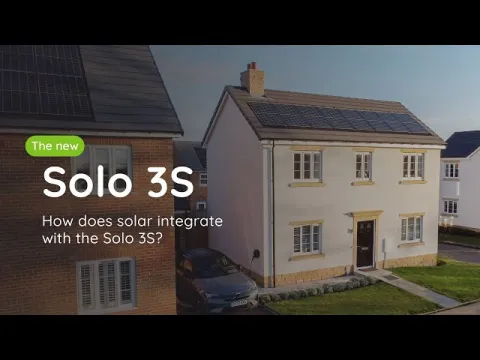
Yes, our Solo 3S chargers can integrate with solar panels. Our most advanced charger yet allows you to redirect excess solar energy, so you can charge your car with both zero cost and zero carbon. 

How does it work I hear you ask:

#heading7
How to Charge Using Solar Power With Your Pod Point Solo 3S
H2

Using Solar charging mode in the app

1. For solar charging mode, head to the ‘At Home’ tab. Click the 3 dots in the top right corner of the tab.

2. Select ‘Manage solar settings’.
Note: Smart mode must be selected to use Solar charging.

3. If you have solar panels or have had them recently installed, head to the ‘Manage Solar settings’ and check that the “I have solar panels” setting has been toggled on.

4. Once ‘I have solar panels’ has been toggled on, you should now have the option to turn on ‘Solar charging mode’.
Note: EVs can only begin charging when receiving a minimum of 1.4kW of power. Please keep this in mind when configuring your solar settings.

5. Once Solar charging mode is toggled on, you will see two possible solar settings to choose from: Solar or Solar & Grid.
 

Important notes

To use Solar charging mode you must be in Smart mode, which will charge your EV outside of any schedules when your solar preferences are met.

Off

When Solar charging mode is off, your charger will not charge using excess solar outside of your normal charging periods. During your normal charging periods, any excess solar is still consumed, with charging topped up to full speed from the grid.
 

Solar mode

This mode allows you to charge your car purely on excess solar energy alone if you have at least 1.4kW available. If excess solar energy dips below 1.4kW, charging will pause. In Solar, grid energy use is minimised. Your vehicle will begin charging when there is 1.4kW or more of excess solar energy. Some grid energy may still be used so that charging isn’t paused too often, which helps protect your vehicle’s battery.

Solar & Grid mode

In Solar & Grid mode, you can top-up using the National Grid when available excess solar energy drops below 1.4kW. When in Solar & Grid mode you’ll notice a slider appears at the bottom of the screen. Here you can select how much energy you’re happy to import from the grid. This allows you to harness your excess solar energy when it’s below 1.4kW using the least amount of grid possible*. You can set the maximum amount of grid energy you are comfortable using.
* Energy from the National Grid is only used to top-up your charger to the minimum threshold of 1.4kW. As more excess solar energy is produced, less energy is imported from the grid. If there is more than 1.4kW of excess solar energy available, no energy will be imported from the grid.

How many solar panels does it take to charge an EV car battery, and can you charge it using just one panel?

Technically speaking, you can charge an electric car battery using a single solar panel. However, that would take an incredibly long time. 

For example, a typical car battery has a capacity of 60kW, so it would take about 60 hours to charge from empty to full if the solar panel was supplying a steady 100W. This assumes perfect weather conditions, so it's likely it will take longer as the charging rate will fluctuate as the weather change (which is very common in the UK). 

So whilst you could in theory use just one solar panel, it’s not very practical. Fortunately, a typical 4kW solar panel system will be made up of around 14 to 16 panels, which is enough to power a 3.6kW home charger. But again, this depends on the weather conditions.

Article read time
9 min read
H1
Summary
H2

Solar energy is one of the best renewable energy sources available to us, especially when combined with home battery storage solutions. Combining a solar array system with a solar compatible dedicated home charger can be a great way to keep your electric vehicle (EV) charged with renewable energy.

Charging your electric car with solar energy is:

  • Greener

  • Cheaper

  • More convenient

H6
H6
Off

Member for

9 months 4 weeks
Off
Image
CRS06130
Categories

If you don’t have your own off-street parking, our ultimate guide contains plenty of ways you can keep your electric vehicle topped up.

#heading1
How can you charge an EV without parking it outside your home?
H2

Charging at home using a dedicated home charger is undoubtedly the best way to charge an electric car. It’s more convenient, cheaper, and overall easier, and with around 65% of homes in the UK having private off-street parking, it’s something most of us can enjoy.

But that still leaves plenty of households that can’t get a home charger installed at their property. Despite the many benefits of switching to an EV, not being able to charge at home can be something of an issue for drivers who must instead rely on on-street parking.

Fortunately, modern problems receive modern solutions, and the EV driver of today has far more options available to be able to charge their car when they don’t have access to a home charger. From kerbside charging to destination and workplace charging, there are many alternatives that are still convenient, easy, and available for all drivers.

#heading2
Kerbside charging from your pavement with Kerbo Charge
H2

There have been various initiatives aimed at allowing homeowners to run an EV charging cable from their front door to their electric car across the pavement.

One of the main players in this space is Kerbo Charge, who will install an EV charging cable channel in the pavement from your door to the kerbside. You’ll still need to get a home charger installed, and once both the channel and the charger are installed, you then simply put your cable into the channel, close the channel’s lid, then plug in and charge. The lid allows other pedestrians to walk on the pavement without getting tripped up or blocked by your cable, though you’ll need to remember to remove the cable from the channel once you’re done charging.

However, before you can get started with Kerbo Charge, you first need to check with your Local Authority whether you have permission to run an electric car charging cable across the pavement. As of writing, Kerbo Charge is available in 30 LAs across the country, and as part of the installation they handle the approval process. For drivers living in the remaining 287, Kerbo Charge is actively working to get more LAs to join, and you can use a free email template supplied by Kerbo Charge to ask your LA directly to get onboard.

#heading3
How to get an electric car charger installed if you live in a block of flats or apartments
H2

Most people assume you need to live in a house to get a charger, but if you live in a block of flats or an apartment, you absolutely can get an EV charger installed. To start with, you’ll of course have to get permission, either from your landlord or the property manager, and from here there are a couple of directions your EV charger installation could take.

The first route is for the landlord or property manager to decide to install multiple EV chargers in the car park. This could be especially beneficial if the car parking isn’t allocated, as it will give you more than one option, although you will of course be competing with potential other EV drivers who live in the same block as you.

Image
Smart Charge

there is a unique EV charger grant for landlords and property managers which could reduce the costs of buying and installing chargers by up to 75% or £350 per charger, as well as an infrastructure grant for residential car parks.

#F2F5CF
#000000
#heading4
H2

Alternatively, if they don’t want to install multiple chargers but are happy for you to install one, you could claim a similar grant, called the OZEV EV Chargepoint Grant, which equally offers a reduction of up to £350 to get a charger installed. It’s aimed exclusively at people living in rented properties or who own a flat, although you must have dedicated off-street parking to qualify.

#heading5
Other options for charging your electric car without off-street parking
H2

Depending on where you live, you may have neither off-street or reliable on-street parking near your home, but don’t worry; you still have plenty of alternative options available that will conveniently keep your EV topped up.

Destination charging

One of the main focuses of public charging is installing chargers at places drivers will habitually visit, and stay at, for long periods of time. This means many charging providers are constantly adding public charging stations at popular destinations so that EV drivers can charge whilst they’re out doing something else.

A common example is supermarkets, with many offering chargers for customers so they can charge whilst they shop. Others include entertainment venues like zoos, shopping centres, hotels, tourist hotspots, gyms and leisure centres, and so on. With over 85,000 electric car public chargers in the UK - and counting! - drivers who can’t charge at home still have plenty of choice when it comes to keeping their EV charged whilst they’re doing something else.

This is also one of the main benefits of electric cars in general; unlike petrol or diesel cars, you can charge whilst doing something else. However, the downside to having to rely on public charging is that it’s generally more expensive than charging at home.

Rapid charging hubs

Along the same lines as destination charging, the UK is starting to see more rapid charging hubs emerge. These are high-powered chargers offering a charger rate of 50+ kW, making them much faster than home or other public chargers. For example, a 50 kW rapid charger could add up to 100 miles of range in around 35 minutes.

These add an extra dimension of convenience and flexibility in the public charging ecosystem, and can be especially beneficial for EV drivers doing long-distance journeys, or simply for people that live near them. However, they come at an added cost, with rapid chargers having the highest price tag per charge, although the higher cost comes with added convenience as rapids get you filled and moving again a lot faster.

That said, despite their benefits, rapid charging hubs are still likely to be few and far between, especially when compared with other destination chargers. That’s because of the huge amount of power needed for rapid chargers, making them costly to build and maintain. You also tend to find them in more remote areas en-route between popular destinations, which typically aren’t in residential areas, so even if you live near one it may not be as convenient to drive to than your local supermarket or other public chargers.

Plus, there’s the fact that not every electric car can charge using a rapid charger. And even if you have an EV that can physically plug into a rapid charger, that doesn’t necessarily mean it can take full advantage of the charging speed. However, almost all modern electric cars do offer rapid charging capabilities, although it’s worth noting than most hybrids can’t, simply because they don’t really need to.

Workplace charging

The COVID-19 pandemic may have caused a surge in working from home arrangements, but whether for necessity or personal choice, many people still work from an office. And just like public charging, it makes total sense to have EV chargers installed at workplaces because people typically spend a long time there, upwards of 8 hours or even more, with their car parked in the same spot.

Not only are workplace chargers great for EV drivers, but also great for businesses that want to flex their environmental credentials and impact, which in turn could help them attract EV-driving talent.

Image
Smart Charge

Pod’s workplace charging solution allows any business, regardless of the number of employees or size of their fleet, to effortlessly enable EV adoption with scalable, cost-effective, and proven workplace chargers and smart load balancing systems. Find out more about workplace charging here.

#F2F5CF
#000000
#heading6
H2

Not every workplace in the UK provides charging for its employees of course, but those that do may either offer it for free or charge a tariff. But with more drivers making the switch to EVs than ever before – over 1.6 million and counting - businesses are coming under more pressure to install workplace EV chargers to help encourage their employees to ditch the traditional petrol or diesel car.

#heading7
Other on-street charging solutions
H2

As well as Kerbo Charge, some places in the UK are trialling alternative methods to providing kerbside charging. These include installing lamppost chargers, allowing EV drivers to pull up alongside one and get a top up. However, these chargers tend to be quite slow, and unfortunately there doesn’t seem to yet be a scalable on-street lamppost solution just yet.

It’s important to also bear in mind that there isn’t a one-size-fits-all solution. Kerbo Charge or lamppost chargers may work for some drivers, but not all. For example, some drivers might find a cable gully from their door to the pavement helpful, but there are plenty of drivers who don’t have this luxury, and so might benefit more from lamppost or other roadside connections. Either way, it remains a challenging environment to install EV charging infrastructure on the side of pavements, both from a planning and administrative point of view.

Article read time
9 min read
H6
Summary
H2

Charging an electric car without a driveway or private off-street parking used to be a challenge, but it’s now easier than ever with the expansion of the UK’s public charging network and alternative options like Kerbo Charge. In this guide, we’ll explore some of the top ways to keep your EV charged when you don’t have access to a dedicated home charger.

H6
Off

Member for

9 months 4 weeks
On
Image
Image (7)
Categories

A complete guide on how much it costs to charge an electric car in the UK at home, work and on the go.

#heading1
H2
Image
Smart Charge

Tip: Electric cars very rarely need a “full” charge, as they never arrive completely empty and usually just need a top up. Learn how to charge an electric car in our guide.

#F2F5CF
#000000
#heading2
Cost to charge an electric car at home
H2

Charging an electric car at home costs about £13 for a full charge* and is the most convenient and cost-effective way to keep your car fully charged. Most drivers will charge their electric car overnight, waking up to a full battery every morning.

  • Average domestic electricity rate in the whole of the UK is about 24.5p per kWh**.
  • Fully charging a 60kWh electric car will cost around £15 (depending on where you live) and give you about 200 miles of range.

By switching to a dual-rate electricity tariff designed specifically for EV drivers you could reduce this even further.

*Costs calculated at 24.5p/kWh based on usable battery is ~54kWh (90%).
**Please note, energy prices vary and can go up and down. To find your current cost per kWh, please check your electricity bill or contact your provider.

Find out more about the home charging options available and how fast you can charge your car.

Image
Hit-the-road-happy-III
Image
lightbulb tip

Tip: Charging at home is best done through a dedicated home chargepoint. Find out more about the benefits of a home charger.

#F2F5CF
#000000
#heading3
Cost of charging at home - 3 example electric cars:
H6
  Battery size Approximate “real-world” electric range Cost to fully charge* Cost per mile
Nissan LEAF 3.ZERO e+ (2019) 62 kWh 239 miles £15.19 6.35p
Mercedes-Benz EQE (2022) 100 kWh 394 miles £24.50 6.21p
Hyundai Tucson PHEV (2021) 13.8 kWh 32 miles £3.38 10.56p (electric mode**)

* You can calculate the cost to fully charge your own car by using the formula:
  Tariff (e.g. 24.5p/kWh) * Battery size (e.g. 100kWh) / 100 = Cost to fully charge (e.g. £24.50).
** Hyundai Tucson PHEV is a plug-in hybrid - this is the cost per mile, when running solely on electric power.

Don't see the model you were looking for in this table? Browse other EVs here.

Find out more about EV home charging.

Image
test

Tip: Get our award winning Solo 3S home charging system from £499 upfront, and an exclusive 2-year fixed low cost energy tariff with EDF*. Check out our Plug & Power bundle.

*Exit fees apply if you cancel the tariff within 2 years. See terms for more details.

#F2F5CF
#000000
#heading4
Cost to charge an electric car at work
H2

The cost of charging an electric car at work can vary between organisations with some choosing to provide free charging while others set a paid tariff.

  • Some employers offer free charging as a staff incentive.
  • Others opt for a time-based tariff to encourage sharing of charging stations.
  • Another model is to offer free employee charging for a set period of time and a fee after this time to encourage employees to vacate charging spaces.

Find out more about Workplace Charging.

Image
Government-grants-for-electric-vehicles-and-charging-infrastructure
Image
lightbulb tip

Tip: More and more businesses around the UK are installing electric car charging facilities. Employee demand is one of the key drivers along with the sustainability benefits and reduced fleet costs.

#F2F5CF
#000000
#heading5
Do electric cars increase your electric bill?
H2

If you switch from a diesel or petrol to an electric car and start charging at home, you’ll inevitably see an increase in your electricity bill - simply because you’re using more energy than before to charge your EV. At the same time, you’ll be making savings as you no longer need to fill your tank at the petrol station. Your car’s fuel cost becomes part of your electricity bill.

Is it cheaper to charge an electric car at home or a charging station?

It’s generally cheaper to charge your electric car at home than at a charging station. The average cost for home charging is 32p per kWh and 48p per kWh for a public charging station.

When it comes to home charging, you can leverage comparison sites and switch providers to get the best rate, keeping your per kWh price low. You won’t find much of a price difference in comparable public chargers, so “shopping around” for a cheaper public charger can sometimes be more effort than it’s worth.

Image
lightbulb tip

Tip: In addition to charging costs, you should also consider and budget for any costs associated with servicing and maintaining your electric car. Get an overview of EV maintenance costs in our guide.

#F2F5CF
#000000
#heading6
Cost to charge an electric car at public chargepoints
H2

Charging your electric car while out and about is a great way to top up your battery.

  • On most modern networks you can use a free-to-download mobile app to find chargepoints and start your charge.
  • Some older public chargepoints require an RFID card (similar to a contactless debit card) to start charging which can be ordered online. This method is slowly being phased out.
  • For app-enabled chargepoints, if the host has set a tariff, you will be able to pay for your charge in app. 

Find out more about how to access public charging here.

Image
Tesco-Braunton-Low-Res-27
Image
lightbulb tip

Tip: Use a mapping service like the Pod Point App or Zap Map to find places to charge and remember to check which authentication method the chargepoint network uses before you travel.

#F2F5CF
#000000
#heading7
Cost to charge an electric car at rapid chargers
H2

Rapid chargers are typically found in motorway service stations and range from being free to one of the more expensive ways to charge.

  • Most network rapid chargers cost 74p/kwh which is about £19 for 30 minutes of charging (as of May 2023).
  • The Tesla Supercharger Network has points across the UK which are either free (dependent on the vehicle age) or pay-per-use for owners of Tesla electric vehicles.
  • Other sites can be found around the UK and typically have an associated tariff that is chosen by the operator.
Image
lightbulb tip

Tip: Rapid charging is unlikely to be a part of your day-to-day charging routine, as your other charging will fulfil most of your needs, usually at lower cost. But access to well placed rapid chargers is critical for longer journeys.

#F2F5CF
#000000
#heading8
Are electric charging stations free?
H2

Most charging stations have a set per kWh price, but some public charging stations are free. You’ll usually find them at destinations like supermarkets, where you can use them to top up while shopping.

Some employers have even adopted free EV charging as an employee incentive at their offices. Speak to your employer to find out if your workplace offers free or reduced-price electric car charging.

#heading9
Why is rapid charging more expensive?
H2

Rapid chargers offer great convenience to EV drivers who need to recharge their batteries in a short space of time, often to continue an onward journey. The increased charging speed means you can charge a typical 60kW electric car from empty-to-full in just 30 minutes. The time saving and convenience comes at a cost, making this option more expensive than home charging or other public charging.

Article read time
6 min read
H1
Summary
H2

The cost to charge an electric car in the UK varies between home, work and public charging.

For a typical electric car with a 60kWh battery and ~200 mile range:

  • Charging at home: Costs about £13 for a full charge.*
  • Charging at work: Many employers will install workplace charging points and typically offer free access throughout the day.
  • Charging at public locations: The cost of public charging at supermarkets or car parks varies based on the chain, location, and speed of the chargers. The average cost is around £26 for a full charge.**
  • Rapid charging: Rapid charging points are normally found at motorway service stations and typically cost ~£19 for a 30 min, ~90 mile charge. ***

* Costs calculated at 24.5p/kWh based on usable battery of ~54kWh (90%).
** Costs calculated at an average rate of 48p/kWh as of May 2023, based on usable battery of ~54kWh (90%).
*** Charging at 50kW, receiving 3.5 miles per kWh. Assumes tariff of 74p/kWh applicable to most network rapid chargers as of May 2023.

H6
Off