Living with an EV

How to talk to family and friends about switching to an EV

Talking to sceptics about the benefits of EVs can be difficult, so we’ve put together a guide to help you debunk myths and advocate for EVs with confidence. 

date02 Jan 2026
date10 min read

Summary

Whether you’re already an EV driver or an eco-conscious person who wants to create positive change in their social circles on online, it can be difficult when confronted with a staunch sceptic. 

Fortunately, there are lots and lots of benefits to electric cars which you can use to try and convince them to make the switch. And if you’re presented with a counter argument, or even one of the dreaded EV myths, then this guide is for you. We’ll be covering the top EV myths and how to respond so that you can confidently advocate for electric cars! 

Why the EV conversation matters more than ever

Climate change is perhaps the biggest threat currently facing humans as a species, and it’s arguably already happening. But as scary as it may be, there are plenty of things to be hopeful about, with new technologies – including electric cars – being developed to make our lives more sustainable and better for the planet. 

EVs are just one part of the wider climate puzzle, but they can have a huge impact. Simply making the switch to an electric car, whether fully battery-electric or a hybrid, can be a big step towards a greener future, with electric vehicles being much greener than equivalent petrol or diesel cars

In fact, an electric car can help avoid on average 1.5 million grams of carbon dioxide per year, which is the same as four flights to Barcelona from London. If you look at 2024, there were a reported 1,360,802 battery-electric vehicles (BEVs) on UK roads (with 2025 already well above this as of the end of June), which means CO2 savings of more than 2 trillion grams! 

So electric cars clearly have a massive impact on reducing carbon emissions globally, making conversations around them more important to have amongst friends and family than ever. But how do you actually talk to them about it? The best place to start is by thinking about who they really are, because once you understand this, you can tailor your approach accordingly. 

Understanding your audience

Who you’re talking to matters as much as what you want to talk to them about. It’s important to really think about who they are because this will help you figure out how to approach talking to them about something they might be sceptical about. That’s because an EV sceptic could have any number of reasons why they might be wary of them. 

For example, it might not be such a surprise that an older person, like a parent, might be resistant to the idea of EVs – or any new technology – when you think about how much different the world of today is from the world they grew up in. Plus, new technologies are perhaps easier for younger generations to get to grips with because they’ve grown up surrounded by technology, whereas older people may find them confusing to use or even understand. 

Similarly, friends or co-workers may have certain opinions that make them more or less likely to agree with your advocating for electric cars. For example, someone’s political alignment may make them view EVs more favourable, whilst a person’s financial status might indicate whether switching to an electric car is even financially possible. As another example, someone might be employed in some way that relates directly to petrol or diesel cars, in which case they might naturally be protective of their industry and job. 

Understanding who the sceptic is and what might be the cause of their scepticism – whether you agree with it or not – will help massively when it comes to talking to them about EVs. But how should you approach a conversation with an EV sceptic? 

Lead with curiosity, not confrontation

A good rule of thumb for any scenario in life where you might come into conflict with someone with opposing views is to not go in with a confrontational or combative mind. Dismissing their opinions outright will likely lead to a more heated confrontation, whereas taking the time to consider their arguments, and where they might be coming from, is not only respectful, but can also help you then consider where your own arguments stem from. 

This should hopefully lead to if not outright acceptance, then at least mutual respect and understanding. Agreeing to disagree is a better result than a fight! 

Share your personal experiences, if you have them

If you or someone you know has positive experiences driving an electric car, these can help reinforce your arguments, or help put the sceptic’s mind at ease if they have concerns around the technology (legitimate or otherwise). 

For example, a lot of EV sceptics are concerned with the driving range of electric cars, which we typically call range anxiety. It’s ultimately the fear that you’ll run out of charge in an EV, driven by the (thankfully misguided) belief that electric vehicles can’t drive very far. Being able to say with confidence that you, or someone you know, has done long-distance trips in an EV without an issue should settle their concerns. 

Cost is another big issue for EV sceptics, and it’s not entirely without merit. Unlike a petrol or diesel car, when you make the switch to an EV you’ll need to make sure you have at the very least your own charging cable so you can charge in public. Home owners can also consider getting a dedicated home charger, which adds to the costs. 

However, when you look at how much it actually costs to charge an electric car, whether at home or in public, and take into other considerations like EV maintenance costs, it becomes clear that electric cars in the long term are cheaper to run than equivalent petrol or diesel cars. And that’s even after accounting for high energy prices. 

Image
Smart Charge

Tip: are you looking for a low-cost way to get an EV charger installed at your home? By joining Pod Drive, our all-inclusive EV charging subscription, you’ll get our award-winning Solo 3S charger with a lifetime warranty and up to 7,500 miles of range paid for, all for just £40 a month and a £99 one-off joining fee. Find out more about Pod Drive today

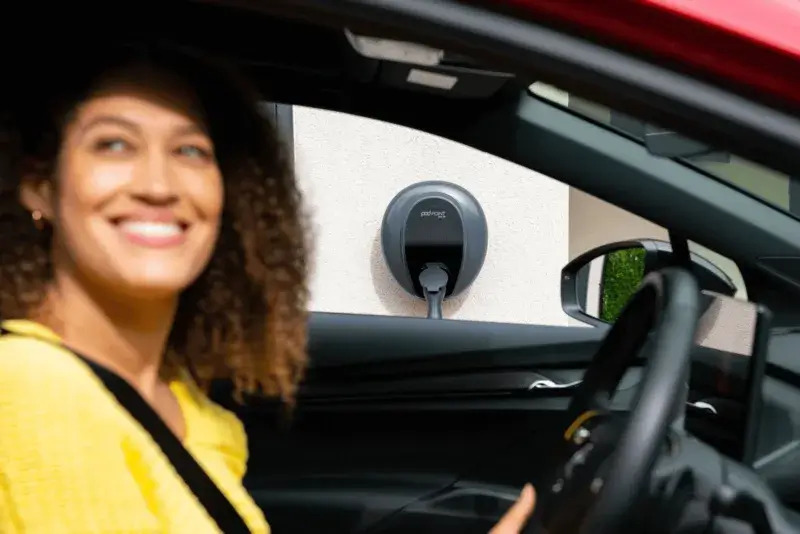
Convenience is also a big reason why many drivers are switching to EVs. There’s nothing quite like waking up every morning to a fully charged electric car. If you know that feeling, you know. No need to drive anywhere to fuel it. No more visiting smelly petrol stations. Just plug in overnight and let the car charge whilst you sleep! 

Myth busting: the top 5 concerns sceptics have about EVs, and how to handle them

Talking to an EV except who seems armed with all the counter-arguments can be difficult. But a lot of the time, all they’re repeating are some commonly held myths about EVs that are, in reality, false. 

These are the top 5 myths and concerns sceptics have about electric cars, and how you can respond to them: 

  1. EVs take too long to charge 

For starters, how long it takes to charge an EV is determined by the size of its battery and the charger it’s plugged in to. Plus, not all EVs can use rapid chargers. So how long it takes really depends on many factors. 

But as a rough guide, it can take anywhere from 30 minutes to 12 hours. This may sound like a big range, but the fact you can charge an EV overnight means it’s not really as inconvenient as sceptics would have you believe. 

  1. EVs can’t go very far 

This really depends on how far you tend to travel, and how frequently. But in reality, the average driver covers roughly 127 miles per week, whilst the average electric car range is 236 miles. So for most people, their EV should be more than enough to cover their weekly driving on a single charge, meaning this really isn’t a problem. 

And if you really do need an electric car with range, there are plenty to choose from with ranges of 300+ miles, with some even covering more than 400 miles on a single charge. 

  1. EVs are dangerous 

Batteries and crashes are two of the main reasons reported that try to paint electric cars as unsafe. For the latter, EVs are as safe, if not safer, than equivalent petrol or diesel cars if they’re involved in a crash. 

As for the former, any lithium-ion battery can catch fire if used improperly. That includes the ones in your phone, laptop, or other electronic devices. In the case of EVs, manufacturers have gone to go great lengths to protect batteries from anything which might cause them to get damaged. After all, it’s the most important part of the car, so it needs protecting. 

Plus, any time an electric car does catch fire, the media is quick to jump on it. But they’re significantly less likely to happen than fires involving petrol or diesel cars; they just get reported more often to appeal to EV sceptics. 

  1. There aren’t enough EV chargers 

Aren’t there? EV charging infrastructure has come leaps and bounds over the last few years. According to Zapmap, there are over 82,000 public chargers in the UK as of June 2025. That’s quite a lot, and that number is constantly going up. 

Plus, what this fails to take into consideration is that EVs can be charged at home using dedicated chargers, and there are many providers coming up with innovative solutions for homes without driveways. This means some drivers don’t even need to use public chargers, whereas every petrol or diesel driver has to rely on public spaces to refuel their car. Looking at it this way, you could argue that comparatively we don’t need as many public chargers as petrol pumps. 

  1. The grid can’t cope with demand 

Simply put: yes, it can. The National Grid hasn’t been complacent; it’s been preparing the UK’s energy network for the mass-adoption of electric vehicles for a long time. Plus, this issue goes hand-in-hand with the concept of smart charging, which is partly about spreading demand across the entirety of the day, like overnight, when energy demand is naturally lowest. 

In other words, the grid wouldn’t be overwhelmed if everyone switched to EVs because we wouldn’t all be charging at the same time. And even if we did, the National Grid itself has said that “Even if we all switched to EVs overnight, we estimate [electricity] demand would only increase by around 10%.” So it’s really not an issue. 

Other handy tools to help you convince an EV sceptic

You don’t have to be armed with all the knowledge to overcome a sceptic’s views. There are plenty of online resources available to give you a helping hand that can calculate the cost savings of switching to an EV, or tools that can show how much carbon driving an EV can save

Or, there’s no better way to convince someone than to suggest they actually take a test drive in an electric car. There are plenty of ways of doing this, from test drive events to car hiring services like Zipcar. We challenge anyone who’s never driven an electric car to take one for a spin and still claim they’re not great to drive! 

Above all else: stay positive!

Whilst it would be great if every conversation with an EV critic would convert them, the reality is you’re not going to be able to convince everyone. You can’t win ‘em all, and it can get disheartening sometimes. Regardless of how the conversations go, it’s important to stay optimistic. 

Electric cars are the future of transport, with more drivers making the switch every year. We’re seeing this in prices, with more affordable electric car models coming out that prove they’re not just for the wealthiest of us. We’re seeing this in infrastructure, with more public chargers popping up everywhere we want to go. And we’re seeing this on the roads, with electric cars increasingly replacing petrol and diesel cars on our roads. 

Besides, change takes time, and it’s important to celebrate the small wins. Every electric car bought, every charger installed, is carbon saved and a small shift towards a larger, greener, electric-only future. So even if you aren’t successful in convincing an EV critic today, tomorrow is a new day, and the future is electric.