Living with an EV

Is an EV a Good First Car?

date24 Jul 2026
date27 Jul 2026
date6 min read
Article Feature Picture

Summary

The short answer: yes, for most new drivers, an EV makes a brilliant first car. Lower running costs, a smoother drive, and far less to go wrong under the bonnet all work in your favour. That said, it’s not the right fit for everyone, and this guide will help you work out which side of the line you fall on. 

Why an EV works well as a first car

Cheaper to run 

This one matters a lot when you’re just starting out. Petrol costs around 14–16p per mile to run right now. Charge your EV at home overnight on a smart tariff and you’re looking at 2–5p per mile. That’s a saving of £800–£1,000 a year on fuel alone for an average driver doing 7,500 miles. 

EVs are also simpler mechanically. No oil changes, fewer brake replacements (regenerative braking does a lot of the work), no clutch to wear out. Servicing costs are lower, and there’s just less to go wrong. 

Easier to drive 

No gear changes. No biting point to find. No stalling at a roundabout when you’re already nervous. For learners and newly qualified drivers, that’s a genuine advantage. The smooth, linear acceleration also makes it easier to control your speed, which is a good thing when you’re still building confidence on busy roads. 

Government grants help with the upfront cost 

OZEV offers up to £500 towards the cost of installing a home charger, though eligibility depends on your situation. If you rent, or if you own a flat, you can apply for the grant as long as you have private off-street parking. There’s also a separate £500 grant for households that only have on-street parking, covering the cost of a cross-pavement charging solution. The grants run until March 2027. It won’t close the price gap between an EV and a used petrol car, but it’s worth checking what you qualify for before you buy. 

The honest downsides

Higher upfront cost 

New EVs are still more expensive to buy than their petrol equivalents. That gap is narrowing, and the used EV market has grown significantly, but it’s real and it’s worth being honest about. If your budget is under £10,000, your choices are more limited than they’d be in the petrol market. 

Insurance for younger drivers 

This is the one most guides skip over. Insurance for under-25s is expensive across the board, and EVs can push premiums higher still, partly because repair costs for EV-specific components (like battery packs) are higher. It’s not a dealbreaker, but you should get quotes before you commit to a specific model. Black box policies can help bring the cost down regardless of what you drive. 

Charging on the go 

If you have a driveway or off-street parking, home charging largely solves this. But if you rely on public charging, you’ll need to plan a little more carefully. The UK’s charging network has improved a lot, but it’s not as seamless as pulling into a petrol station. For most day-to-day driving, this won’t be a problem. For long trips, it needs a bit of thought. 

Range for longer journeys 

Most modern EVs manage 150–280 miles on a full charge. For commuting, school runs, and everyday life, that’s more than enough. If you regularly drive to visit family a few hours away, you’ll want to check the route for rapid chargers in advance.

Home charging changes everything

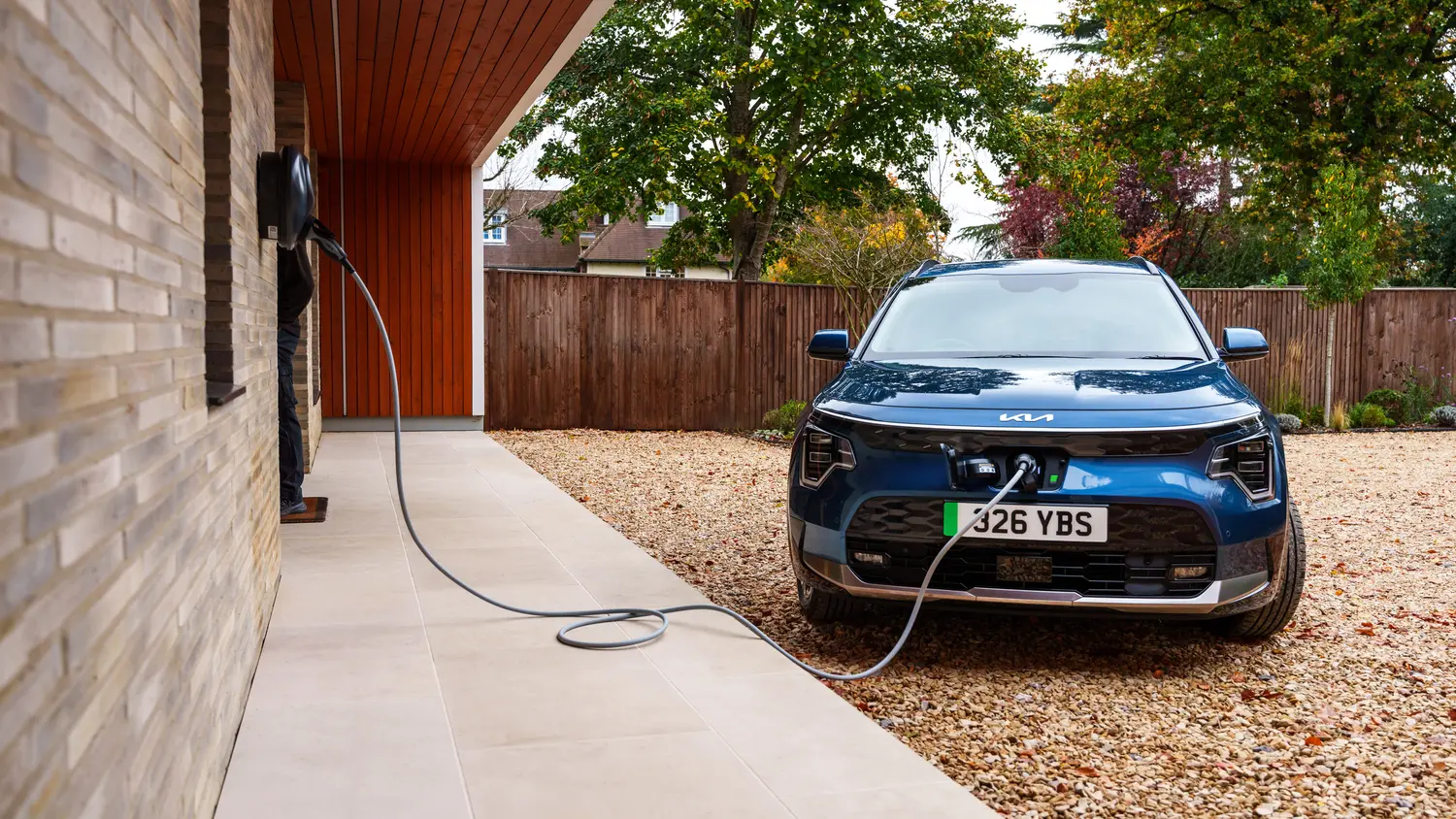
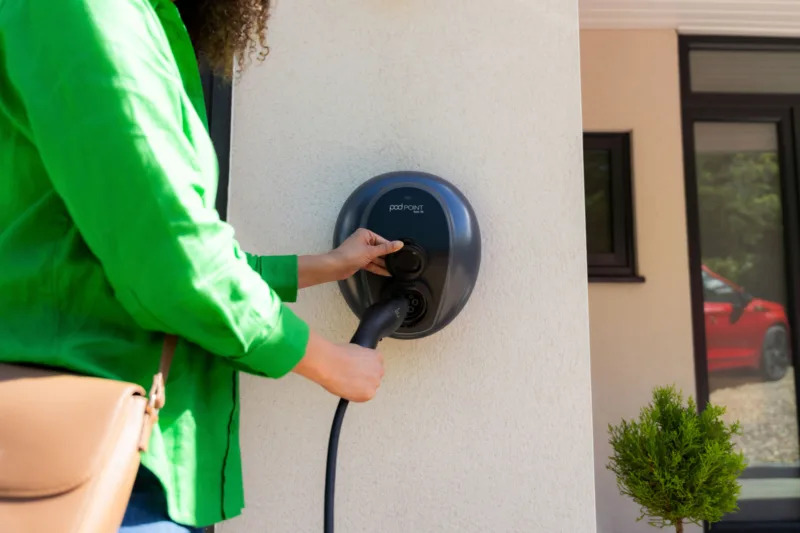
If there’s one thing that makes EV ownership genuinely easy, it’s being able to charge at home. You plug in when you get back, wake up with a full battery every morning, and never have to think about it. It’s a bit like your phone, but for your car. 

A good home charger delivers up to 7.4kW, which means most EVs go from low to full charge overnight in 6–8 hours. On a smart energy tariff, you can set charging to happen during off-peak hours when electricity is cheapest. 

What to look for in a home charger: 

  • At least 7kW charging speed 
  • Smart charging capability (app control, scheduled charging, tariff integration) 
  • A good warranty and reliable after-sales support 

OZEV grant eligibility

Eligibility depends on your situation. If you rent or own a flat with private off-street parking, you can apply for up to £500 towards installation costs. If you only have on-street parking, there’s a separate £500 grant covering cross-pavement charging solutions. Both grants run until March 2027. You’ll need to use an OZEV-approved installer. Full criteria at gov.uk/guidance/electric-vehicle-chargepoint-grants 

Pod Drive brings together an award-winning Pod Point charger, smart charging, and cash rewards through Pod Rewards. Choose to buy upfront from £999 or subscribe from £99 upfront and £34 a month for 36 months. Find out more about Pod Drive

EV insurance for new and young drivers

It’s a fair concern, and it’s worth addressing directly. EV insurance for under-25s can be more expensive than petrol equivalents, but it depends heavily on the model you choose. Smaller, lower-powered EVs (like the MG4 or Vauxhall Corsa Electric) tend to come in at more reasonable insurance groups than premium models. 

A few things that can help: 

  • Black box (telematics) insurance is one of the most effective ways for new drivers to cut premiums. Insurers track your driving and reward safe habits with lower costs over time. It works just as well for EVs as it does for petrol cars. 
  • Adding a named experienced driver to your policy can also reduce the cost, as long as you’re the main driver. 
  • Shop around. Some insurers are more competitive on EV cover than others. Use a comparison site but also check directly with specialist EV insurers. 

The honest truth: insurance will be your biggest running cost as a young driver, whatever you drive. The EV premium is real but manageable with the right policy.

Best EVs for first-time buyers in the UK

There’s no single best answer here. It depends on your budget, how you’ll use the car, and whether you’re buying new or used. Here are five worth looking at. 

Under £20,000 (new or nearly new) 

  • MG4 One of the best value EVs on the market. Good range (217–281 miles depending on spec), low insurance groups, and a 7-year warranty. A strong all-rounder for a first car. 
  • Image
  • Vauxhall Corsa Electric Familiar, practical, and available in lower insurance groups. Range is more modest (222 miles), but it’s well suited to everyday urban driving. 

£20,000–£30,000 (new) 

  • Volkswagen ID.3 Polished, well-built, and easy to live with. Range up to 263 miles. A step up in refinement and a car you won’t feel like you’ve outgrown quickly. 
Image
  • Nissan Leaf One of the originals, which means it’s widely understood by insurers and mechanics. A solid, reliable choice with a decent used market if you’re looking at older models. 

Best used option 

  • Renault Zoe Has been on sale since 2012, so there’s a healthy used market with prices starting well under £10,000. Worth checking whether the battery is owned or leased on older models.

So, is an EV right for you?

An EV makes sense as a first car if you have access to home charging, do most of your driving locally, and want to keep your running costs down. The upfront cost is the main hurdle, and insurance needs careful shopping around if you’re under 25. 

If you can tick those boxes, you’re likely to find that an EV is not just fine for a first car. It’s genuinely one of the better choices you can make. 

Explore Pod’s home EV charging options.

About the author
Louise McCormack Headshot

Louise McCormack is a highly experienced product leader at Pod, leading the Home category,  with a passion for developing customer focused product experiences.

Across Pod, myenergi, and E.ON, she has spent her career building and scaling products across EV charging, solar, storage, and energy services in multiple markets — managing service-led propositions that turn complex technology into solutions people actually want to use.

Louise McCormack is a highly experienced product leader at Pod, leading the Home category,  with a passion for developing customer focused product experiences.

Across Pod, myenergi, and E.ON, she has spent her career building and scaling products across EV charging, solar, storage, and energy services in multiple markets — managing service-led propositions that turn complex technology into solutions people actually want to use.