How Much Does it Cost to Install a Home EV Charger?
This complete guide covers everything you need to know about all the costs associated with installing an EV charger at home.
 30 Dec 2025
 6 min read
Summary
If you’re able to get a dedicated home EV charging system installed, it’s well worth considering. Charging at home is often the cheapest way to charge an electric car, with a typical home charge costing just £13 compared to an average of £26 when charging in public, so having one installed could save you a lot of money.
Electric vehicle home chargers aren’t cheap pieces of kit, but what you get in return is a safe and convenient means of charging your EV every day. And, as you'll see, there are ways of making it cheaper to buy and install a home EV charger via a range of EV charger installation incentives or rebates.
What’s included in the cost of a home EV charger?
When you buy an electric car charger for your home, there are a few things that factor into the home EV charger installation costs:
The charger
Obviously a key component of the cost of is the charger itself, which can vary across providers and charger types, with smarter and more high-tech chargers usually costing more. For example, our award-winning Pod Point Solo 3S home charging system starts from £999.

Tip: alternatively, you can get a Solo 3S charger for just £499 upfront with the rest spread across a fixed 2-year low-cost energy tariff supplied by EDF through the Plug & Power bundle.
Installation
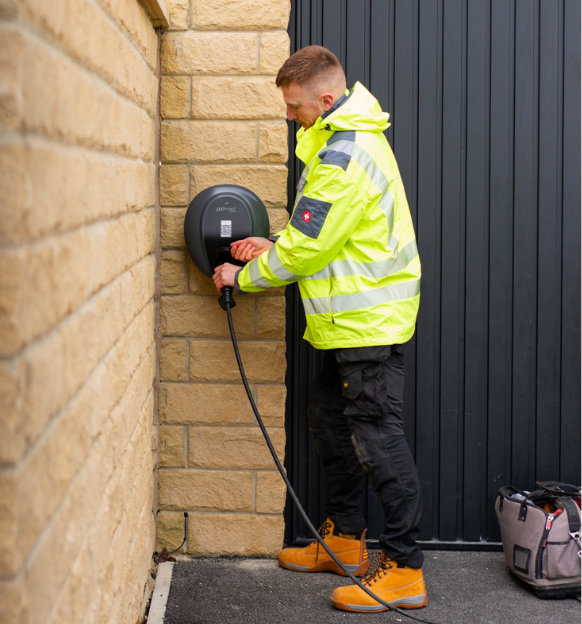
Home chargers need to be installed by professional and qualified electricians to ensure they’re installed correctly and safely. No matter where it’s installed, from the side of your house to the inside of your garage, this understandably comes at a cost to cover labour, materials, and any other costs that you may incur due to the nature of the installation. For example, more complex installations typically cost more as they often require more labour or additional materials like cabling or trunking to complete the installation.
Tip: the price of a Solo 3S includes the cost of installation if it meets out standard installation criteria, so when you order yours you won’t be hit by any hidden costs. Order your Solo 3S today.
Power supply panel upgrades
Most homeowners tend to have a 7kW home EV charger installed, which is more than sufficient for most charging needs. These rarely require upgrades to the home’s power supply to be installed, but older properties with older electrical panels may need an upgrade. Similarly, if you’re going for a faster 22kW you’ll likely need to upgrade your power supply as these chargers need three-phase power, where the majority of homes in the UK have single-phase power.
Optional extras
As mentioned, more advanced home chargers will likely incur a higher cost, especially smart chargers that give homeowners great control over their charging. But there could be other extras that may factor into the price like weatherproofing, although reliable home chargers will have been designed to withstand a range of weather types including rain, snow, and heat.
What affects the cost of installing an electric car charger?
Some, but not all, providers include the cost of installation in the purchase price, giving you a relatively predictable measure of how much it should cost you. However, if you’re buying the charger separately and then sourcing an electrician to install it, how much it costs could be determined by many things such as their availability, the time of year, and where you live.
Of course, any installation cost assumes ideal conditions on the day, and anything that happens as a result of less-than-ideal conditions – like the weather, sickness, or unexpected complexity of the installation – could affect the cost.
For example, telling your installer where the charger is being installed relative to your home’s power supply lets them know ahead of the date what to expect in terms of how much trunking or trenching is needed, how long cable runs will be, and so on. This will result in a smooth installation day and avoid any headaches. Anything unexpected which could complicate the installation, like the need for groundworks, that your installer doesn’t know about will almost certainly impact the installation cost.
That’s why it’s important to properly prepare for your home EV charger’s installation in advance, such as:
- Having the charger be in a sensible place so that it’s not too far from the power supply or your home’s Wi-Fi
- Choosing a charging speed that your home can comfortably handle
- Ensuring that the chosen charger type (tethered or untethered) is suitable for your needs, as swapping one out after the fact can be costly
- Making sure to choose both a reliable charging provider and a reputable electrician to install it
Tip: did you know? 90% of our installations are classed as standard, meaning the vast majority of our customers experience no extra costs during the installation. In the rare case that your installation is more complex, we’ll talk through these with you prior to your installation date and discuss how this might impact your costs.
How to reduce the costs of buying and installing a home EV charger
When it comes to government grants, there are a number of incentives and rebates available to help homeowners install EV chargers for less, or that generally reduce the costs of EV ownership in general. The main grant currently available is the OZEV EV Chargepoint grant, provided by the UK Government’s Office for Zero Emission Vehicles (OZEV).
This provides up to £350 off the cost of buying and installing a home EV charger to people who lived in rented accommodation or who own a flat with a private parking space. It replaced the old Electric Vehicle Homecharge Scheme (EVHS) in April 2024.
Beyond this, there are a number of other grants aimed at reducing the cost of EVs, rather than charging, such as:
The Electric Car Grant
This is the newest grant introduced by the Department for Transport (DfT) in July 2025, which will give drivers discounts of up to £3750 on new electric cars with list prices below £37,000. Car manufacturers must submit their cars for eligibility, with the reduction being passed straight onto UK drivers.
The Motability Scheme for Electric Cars
This grant allows disabled drivers to exchange their mobility allowance for a new car, scooter, or wheelchair, with several plug-in vehicles (PHEVs) available under the scheme. This could save disabled drivers up to £1,000 a year in running costs.
The Plug-in Grant
An older grant that no longer runs, the Plug-in Grant offered a range of discounts on eligible motorcycles, mopeds, and vans. It ended in June 2022.
DIY versus professionals – who can install a home EV charger?
In the UK, home EV chargers can only be installed by qualified and registered electricians. In order to qualify, they must hold certain qualifications and be registered with a Competent Person Scheme. This is to ensure the charger is installed safely and complies with various codes and regulations.
Even if you consider yourself competent with electrical devices, you can’t install an EV charger yourself, and it’s always better to not take the risk and get someone qualified to install it, even if it comes at an extra cost.
How to find a qualified installer
If you’re looking to claim a government grant, you’ll need to make sure that they’re an authorised EV charger installer. There are a few websites and tools you can use to find local electricians like Checkatrade and Airtasker. Alternatively, you can check out the government website to find authorised installers.
Besides simply asking them whether they’re qualified, the right electrician should also be able to demonstrate that they have specific qualifications that let them install EV chargers. This includes completing a Level 3 Award in the Design and Installation of Electric Vehicle Charging Equipment or a Level 3 Award in the Installation and Commissioning of Electric Vehicle Charging Equipment. This is on top of the other qualifications electricians need including 18th Edition, BS 7671, and so on.
Home electric car charging – worth the cost
Even accounting for the costs of buying and installing an EV charger, it’s worth considering for anyone who drivers an electric vehicle. Charging at home is the ultimate convenience, giving you the ability to charge overnight and wake up to a fully charged EV every day, so get your quote or consultation today!
Pod is a leading home charging provider, offering a Which? accredited standard installation included, 24/7 customer support, a comprehensive 5-year warranty, and more. Find out more about our home EV charger installation service.